TL;DR
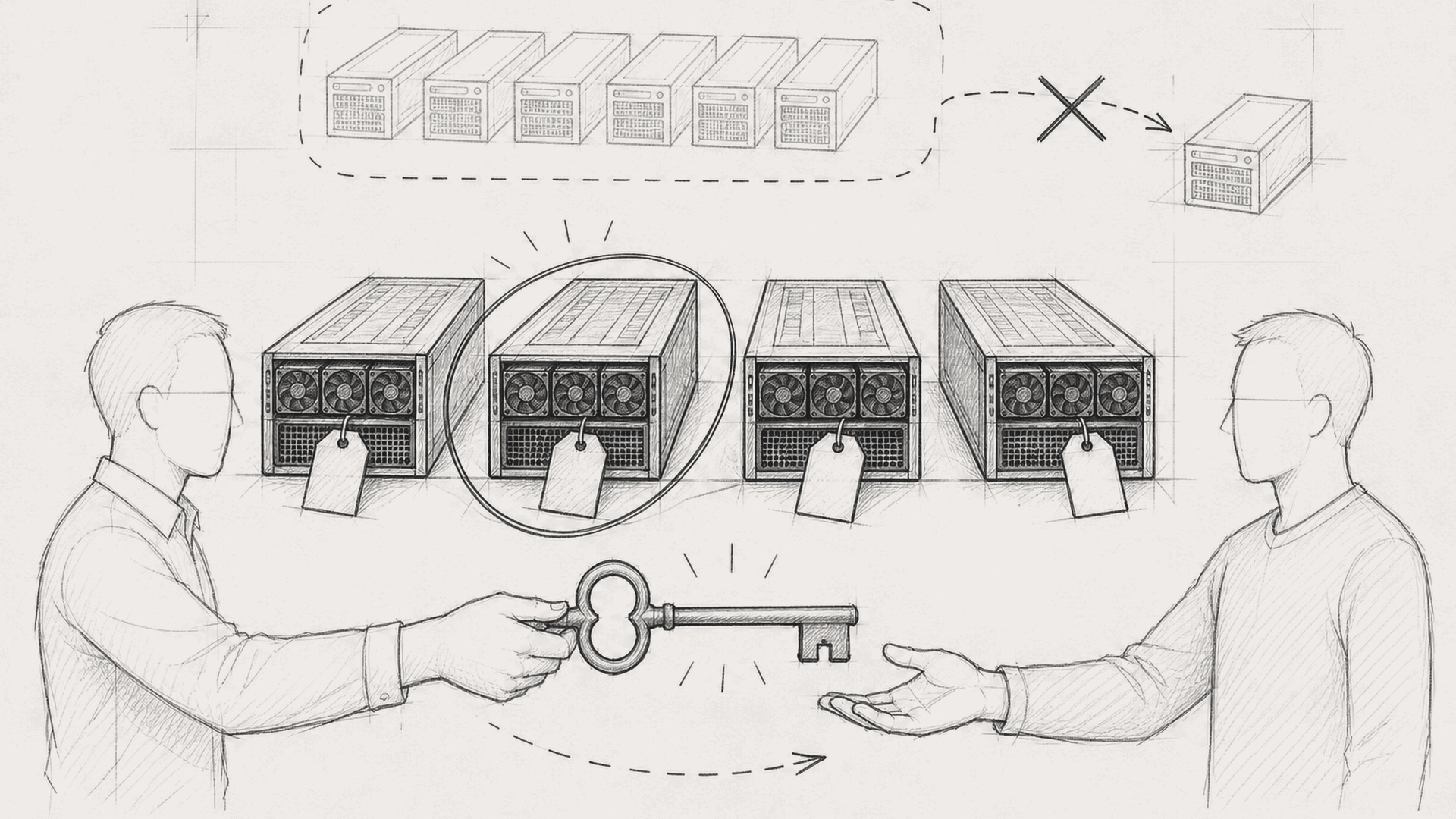
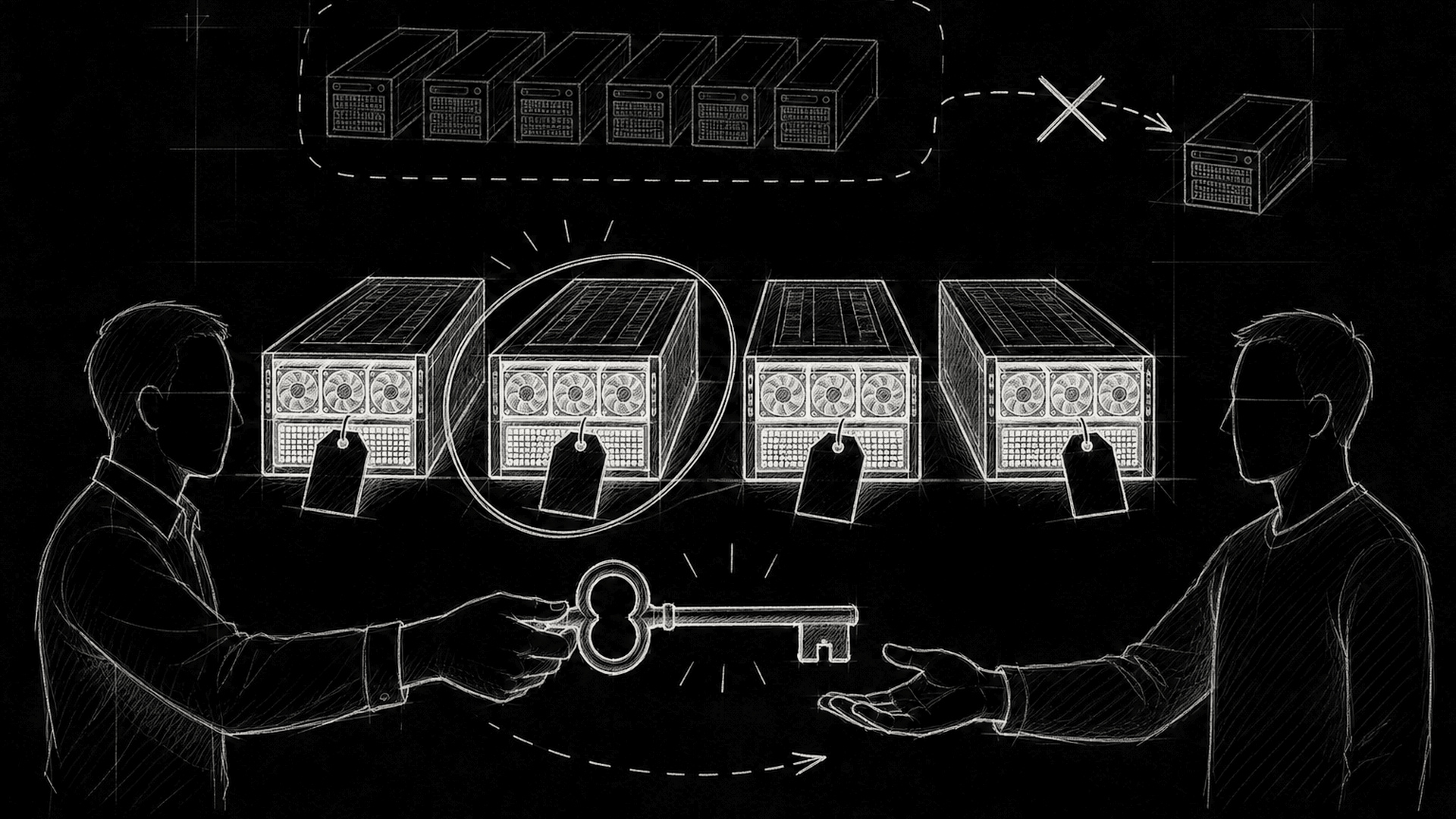
On U.S. listed markets, the public sample that books what customers pay for company-owned, identified GPUs as an ASC 842 lessor operating lease is two names: Boost Run (NASDAQ: BRUN) and Digi Power X (NASDAQ: DGXX). The difference is not whether the product page shows Kubernetes. It is whether the contract hands the customer control of the use of an identified asset.
BRUN is currently the only listed company whose core business model is this. In the first half of FY2026, lease revenue was 97.5% of total revenue (USD 41.0M / 42.1M). It has infrastructure-as-code and vCluster, and it still recognizes revenue under ASC 842: the customer has exclusive control of specifically identified GPU servers.
DGXX is another name that is similar in accounting and different in business architecture. In the second quarter of this year it booked NeoCloudz bare-metal GPU rental as 842 revenue for the first time. Inside the group the split is colo 52% + energy sales 30% + mining 2%, while the 842 lease line is 16.3% of revenue (USD 1.08M / 6.63M). Its largest contract is a Cerebras 40 MW / 10-year / about USD 1.1B data-center hosting deal; the tenant brings its own chips, and nothing has been booked yet. The USD 128.1M of cash on the balance sheet is not an operating surplus. Operating cash flow is still negative. Alabama / GPU capex is funded by equity; the ATM is the main intake channel.
The GPU clouds that the market usually uses as comps — CRWV, NBIS, CHRN, WYFI, IREN — can look very dedicated at the product layer, but their revenue is almost uniformly an ASC 606 customer contract. APLD / WULF’s 842 is halls and power, not GPUs.
1. ASC 842 vs ASC 606
The same dedicated GPU contract can enter only one of two U.S. GAAP frameworks. Operating-lease lessors (BRUN, DGXX’s GPU line) sit on one side; 606 cloud services (CRWV, CHRN) sit on the other.
First separate lessor from lessee. Almost every NeoCloud and colo company has large lessee 842: leased halls, leased power, even leased-in GPUs. That is cost. The public-sample peculiarity of Boost Run / Digi Power X is on the revenue side: the money customers pay them is treated as operating-lease rent. WhiteFiber’s 842 appears in the opposite direction (lease in GPUs to sell 606 cloud) and cannot be treated as isomorphic to BRUN. APLD / WULF’s 842 leases out cabinets and power; the tenant brings the chips.
1.1 How each books revenue, and how much is 842
The table below is sorted by how much the GPU / cloud layer is of company revenue. It is not sorted by 842 purity. A high product-layer share only means the company is selling GPU cloud. 842 lessor revenue as a share of the group is currently only BRUN at about 98% and DGXX on one line at 16%. Everyone else is 0%.
| Rank | Name | Product-layer share | Revenue standard | Call |
|---|---|---|---|---|
| 1 | BRUN | ~95–100% lease | 842 | H1'26 lease 97.5% (Q2 97.7%). This is an 842 GPU lessor. |
| 1 | CRWV | ~95–98%+ GPU cloud | 606 | All 606 |
| 1 | NBIS | ~98% AI Cloud | 606 | Material customer contracts are 606 |
| 2 | CHRN | ~90–100% operating entity | 606 | A dedicated 6,144 H100s is still 606 |
| 3 | WYFI | Cloud ~76–87% | 606 | Cloud + colo run 606; GPU servers are a lessee cost, not an 842 lessor |
| 4 | IREN | ~23% AI Cloud | 606 | AI Cloud Services is 606 (with RPO) |
| 5 | DGXX | GPU rental 16.3% (Q2) | That line is 842 | Colo / energy / mining run separately. Only the GPU line is 842. |
| — | BTDR | AI Cloud is not the core | IFRS 15 | The customer does not possess the machines. Not a U.S. GAAP 842 GPU lessor. |
| 6 | APLD / WULF | ~0% (landlord) | Hall 842 | Does not sell owned GPU-hours; HPC is hall 842 |
Product-layer height only says the company sells GPU cloud. 842 lessor income as a share of the group is currently BRUN and one DGXX line.
1.2 The legal tests
| ASC 842 lease (lessor operating lease) | ASC 606 customer contract (service) | |
|---|---|---|
| Definition | Conveys, for a period of time, control of the use of an identified asset in exchange for consideration | Performance obligation: transfer a service to the customer (compute, SLA, tokens, platform) |
| Must both hold | (1) There is an identified asset, and the supplier has no substantive substitution right; (2) the customer obtains substantially all of the economic benefits during the use period and directs how the asset is used | Fail either → not a lease |
| Typical revenue line | Lease revenue / lease income, straight-line; variable rent not indexed to an index or rate is recognized when it occurs | Cloud / service revenue; stand-ready over time, usage as consumed |
| Asset | GPUs remain on the lessor’s balance sheet and depreciate as PP&E | GPUs also depreciate on the operator’s books, but the revenue is not “rent” |
| Prepayments | deferred lease income / customer deposits | deferred revenue; disclose RPO |
| Residual | Stays with the lessor (an operating lease does not derecognize the asset) | Economically also with the operator, but it does not go through the lease classification tests |
The control test splits into two simple questions: an identifiable asset, and control of the right to use it.
| Test | Pass → more like an 842 lessor | Fail → more like a 606 service |
|---|---|---|
| Identified asset | The contract points to specific GPUs / servers (or the customer has the right to specify them); the supplier cannot swap machines for its own capacity, maintenance, or oversubscription | Equivalent compute is drawn from a substitutable pool; the vendor keeps substitution |
| Control of use | The customer decides what runs, who logs in, what OS / drivers are installed, and utilization | The supplier schedules, migrates, oversubscribes, and slices multi-tenant; the customer buys GPU-hours / tokens / an SLA and does not command that machine |
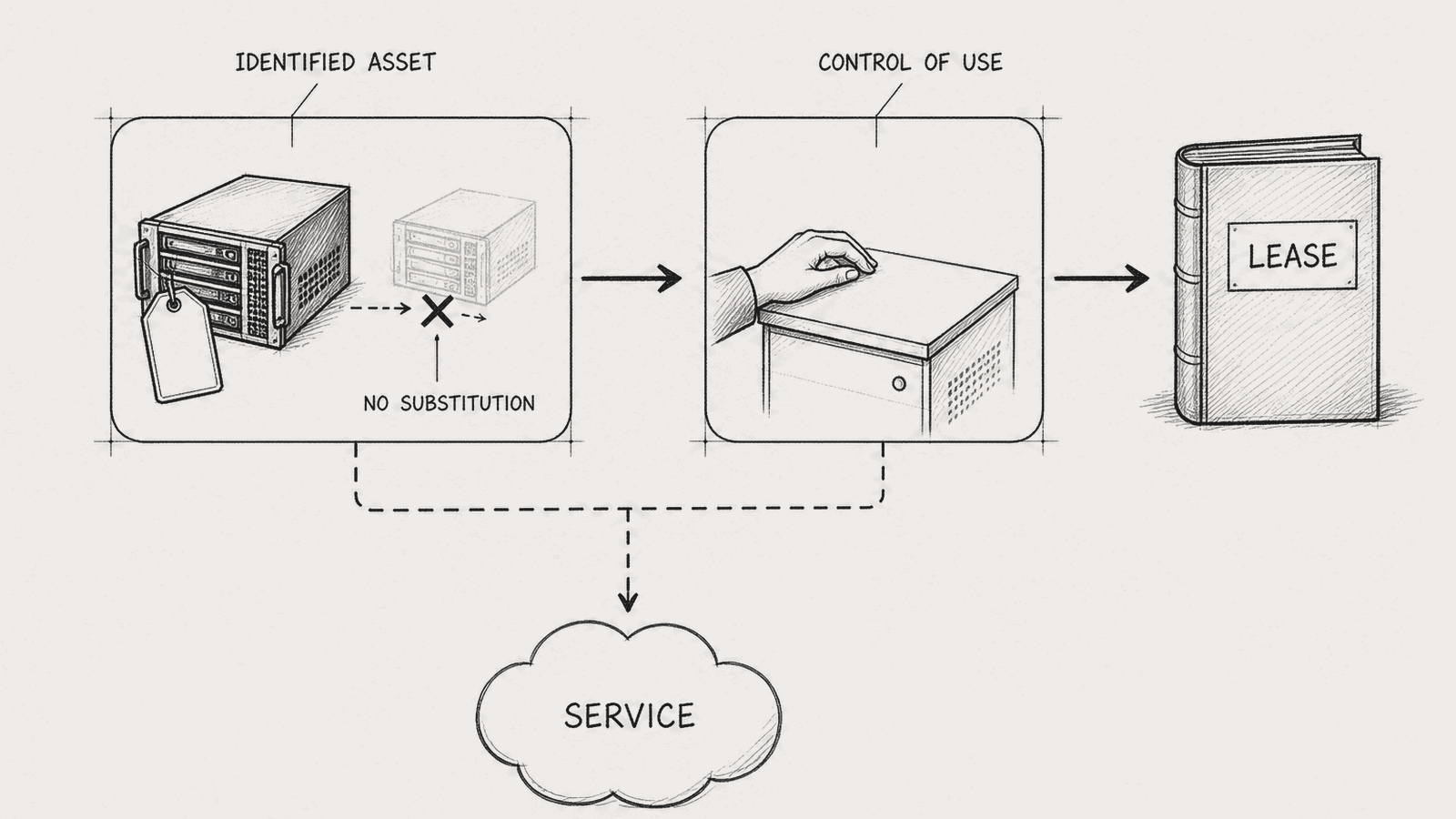
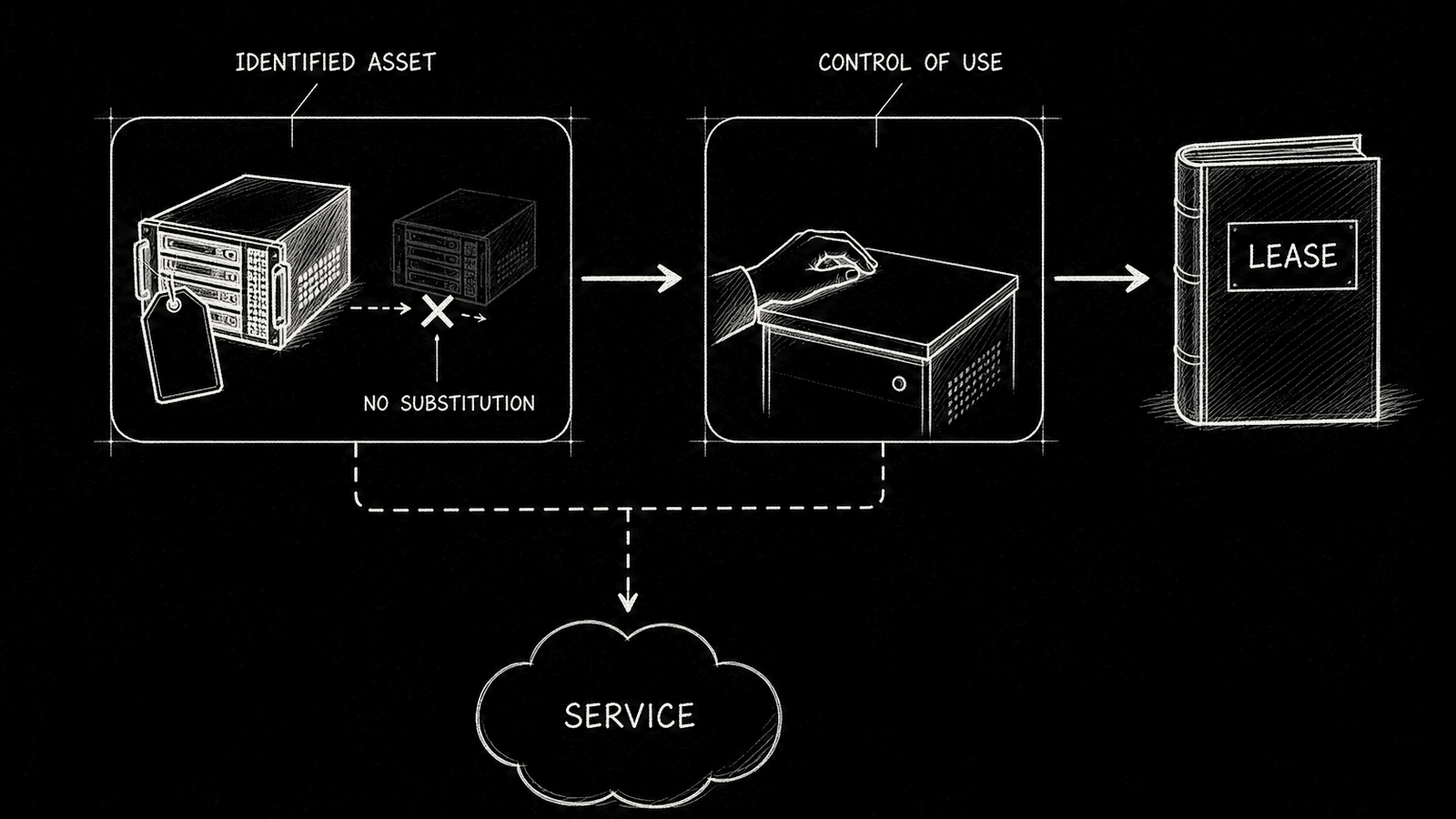
A lease is not “bare metal” and not “no software.” Both gates have to pass.
In CoreWeave’s 2025 annual report, Deloitte marked revenue recognition on certain customer contracts as a Critical Audit Matter. A critical audit matter is not a qualified opinion. The auditor has already issued an unqualified opinion on the financial statements as a whole; it is separately writing, as required, the matter that took the most judgment and was material to the statements. It does not say management got it wrong, that a restatement is coming, or that the auditor and the company have fallen out. It says: the amount is large, the judgment is hard, and a reasonable person could reach a different conclusion.
The first layer Deloitte watched is the table above: is the contract a cloud computing service (ASC 606) or a lease of cloud computing equipment (ASC 842). The company’s answer is: usually either there is no identified asset, or the customer cannot control and direct the underlying hardware; the company keeps the right to choose which machines and how they are deployed, as long as service quality and availability are met. Therefore everything runs as 606. The auditor finds it hard because, once dedicated clusters and multi-year take-or-pay are handed over, the two questions — identified asset and control of use — sit in a gray zone. Boost Run passed the same tests and booked 842. The answer depends on whether the contract locks the machines and the command rights, not on what the product page automatically implies.
It is not only CoreWeave. Nebius’s 20-F likewise marks whether material customer contracts are a service or a lease as a critical audit matter.
The CAM has a second layer: whether variable consideration and optional purchases change the timing and amount of revenue; and whether, if the contract is reclassified as a lease, it then slides into a sales-type lease. GPU life is about 3–5 years. CRWV contracts run 1–6 years, weighted about 5 years. If the term covers most of the economic life, or the present value of payments is close to the fair value of the equipment, 842 requires a sales-type lease: the equipment leaves the balance sheet, a net investment in the lease is recognized at commencement, and a one-time gain or loss can appear. Variable consideration and optional expansion, under 606, have to pass the constraint and be estimated as a service; after a reclassification they become variable rent or a lease modification, a different set of entries, and the timing can fail to match the line now recognized over time.
1.3 A cloud platform is a common reason for 606, not the definition
A control plane, orchestration, and multi-tenancy usually make both the identified-asset test and the control-of-use test fail, so CoreWeave, Nebius, and DigitalOcean run customer-contract revenue (ASC 606). That is a common reason, not the definition. It does not mean bare metal is written as a lease, and it does not mean management software is written as 606.
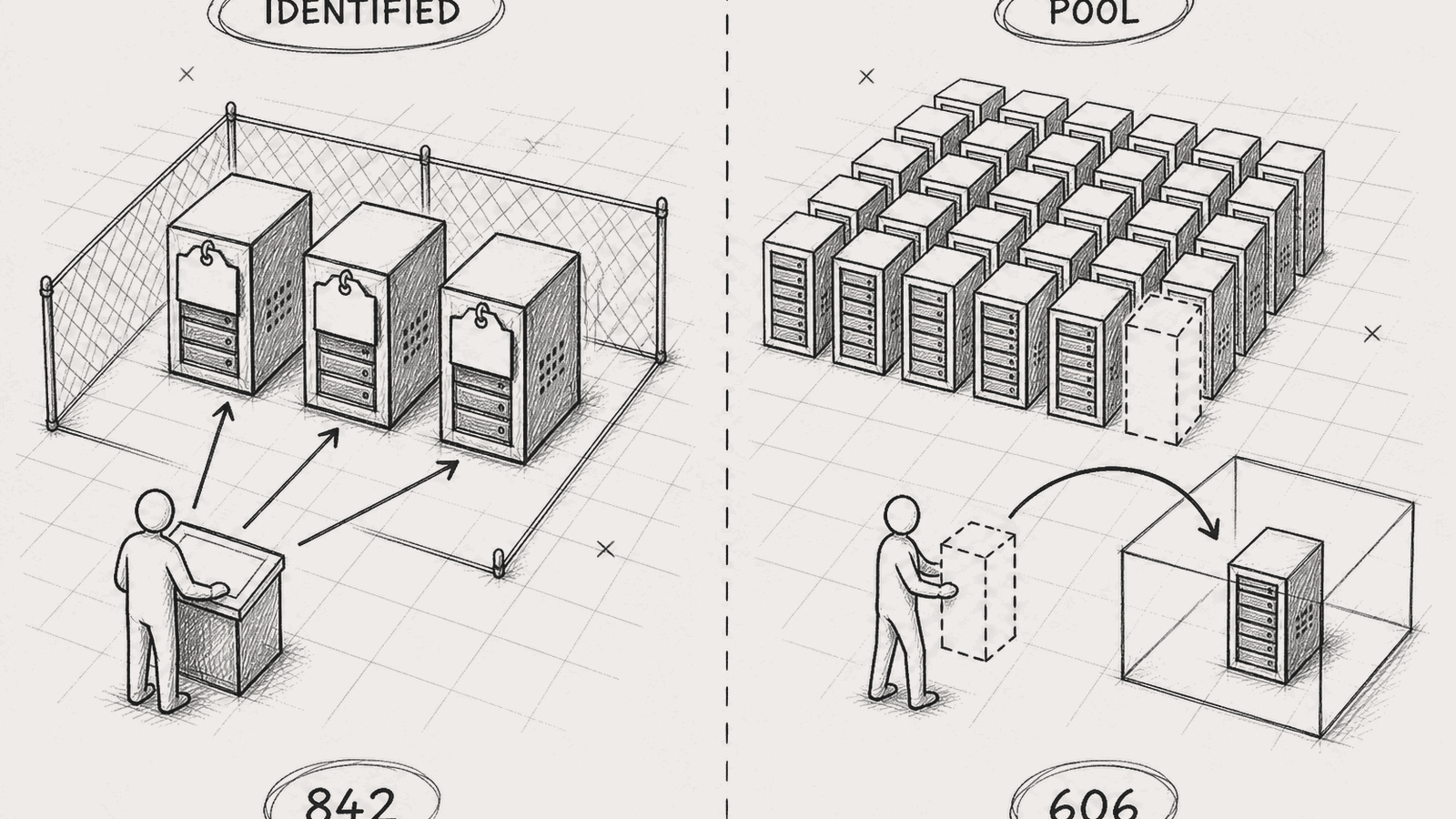
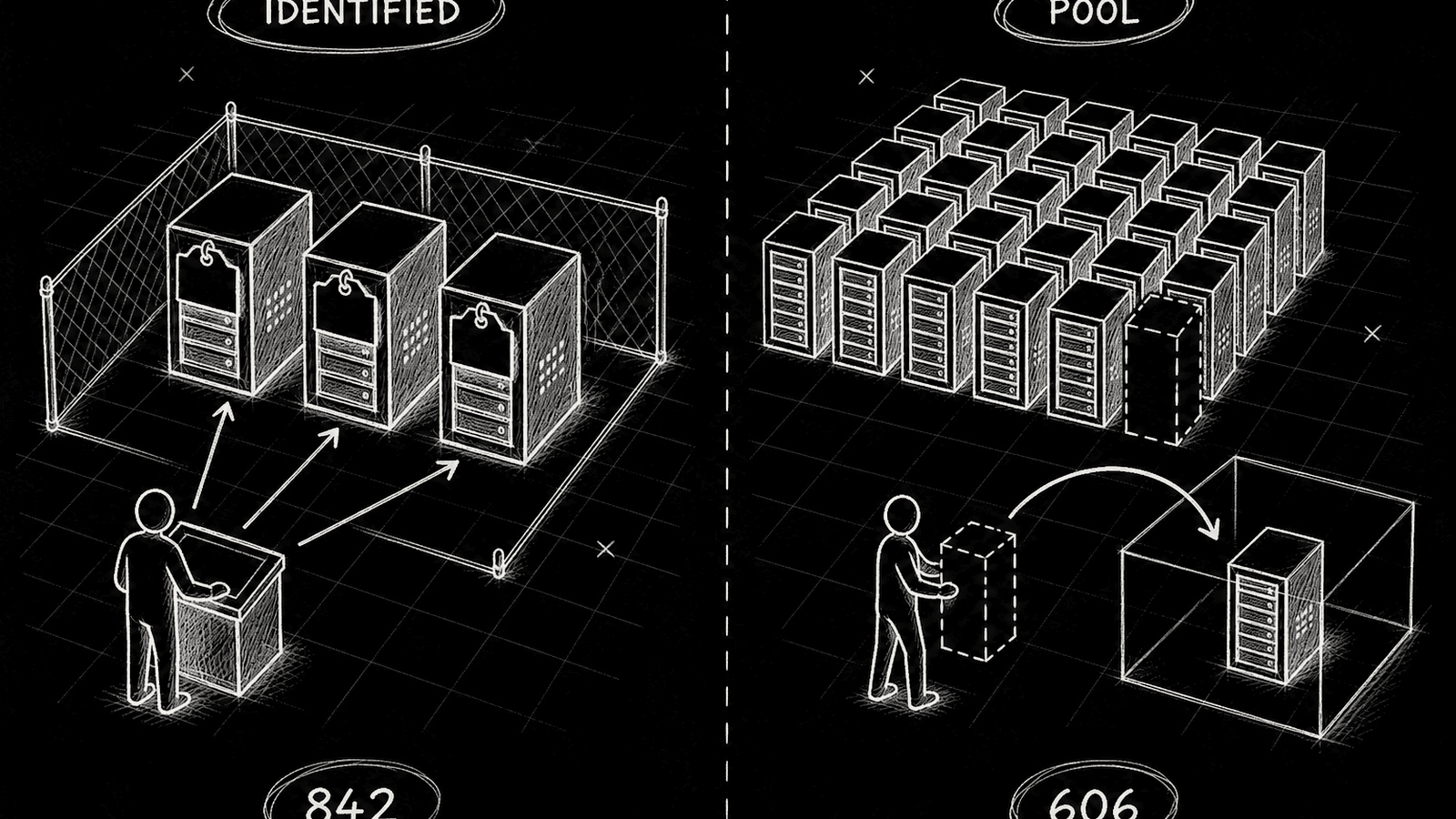
Dedicated product can still be a service if the vendor keeps the pool. A lease requires identified machines under the customer.
| CoreWeave | ChronoScale | Boost Run | |
|---|---|---|---|
| Can the product be called dedicated? | Yes | Yes (all cards to Together AI) | Yes (identified servers, no VM layer) |
| Who picks / swaps machines? | The company keeps the choice of which machines | The company holds the fleet; unsigned capacity can be resold | The contract points to specifically identified servers |
| What is the customer buying? | Cloud service + availability | Compute service priced per GPU-hour; unit price can change | Exclusive use rights over identified GPUs |
| Contract form | Committed capacity / on-demand cloud contract | Master service terms, 12 months, cancellable | GPU lease, non-cancellable initial term |
| Is it take-or-pay? | Committed capacity usually is | No (unit price can change; short term can be cancelled) | Yes (non-cancellable fixed rent) |
| Revenue standard | All 606 (critical audit matter) | 606 | Core is 842 |
| Is there platform software? | Thick (orchestration, storage, Weights & Biases) | Thickening (Token Factory) | Yes — infrastructure-as-code and managed Kubernetes, but thin, and not broken out as revenue |
| When revenue starts | After capacity is delivered and stand-ready begins, over time | Per GPU-hour, monthly bills (usage / invoiced) | From server delivery and enablement, straight-line over the term |
| Prepaid line | deferred revenue + deposits | Mostly monthly; prepayments, if any, go to deferred revenue / contract liability | customer deposits |
| Future-obligation disclosure | RPO + backlog | 606 RPO; short cancellable term, less visibility than committed long contracts | Lease receipts table (operating metrics separately report TCV / ARR) |
| GPUs | Stay on the books and depreciate (in technology and infrastructure, not cost of revenue) | Stay on the books and depreciate | Stay on the books and depreciate |
Besides CoreWeave, another example is ChronoScale, which is more dedicated than CoreWeave — FY2026 cloud revenue about 99.5%, of which customer Together AI, all about 6,144 H100s — and the contract form is still not a lease, and is also not take-or-pay. The filings describe master service terms (from December 2023, renewed March 2026). What is sold is “use of dedicated H100 infrastructure; priced per GPU-hour, billed monthly; all fixed per-GPU-per-hour fees can be changed; term about 12 months, then 60-day rolling, either party can stop on prior written notice.” The company also maintains deployable inventory above signed capacity, which can be sold to existing or new customers — fleet dispatch stays with ChronoScale. This is short-term dedicated cloud, not the Boost Run / CoreWeave committed kind of non-cancellable, multi-year fixed fee that is paid whether or not the capacity is used. Giving a whole cluster to one customer only says the product is very dedicated. It does not imply a lease, and it does not imply take-or-pay. Revenue runs as a cloud service under 606.
Boost Run does have management software. But 842 does not stand up by the absence of software. The Q2 2026 10-Q states that bare-metal GPUs are delivered through an infrastructure-as-code automation platform; vendor case studies write an independent Kubernetes control plane per tenant plus dedicated GPU hardware. The software sits on identified, customer-exclusive GPUs. The quarterlies do not write Kubernetes as the dominant performance obligation. If one day software becomes the thing being sold, the policy states that the arrangement can move to 606.
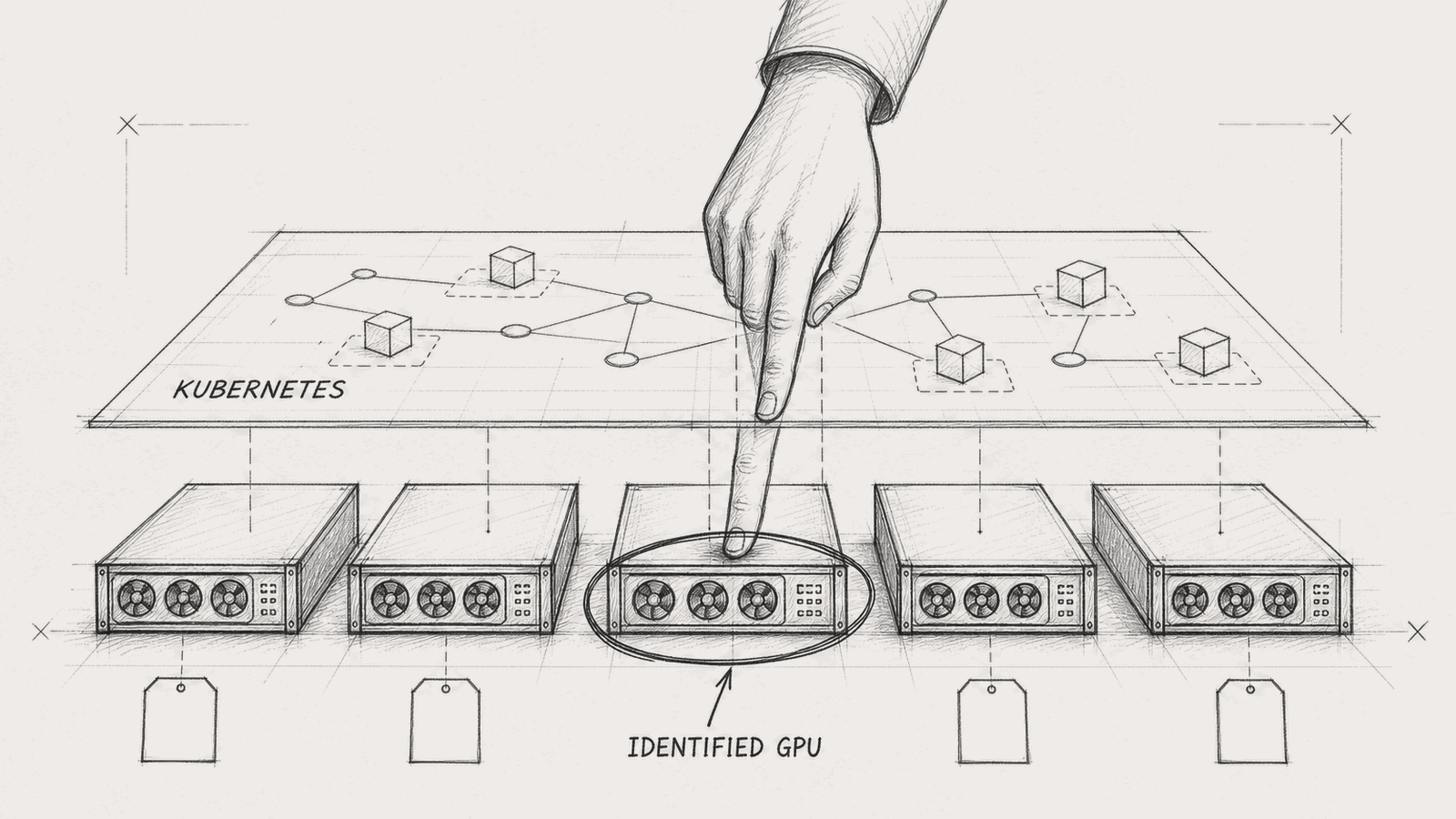
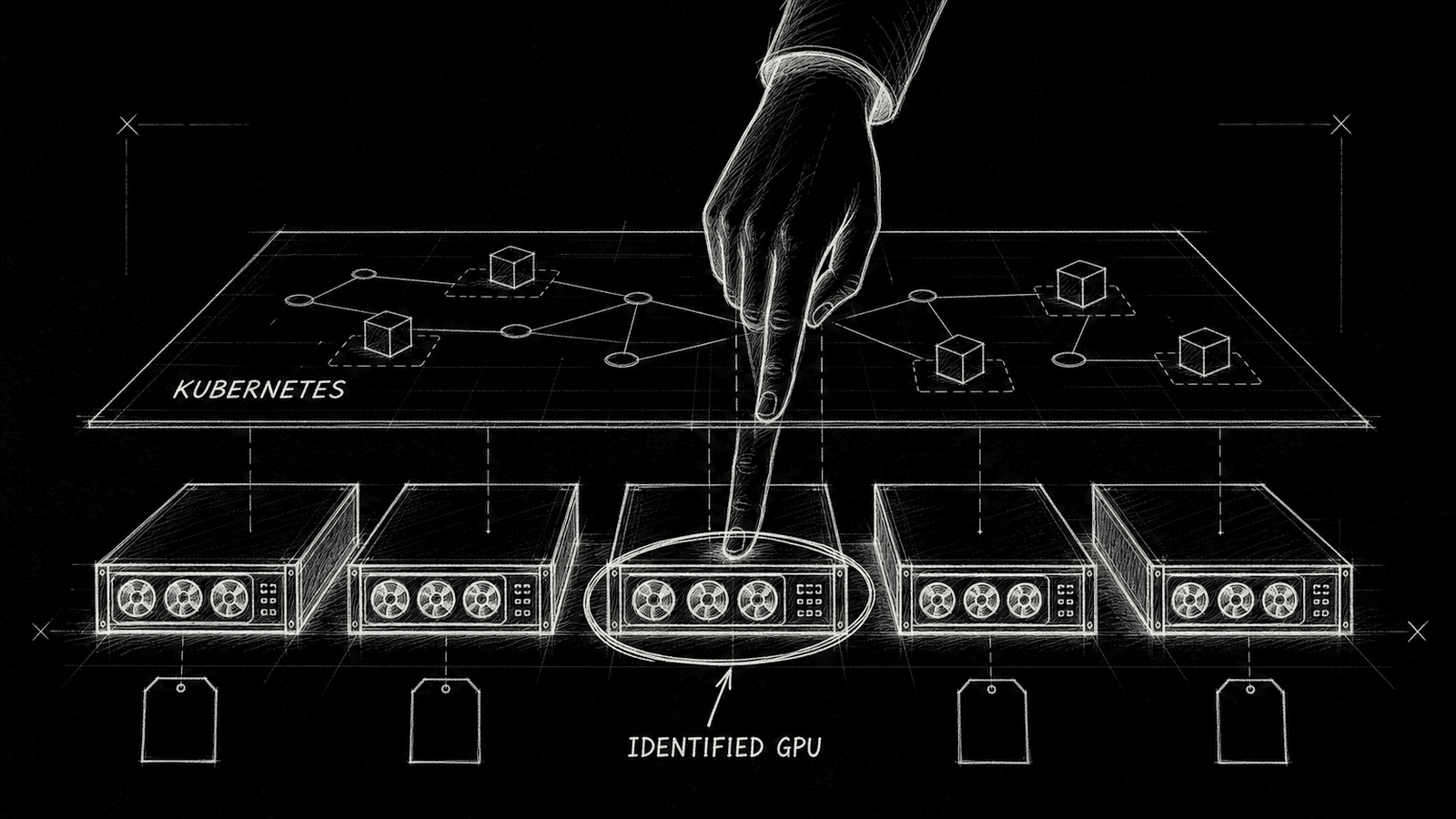
Software on identified exclusive GPUs is not, by itself, a 606 service. Dominance can change.
In short: CoreWeave / ChronoScale dedicated means this capacity is for you to use, we arrange the machines, we keep the service. Boost Run’s 842 is “these identified servers, for this period, are under your command.”
There is a counter-example as well. Digi Power X’s website looks like on-demand cloud and claims about 60-second spin-up; what has already been booked is 24-month exclusive bare metal, booked as 842. So a bare-metal business is not 842, and having a cloud platform is not 606. The necessary and sufficient conditions remain identified asset + customer control of use.
1.4 What actually diverges on the statements
How you sell (contract economics) and how you book (accounting classification) are orthogonal, not two mutually exclusive business models. They have to be split. Take-or-pay / reserved means multi-year fixed fees, paid whether or not the capacity is used. ASC 842 asks whether the customer obtained control of the use of identified servers.
| Contract economics | When it runs as ASC 606 | When it runs as an ASC 842 lessor |
|---|---|---|
| On-demand GPU-hour | Most common (on-demand cloud) | Rare; if still identified to specific machines and the customer controls use, variable rent is booked when it occurs |
| Take-or-pay / fixed long contract | CRWV committed: capacity SLA, company keeps swap rights | BRUN core: non-cancellable rent, identified servers, straight-line lease income |
| Variable usage | 606 variable consideration (CHRN unit price can also change) | DGXX GPU line: operating lease, consideration all usage-based, no material fixed minimum receipts |
Therefore: recognizing revenue under 842 can fully be take-or-pay — BRUN is that path. DGXX’s SubQ is 842 but not take-or-pay. CRWV’s reserved clusters are take-or-pay but not 842.
For operating-lease lessors (BRUN, DGXX’s GPU line) and 606 cloud services (CRWV, CHRN), the GPUs still depreciate on the company’s books. What diverges day to day is which line the revenue sits on, what prepayments are called, and how future contracts are disclosed.
What does not change
Both sides are company-owned GPUs, collecting multi-year money from customers:
| Item | 842 operating-lease lessor | 606 service contract |
|---|---|---|
| Whose balance sheet holds the GPUs | The company, continues to depreciate as PP&E / equipment | Also the company, continues to depreciate |
| When cash arrives | Per contract collections and prepayments | Per contract collections and prepayments |
| Hall rent (company as lessee) | Separately 842 lessee | The same |
Gross margin and EBITDA do not line up mainly not because of 842 vs 606, but because each company puts GPU depreciation in cost of revenue or in technology and infrastructure, and because whether the hall is in cost of revenue. Change the standard and BRUN still presents halls and depreciation as standalone operating expenses; reported gross margin will look extremely high and is not cross-comparable with CRWV.
Income statement: the daily difference is which line, and how it is smoothed
If both are fixed take-or-pay and the term covers the service period, the amount recognized each quarter can be very close (842 straight-line rent ≈ 606 recognized over time). But 842 is not uniformly monthly-averaged: only fixed rent is straight-line; variable rent not indexed to an index or rate is booked in the period it occurs. 606 is not uniformly stand-ready either: committed is often over time; on-demand and hourly is as consumed or as invoiced.
So the difference is not that one recognizes early and the other does not. It is recognition differences at the edges.
| 842 operating lease (BRUN) | 606 service (CRWV) | |
|---|---|---|
| Revenue line | Lease revenue | Cloud / revenue from contracts with customers |
| Fixed rent | Straight-line over the non-cancellable term | Performance obligation over time (committed is often stand-ready, also even) |
| Usage / variable | Variable rent not indexed to an index or rate is booked in the period the facts occur (DGXX on actual usage) | Variable consideration: recognize the amount the company has the right to invoice that month; must estimate service-level concessions, delays, and resalable capacity |
| Power, support | If the lease component dominates, non-lease components can be combined into rent | May split into multiple performance obligations and allocate on standalone selling price (CRWV combines compute facilities and support into one PO because they are delivered over the same period) |
| Undelivered | Servers not yet delivered and enabled → the lease term cannot start | Capacity not ready → cannot recognize that portion of 606 revenue (it sits in remaining performance obligations) |
Cash-flow statement: the standard difference is almost invisible
Money collected from customers, for both operating leases and 606, enters operating cash flow (an increase in prepayments is also working capital). Buying GPUs and finance-leasing equipment in are investing / financing on both sides. 842 vs 606 does not move GPU purchases out of investing. The visible difference is mainly whether the working-capital account is called deposits or deferred revenue.
Balance sheet: prepayment names differ; a net investment in the lease is usually absent
| 842 operating lease | 606 | |
|---|---|---|
| Equipment | Stays on the books, depreciates | Stays on the books, depreciates |
| Customer pays first | deferred lease income or customer deposits (BRUN deposits at Q2 end about USD 128.4M; DGXX deferred lease income USD 2.51M) | deferred revenue / contract liability (CRWV YE2025 about USD 8.2B) + sometimes also deposits |
| Performed, not yet invoiced | Rare (operating leases are straight-line) | contract asset |
| Mandatory disclosure | Maturity table of future undiscounted lease receipts | RPO (remaining performance obligations) maturity table |
An operating-lease lessor does not recognize a lease receivable. The equipment stays on the books and depreciates; customer prepayments are deposits or deferred lease income. BRUN, for example, records the difference between recognized revenue and contract payments as customer deposits; CRWV records cash collected but not yet delivered as deferred revenue. Economically both are money in and obligation in. The account names and the regulatory disclosure templates differ. BRUN’s TCV cannot be treated as CRWV’s RPO.
Pitfalls in the filings
There are two kinds of pit. One is using the wrong ruler: quarterly income-statement amounts can be close, but RPO, backlog, and TCV are not the same thing.
RPO, backlog, and TCV all say how much money is left on the contract, but their in-statement meanings are not the same.
| Who requires it | How a contract gets into the number | What it is not | Example | |
|---|---|---|---|---|
| RPO (remaining performance obligations) | ASC 606 mandatory. Companies on 606 must disclose it | Already a customer contract, and the performance obligation is not yet complete. Capacity usually has to meet the company’s recognition conditions before it moves from “signed” into RPO. Variable consideration still has to pass the constraint; unexercised options generally do not enter | Not accounts receivable, not revenue already in the income statement, and not cash the customer has already paid in full. The collected-but-undelivered piece on the balance sheet is called deferred revenue and is only a subset of RPO | CoreWeave: YE2025 USD 60.7B, Q2 2026 about USD 103.7B. Deferred revenue YE2025 about USD 8.2B — the vast majority of RPO has not been paid by the customer yet |
| Backlog (revenue backlog) | Nobody requires it. Company-invented non-GAAP | CoreWeave’s definition: RPO plus committed estimates that still lack delivery, available capacity, and similar conditions. There can also be commitments that are “already signed and have not even entered backlog” | Not unconditional cash, and not a “truer” contract than RPO. Backlog definitions cannot be compared across companies | CoreWeave Q2-end backlog USD 104.2B, only USD 0.5B above RPO at the time (almost all already met RPO conditions). YE2025 backlog USD 66.8B vs RPO USD 60.7B, a USD 6.1B gap still stuck on delivery conditions. Early Q3 another more than USD 25B of new commitments, which the company writes are not in the 104.2B — they cannot be added to 129B |
| TCV (total contract value) | Nobody requires it. Management metric | Face value or remaining face value of signed contracts, regardless of the 606 performance-obligation test and regardless of whether servers have been delivered and enabled | Not RPO, not remaining lease payments in an 842 footnote, and not annualized revenue | Boost Run quarter-end USD 1.9B (about 0.94B at listing). The call counts only about USD 0.4B of that as already powered — most of the same 1.9B has not started contributing rent |
| Remaining lease payments | ASC 842 mandatory footnote. Operating-lease lessors disclose it | Future fixed rent to be collected, undiscounted. Variable usage not indexed to an index or rate does not enter | Not RPO. There is no 606 concept of a “performance obligation” | Boost Run has fixed rent, so it has this table. Digi Power X’s GPU line states consideration is all variable, no material future fixed minimum lease receipts — the 842 footnote is almost empty, which does not mean there is no contract |
Also: ARR is a flow (annualizing current or forward revenue). The four above are stocks (a lump of money still left on the contract). Boost Run mid-year ARR USD 145M and TCV USD 1.9B cannot be treated as each other.
So the gap between CoreWeave’s RPO and Boost Run’s TCV is not only orders of magnitude. It is recognition conditions: one has to pass the 606 performance-obligation test, one is management face value, and one can enter TCV before the servers are even racked. Comparing the two on price-to-sales or enterprise value / RPO is putting a service company’s remaining performance obligations onto a lessor’s contract stock.
The other kind of pit is a few lines inside the statements that make the amounts themselves move: variable consideration, contract changes, software taking dominance.
| Lens | 606 company | 842 lessor |
|---|---|---|
| Visibility of future revenue | RPO (606 mandatory) + company-defined backlog | Remaining lease payments in the footnote; the TCV / ARR BRUN talks about externally is a management metric, not RPO |
| Prepayment | Contract liability, transferred into revenue after delivery | Prepaid rent amortized straight-line into lease income |
| Usage / variable | Variable consideration: current rate × hours, still has to pass the constraint (ChronoScale unit price can change) | Variable rent not indexed to an index or rate is booked in the period it occurs; there can be no fixed minimum receipts (Digi Power X’s GPU line) |
| Repricing, shortening, swapping machines | 606 modification: prospective or cumulative catch-up | 842 lease modification: whether it is a separate new lease, whether to remeasure |
| Whether software dominates | The platform can thicken without retesting lease dominance | If a non-lease component becomes dominant, the whole arrangement moves to 606 (Boost Run’s policy says so) |
When the contract is fixed take-or-pay and the term covers the service period, 842 straight-line ≈ 606 over time, and quarterly amounts can be very close. Three other lines in the statements break that approximation. That is “the numbers jump” — not a second story.
Usage / variable. ChronoScale: 606, unit price can change, revenue = current rate × hours; uncertain money cannot be recognized early (variable-consideration constraint). Digi Power X’s GPU line: 842, consideration is almost all usage, book what is used, the footnote states no material fixed minimum receipts. Utilization drops and revenue drops immediately; there is no take-or-pay floor. Rate changes and usage changes move both sides; 606 has an extra hoop on “how much can be recognized,” and this 842 has no floor. So Digi Power X cannot be compared sideways with Boost Run / CoreWeave fixed long contracts.
Repricing, shortening, swapping machines. Refreshing GPUs, shortening the term, adding modules — the commercial negotiation can be identical. 606 runs a contract modification (sometimes only future periods, sometimes a catch-up); 842 runs a lease modification (whether it is a new lease, whether to remeasure). The same commercial memo moves both income statements.
Whether software dominates. Boost Run’s quarterlies today write: the lease component dominates; infrastructure-as-code and Kubernetes are combined into rent; the whole arrangement is 842. The policy also writes the inverse: if software becomes the thing being sold, the whole arrangement moves to 606. Cash can be unchanged; the income statement moves from lease revenue to cloud-service revenue — investors will suddenly feel it “became a cloud company,” when only the dominant component changed.
The 842 / 606 choice
It is not which standard is better, and it cannot be picked as an accounting policy. How the contract writes control rights is how the standard follows. The public market almost all runs 606 because two things stack.
Commercially, the supplier does not want to give up substitution rights. Keeping swap and orchestration is what makes oversubscription, failed-node migration, and selling the platform layer (Kubernetes, tokens, inference routing) possible. Give up substitution and the contract looks more like a lease: revenue elasticity falls, the asset stays on the books, residual risk stays with the lessor. CoreWeave, Nebius, and DigitalOcean choose to productize a service. Boost Run chooses to hand identified machines to the customer.
Audit incentives lean 606. Once a large customer’s “dedicated cluster” is seen as an identified asset + control, it has to run 842: straight-line rent, disclose remaining lease payments, depreciate the asset as equipment on the balance sheet. The existence of a critical audit matter shows this is a contestable judgment — the larger the scale and the more the contract looks like exclusive whole-cluster use, the less willing the auditor is to write it as a lease. For a smaller company, if the contract is truly written as exclusive identified servers, 842 is cleaner. Boost Run is that path.
Control rights written into the contract buy a set of outcomes:
Run 606 (CoreWeave, ChronoScale, Nebius) and keep swap, dispatch, and refresh; you do not have to run a lease modification every time a batch of cards changes; compute facilities, support, and software can be combined into one performance obligation; thickening the platform does not require retesting who dominates; the market prices it as a cloud company, with mandatory RPO disclosure. The cost is that classification is watched; if it flips to a lease, especially sales-type, the income statement can be punched through; undelivered capacity cannot be recognized; variable consideration is constrained. RPO visibility is high, but RPO is not cash, and classification risk is a left tail.
Run an 842 operating lease (Boost Run core, Digi Power X’s GPU line) and the contract and the legal story match: these identified machines, for this period, are under the customer’s command; under fixed rent there is an undiscounted lease-receipts table, harder than management TCV. The cost is that substitution rights are given away; machines cannot be pulled for the company’s own capacity; if software becomes dominant the whole arrangement may move to 606; there is no RPO, and the TCV / ARR told externally is a management metric; refresh and shortening run as lease modifications. When usage is all variable (this Digi Power X contract) there are no material fixed minimum receipts, so visibility is worse than CoreWeave-style take-or-pay 606. Short-lived GPUs that slide into sales-type are especially easy to leave the balance sheet.
2. Boost Run (NASDAQ: BRUN)
2.1 BRUN’s business
Boost Run is the cleanest bare-metal label among U.S. small-cap NeoClouds: the product defaults to 100% bare-metal GPU, and the revenue core is an ASC 842 operating lease. The Q2'26 10-Q customer contracts: a right to use specifically identified GPU servers, and the customer has an exclusive right to control the use (workload, utilization, who can log in). Power, network, security, and customer service are non-lease components, but the lease dominates, so the whole arrangement is an 842 operating lease. Managed Kubernetes has no separate revenue line. Blockchain rewards run 606.
| Period | Lease (USD k) | Blockchain (USD k) | Total (USD k) | Lease % |
|---|---|---|---|---|
| FY2025 | 21,224 | 5,663 | 26,887 | 78.9% |
| Q1'26 | 10,615 | 341 | 10,956 | 96.9% |
| Q2'26 | 30,417 | 721 | 31,138 | 97.7% |
| H1'26 | 41,032 | 1,062 | 42,094 | 97.5% |
Purity lifted from FY25 ~79% to a run-rate ~97%. H1 blockchain is about 2.5%. The miner tail was drowned by lease scale; this is not an accounting-policy change.
On the service layer overall: as noted above, software is not 606, and the quarterlies do not write Kubernetes as the dominant performance obligation.
| Layer | Technology | Note |
|---|---|---|
| Compute | 100% bare-metal NVIDIA, no VM layer | Core product |
| Orchestration | vCluster managed Kubernetes; GPU Operator, Ray, KServe | Case studies claim go-live in under 45 days |
| Network | Netris automatic per-tenant turn-up and isolation | |
| Tenant isolation | Independent control plane per tenant (Private Node) + dedicated GPU hardware | Software sits on identified, customer-exclusive cards |
| InfiniBand | Public materials do not clearly confirm | Low confidence |
| Console / API | Claims “delivery in minutes” | Website |
2.2 Founding, Blue Fire lineage, and listing
| Date | Event |
|---|---|
| 2007 | Andrew Karos co-founded Blue Fire Capital: quantitative trading, later 13 data centers, 7 countries, revenue above USD 500M, using more than USD 500M of credit lines for high-frequency trading |
| 2020 | Galaxy Digital acquired Blue Fire; Karos became managing director and head of electronic trading |
| 2023-08-16 | Karos self-funded Boost Run LLC; brought CIO Tynan Wilke and COO Harry Georgakopoulos out of Galaxy |
| 2025-09-16 | Announced a merger with Willow Lane Acquisition (NASDAQ: WLAC); announced post-money USD 614M |
| 2025-10-14 | Signed government / public-sector distribution with Carahsoft |
| 2026-01-13 | First amendment to the merger agreement: board 5 company + 2 SPAC designees; close date extended to 2026-06-30 |
| 2026-02-27 | Completed a USD 11M February bridge loan |
| 2026-04-22 | Signed a USD 1.44B five-year purchase with Dell (including Dell Financial Services financing) |
| 2026-04-30 | Willow Lane shareholders approved the merger |
| 2026-05-08 | Merger completed; redomiciled from Cayman to Delaware |
| 2026-05-11 | Nasdaq listing BRUN / BRUNW |
2.3 Management and governance
| Role | Name | Background | Cash compensation |
|---|---|---|---|
| CEO, founder, chairman | Andrew Karos | Blue Fire (2007) → Galaxy head of electronic trading (2020–2023) → self-funded Boost Run | Base USD 1 / year + earnout equity |
| CFO | Erik Guckel | University of Chicago MBA; Illinois PhD, Wisconsin undergrad (chemical engineering); KeyLogic, KBR, Honeywell UOP | Base USD 400k + 75% target bonus + equity |
| COO | Harry Georgakopoulos | University of Chicago financial mathematics, NTUA electrical; Motorola; Blue Fire digital-assets head; Galaxy MD; COO from 2024-04 | About USD 250k order of magnitude, to be confirmed in the 10-K |
| CTO | Daniel Gormley-Rahn | Ten years in networks and infrastructure; Own Company networks across five global sites; claims thousands of GPUs deployed in production | Not disclosed |
| CIO | Tynan Wilke | About 20 years of trading infrastructure; Blue Fire / Galaxy lineage | Not disclosed |
The core comes from Blue Fire → Galaxy quantitative-trading infrastructure: they know how to run multi-site halls, are used to high-leverage capital-intensive operations, and understand crypto assets. What is missing is a traditional enterprise-IT sales network and hyperscale-cloud relationship depth. Karos’s base salary is one dollar, about 90% voting control — incentives aligned, governance concentrated.
The board is 7 people (5 company designees + 2 SPAC designees), zero independent directors, a Nasdaq controlled company, exempt from an independent-director majority and committee independence. SPAC chairman B. Luke Weil received 336,000 advisor shares after the merger. This is common in early de-SPAC. Once the contract book is in the billions, the market will want more mature governance.
2.4 GPU fleet, NVIDIA, and procurement
Boost Run’s cards enter the books through three channels: cash purchase (equipment, net), finance-leased in (right-of-use assets, the core), and a 2024 sale-leaseback that already sold title and leased the machines back. Customer payments sit on the other side: operating-lease rent.
| GPU model | Status |
|---|---|
| NVIDIA B300 | Large orders signed: Thinking Machines 5,000 (625 machines × 8); Customer B 1,536 (192 machines × 8) |
| NVIDIA B200 / H200 / H100 | Sellable on the platform; the 424B3 writes 2026 deployment as an RTX Pro / B200 / B300 mix |
| RTX PRO 6000 / L40S / ADA 6000 | Sellable on the platform (inference-leaning) |
| Deployment cadence | Intends about 3,000 cards a quarter in FY2026, constrained by supply chain and hall cadence |
| Fleet total | “Thousands”; has implied YE26 19K+ |
Coverage runs from inference (L40S / ADA) to training (B200 / B300 / H200). The B300 is Blackwell Ultra (288GB HBM3e). All hardware on the books today is entirely leased to customers as operating leases. Of the USD 54.9M net owned equipment at 6/30, another USD 28.0M is fixed assets not yet placed in service — cash bought, not yet provisioned. The fleet that is actually spread out sits on finance-lease right-of-use assets, USD 328.5M, estimated at B300 prices at the time of purchase.
NVIDIA: Preferred Cloud Partner; Exemplar Cloud covers B200 + GB300, one of about 15 certified globally, and among listed NeoClouds currently CoreWeave, Nebius, Boost Run, and IREN. Relationship depth is less than Nebius (about USD 2B of equity) and CoreWeave’s historical shareholder relationship. The company claims it procures to NVIDIA reference architecture (switches and optics also through OEMs) to lower customer go-live risk.
The Dell USD 1.44B is a five-year purchase commitment for cards and storage, then leased to customers; 2026 full-year GPU deployment gross capex is about USD 1.0–1.2B.
| Date | Procurement update |
|---|---|
| 2025-12-15 | Next-generation GPU orders (Dell + “existing GPU vendors”); equipment financing with Dell and Data Sales; Q1'26 deployment expectation raised from USD 100M to at least USD 250M |
| 2026-04-22 | Signed USD 1.44B with Dell Technologies; further developed the financing relationship with Dell Financial Services, “deploying capital flexibly to the cadence of customer contracts” |
| 2026-04-17 | A separate five-year Dell Partnership Agreement, minimum purchase commitment |
| 2026-08-14 | Dell 1.44B essentially fully committed and allocated; separately working a strategic compute-hardware purchase of about USD 4–5B, multiple OEMs |
| 2026-08-14 | Karos: four purchase agreements signed publicly; Dell 1.44B essentially used up; 4–5B scale in discussion, naming Dell / Lenovo. CFO: continuing new structures beyond current equipment financing |
Finance lease: pay every month, title may transfer at the end
| Pay every month | Legal title | Accounting (lessee) | |
|---|---|---|---|
| Operating lease (car rental, sale-leaseback) | Yes | Usually does not transfer; can return the car at the end | ROU amortized over the term; the asset is not treated as a purchase |
| Finance lease, with a purchase option that is almost certain to be exercised | Yes | Title may transfer at the end, but an exercise price still has to be paid | 842 treats it as a buy: the exercise price enters the liability from day one; the asset depreciates over economic life |
| Finance lease, no transfer and no bargain purchase | Yes | Still the lessor’s at the end | Can still be a finance lease — as long as the term is long enough, or the present value of payments is almost the purchase price |
Boost Run is the landlord to customers (operating-lease income); it is the tenant to Dell DFS / Data Sales (finance-lease cost). GPU depreciation policy is computer hardware 4 years. Finance terms are 30–36 months; 36 months is already about 3/4 of life. So even if the contract does not gift title, accounting is still often a finance lease.
An 842 lessee is in a finance lease if any one of the following holds; “title transfers at the end” is not required: (1) ownership transfers at the end of the term; (2) there is a bargain purchase option and the lessee is reasonably certain to buy; (3) the term is a major part of remaining economic life (common rule of thumb about 75%); (4) the present value of payments is substantially all of fair value (common rule of thumb about 90%); (5) the asset is so specialized that the lessor has no alternative use if it takes it back. Boost Run’s 2024 and 2025 vintages ran on (2): the annual report states the company is reasonably certain to exercise the available purchase options. The 2026 set of 34, the quarterlies do not repeat that sentence.
| Vintage | Count | Start | Term | Undiscounted fixed payments | Prepaid to lock the line | End purchase / title |
|---|---|---|---|---|---|---|
| 2024-01 sale-leaseback | 1 | 2024-01 | 36 months | Monthly rent USD 16k (about 0.58M over three years) | Sale price USD 590k | Title already transferred to a third party; Boost Run leased it back, operating lease |
| 2024 H1 finance leases | 4 | H1 2024 | 36 months | Not broken out | Not broken out | Can buy at end: the lower of then-fair-value and “a percentage of cost agreed at signing”; company considers exercise almost certain |
| 2025 Q1 finance leases | 6 | 2025 Q1 | 30 months | USD 23.8M | USD 0.55M already paid in 2024 to lock these 6 | See next row (same option set as the full-year 9) |
| 2025 Q2 finance leases | 3 | 2025 Q2 | 30 months | About USD 16.8M (= full-year 40.5 − Q1 23.8) | H1'25 three contracts prepaid USD 2.3M in total | At end, three choices: buy at fair value, capped at 20% of acquisition cost; renew; or return the equipment. Company considers purchase almost certain |
| 2025 full-year finance leases | 9 | Q1–Q2'25 | 30 months | USD 40.5M | As above | Same |
| 2026 Q1 finance leases | 12 | 2026 Q1 | All 30 months | USD 55.7M | 5 contracts: Q1 1.95M + 2025 Q4 1.86M; remaining 7 paid another 9.38M in 2026-04 | Quarterly does not repeat purchase terms |
| 2026 Q2 finance leases | 22 | 2026 Q2 | 30–36 months | USD 240.2M | 13 contracts prepaid USD 26.2M; another 9 do not disclose a prepayment | Quarterly does not repeat purchase terms |
| 2026 H1 newly signed | 34 | USD 295.9M | Prepayments lift ROU above remaining liability | 424B3 only says equipment financing “generally includes an end-of-term purchase option,” not contract by contract |
What can be dug from public sources: all GPU leases. They cannot be mapped one-for-one to vendors, but timing, term, and price are basically visible.
| Channel | Role | Public information |
|---|---|---|
| Dell Financial Services | OEM seller financing, tied to the USD 1.44B purchase | Form 425: flexible deployment to the customer-contract timetable; the Q2 earnings release puts the 34 finance leases and Dell “allocated” in the same paragraph |
| Data Sales | Independent IT-equipment lessor | 2025-12-15 press release: “new and existing” financing relationships; self-describes asset-backed leasing and internal credit approval |
| 2024 sale-leaseback counterparty | “Third party” | Appears only in the 10-K |
| 2024 four finance-lease counterparties | Not disclosed | 10-K |
Rates: YE2025 finance-lease weighted discount rate 6.62% (still 11.93% at YE2024), weighted remaining term 1.8 years.
Almost no need to put up the full cash on signing day: the asset (ROU) and the liability (remaining principal) grow at the same time. H1 equipment cash purchases USD 29.6M, finance-lease prepayments (investing) USD 2.8M; “ROU assets obtained in exchange for new finance-lease liabilities” USD 268.3M (Q1 already booked USD 60.1M in a single quarter, Q2 about another USD 208M). The large remainder is cards leased in.
| 2025-12-31 | 2026-03-31 | 2026-06-30 | |
|---|---|---|---|
| Finance-lease ROU | USD 33.8M | USD 94.1M | USD 328.5M |
| Finance-lease liability (current) | 12.7 | 38.1 | 82.2 |
| Finance-lease liability (non-current) | 17.7 | 48.6 | 155.9 |
| Liability total | USD 30.4M | USD 86.8M | USD 238.1M |
| Owned equipment, net | 14.9 | 30.8 | 54.9 |
| Of which: not yet placed in service | 8.1 | 28.0 |
Assets USD 328.5M exceed liabilities USD 238.1M mainly because of prepayments before commencement, and because ROU has started to amortize while the liability is measured at remaining principal. Owned equipment USD 54.9M is the small cash-bought stub, and half of it is not yet in service.
Q2 finance-lease undiscounted maturity table:
| Calendar year | Still to pay the lessor (USD k) |
|---|---|
| Rest of 2026 | 45,451 |
| 2027 | 103,529 |
| 2028 | 99,826 |
| 2029 | 12,051 |
| Total | 260,857 |
| Less: implicit interest | (22,731) |
| Present value = liability on the books | 238,126 |
About USD 45.5M left in 2026, about 100M a year in 2027–2028 — this is the principal-and-interest wall for the next two and a half years. 2029 is only USD 12.1M, which matches “longest 36 months, commenced only in Q2 2026”: this vintage clears in the first half of 2029. MD&A: as of June 30, operating + finance leases still to pay by December 31, 2026 total about USD 58.7M (finance 45.5 + operating 13.3).
2.5 Data centers: where the operating-lease right-of-use asset comes from
There is also an operating-lease right-of-use asset of USD 122.0M on the books (only USD 8.8M at YE25). That line is not a lessor ROU created by renting GPUs out. An operating-lease lessor does not derecognize the asset and does not build a separate ROU for being a landlord.
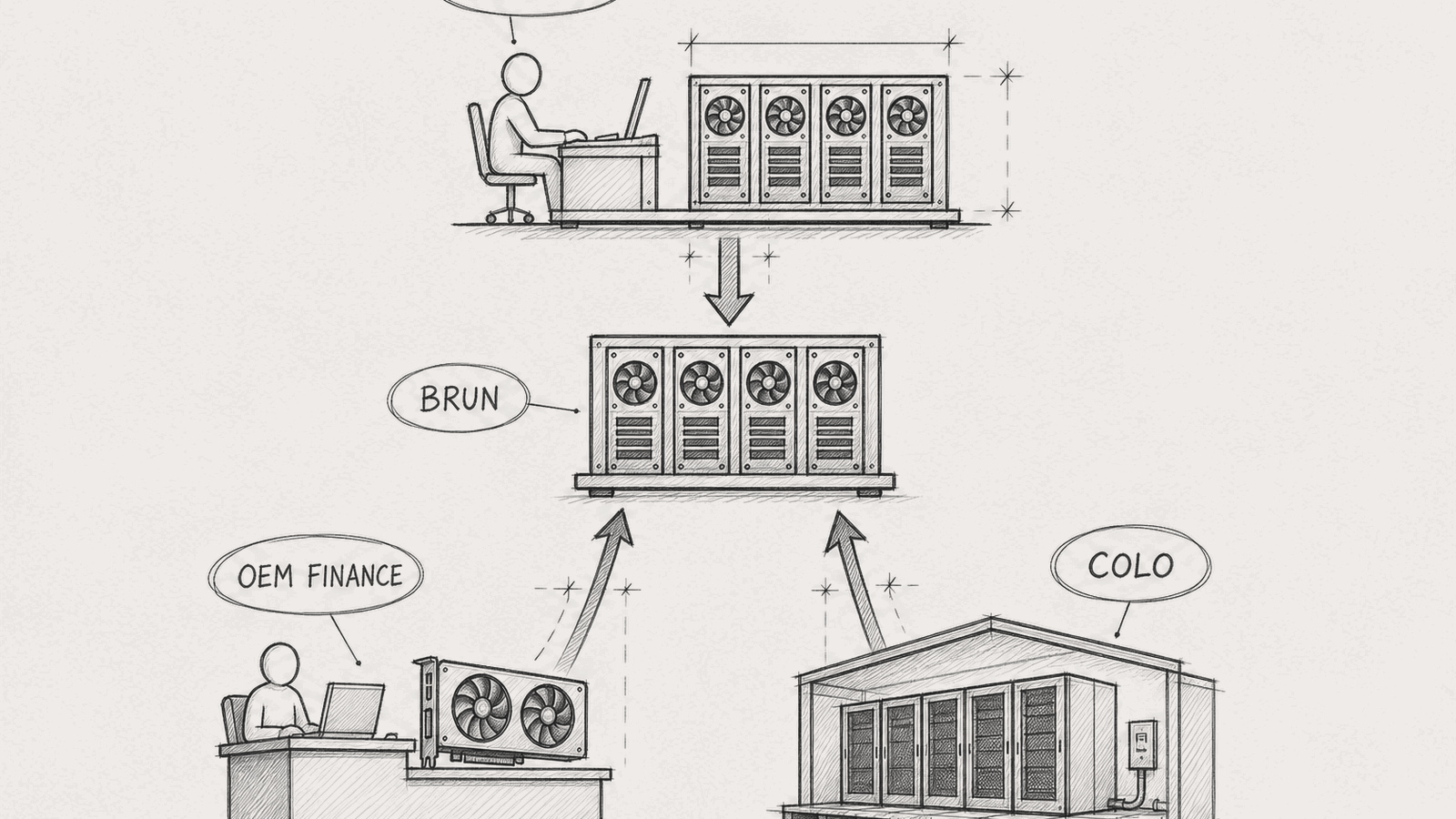
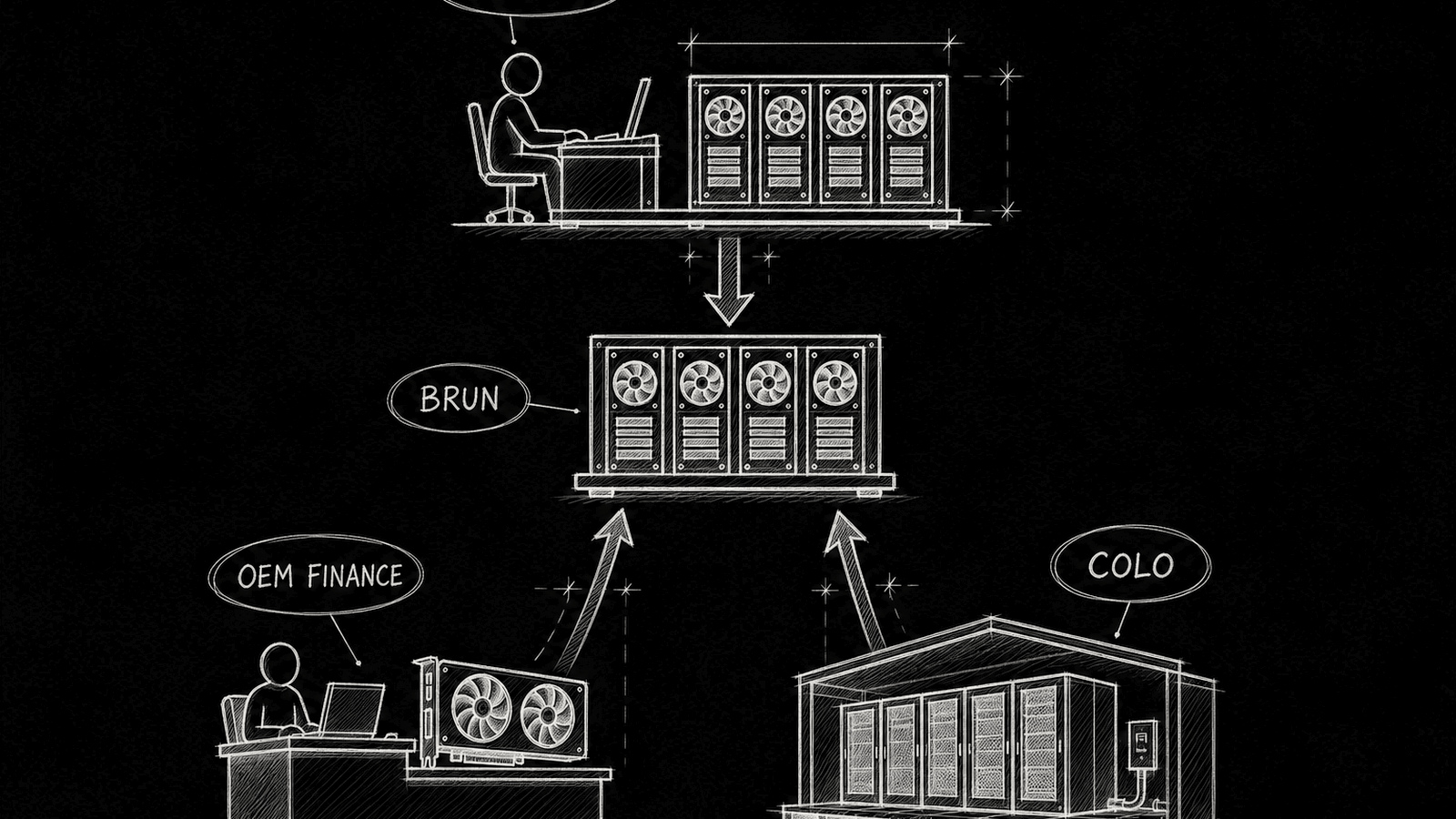
Three roles, three contracts. Customer rent is income. OEM finance and colo are costs.
| Role | Contract | What is on the 6/30 books | What is not |
|---|---|---|---|
| To the customer: operating-lease lessor | GPU servers leased out | Revenue: lease revenue. Asset: GPUs still depreciate on finance-lease ROU / owned equipment | Does not create a “lessor right-of-use asset.” An operating-lease lessor does not derecognize and does not build a separate ROU |
| To Dell / Data Sales: finance-lease lessee | GPUs leased in | Finance lease ROU USD 328.5M / liability USD 238.1M | See 2.4 |
| To the hall landlord: operating-lease lessee | Leased cabinets, power capacity, space | Operating lease ROU USD 122.0M / liability USD 119.5M | Power, bandwidth, and excess usage are variable leases and do not enter ROU |
USD 122M is almost all colo: the company does not buy halls. It leases dedicated cabinets from landlords such as TierPoint and puts finance-leased GPUs in them. The 2024 GPU sale-leaseback (monthly rent USD 16k, operating lease) and the Chicago office also entered this line; the office expired in 2026-02. Relative to a 120-million hall book, those two are rounding.
Commenced hall leases already on the books
Q2 10-Q Note 12: hall leases give a minimum power capacity; power above the threshold is a variable lease and does not enter the right-of-use asset. H1 newly signed four colo contracts:
| Vintage | Count | Term | Undiscounted fixed payments | Prepaid / LC | Q2 2026 |
|---|---|---|---|---|---|
| Two each in 2024 and 2025 | 4 | 3 years each | Not broken out per contract; YE25 remaining payments on all operating leases only USD 10.0M | In the old book | On. YE25 operating ROU only USD 8.8M |
| 2026 Q1 | 2 | 3 years + 7 years | USD 6.3M + USD 113.8M | Prepaid 0.37M + 6.79M; the seven-year needs a standby LC (YE25 already issued USD 6.4M) | On. The seven-year is the main reason ROU jumped from 8.8M to Q1 107.4M and then to 6/30 122.0M |
| 2026-04 / 05 | 2 | Both 7 years | USD 42.8M + USD 184.0M | Not on the books at 6/30 | Not on. Target commencement 2026 Q3; Note 12 expressly excludes them |
| Chicago office | 1 | Expired | — | — | Ended 2026-02 |
| 2024-01 GPU sale-leaseback | 1 | 36 months, to about 2027-01 | Monthly rent USD 16k | Sale price 0.59M | On, small |
H1 “ROU assets obtained in exchange for new operating-lease liabilities” USD 113.4M is the same order of magnitude as the Q1 two-contract undiscounted total of about USD 120M (especially the seven-year USD 113.8M): one seven-year hall began to be performed. Q1 hall cost by site: Durham about USD 0.7M, Charlotte about 0.5M, Minneapolis about 2.7M — Minneapolis is almost the entire increment that quarter, booked in the same quarter as the seven-year large contract.
6/30 operating-lease undiscounted maturities (already on the books, excluding not-yet-commenced):
| Calendar year | To hall landlords (USD k) |
|---|---|
| Rest of 2026 | 13,288 |
| 2027 | 28,942 |
| 2028 | 25,974 |
| 2029 | 21,352 |
| 2030 | 17,094 |
| Thereafter | 38,799 |
| Total | 145,449 |
| Less: implicit interest | (25,928) |
| Present value = operating-lease liability | 119,521 |
Finance leases clear in 2029; operating leases still have USD 38.8M thereafter — the seven-year halls run into the 2030s. Restricted cash USD 13.0M is the same order of magnitude as hall letters of credit, not operating cash that can be spent freely.
Signed, not yet on the books
| Contract | Date | Capacity / area | When it starts | Will it lift ROU again |
|---|---|---|---|---|
| Two seven-year colo | 2026-04, 05 | MW not disclosed | Target 2026 Q3 | Yes. Undiscounted USD 42.8M + 184.0M, larger than the entire operating-lease liability now |
| Rock Island, IL | 2026-07-16 | About 10,000 sq ft; 6.5 MW total load / 4 MW critical load | Target 2026-09-01; initial 60 months, extendable another 36 | Full-fit monthly rent about USD 0.66M, 80% floor ≈ 0.53M; 2.5% step-up after three years; landlord delivery-cost cap about USD 41M or the delivery schedule; parent guarantee of six months’ rent |
| Pryor, OK | 2026-08-13 | MW not broken out in the 10-Q | Subsequent event | Yes; terms not itemized |
| 10X Infrastructure | 2026-08-14 press release | First phase 20 MW already-powered site, target Q4'26; two more sites planned to 111 MW / 2027 | Not yet commenced | Not on the 6/30 books. This is a capacity narrative, not a booked liability |
Partners: TierPoint and others + 10X. Operating six sites (Seattle, Durham, Dallas, Richardson, Charlotte, Minneapolis); another three in the next six months. Reachable-power narrative partners +125 MW, total 253 MW — “accessibility” is not installed sellable. St. Louis and Breinigsville, PA are planned expansions.
2.6 Customers and contracts
TCV USD 1.9B is a management metric, not RPO. The latest call shows average term about 3 years, average prepayment about 22%, every deal collects a prepayment.
| Date | TCV / contract stock |
|---|---|
| YE2025 | About USD 120M (IR deck comparison column) |
| Listing about 2026-05-11 | About USD 940M |
| 2026-06-30 / Q2 release | USD 1.9B |
| Already powered (deck) | About USD 0.4B |
| Management path | Q3 +0.4B → 0.8B; Q4 +0.4B → 1.2B (aligned to USD 400M exit ARR); 2027 Q1 +0.7B → 1.9B fully live. This is a deck path, not a 10-Q commitment |
Listing TCV about USD 940M → USD 1.9B at the release. The increment is about USD 960M. Powered is still about USD 0.4B.
On the customer side, what can be broken out publicly is currently these deals. Customer A and Customer B are the two unnamed 10-Q contracts, distinguished by signing date.
| Customer | Contract value | Term and start | Scope | Prepayment | Signed | Counts as Q2 new? |
|---|---|---|---|---|---|---|
| Thinking Machines Lab | USD 471.7M | 36 months | 5,000 B300 + storage + CPU; order non-cancellable | 8-K does not break it out; company says every deal collects a prepayment, average about 22% | 2026-05-21 | Yes. Inside Q2, 8-K |
| Fluidstack | USD 127M | 2 years | Inference / training wholesale; the release leans usage | Press release does not break it out | 2025-12-15 | No. Pre-listing, already inside ~940M |
| Customer A | About USD 207.6M | 3 years from 2026-11-30; amended 6/27 | 240 GPU servers; amendment adds 18 CPU + 6.27 PB NVMe | Before start USD 19.0M (already in deferred revenue at 6/30) + at start USD 37.9M; monthly rent about USD 3.689M | 2026-06-08 | Yes. Inside Q2, 10-Q |
| Customer B | About USD 222.5M | 48 months from 2027-03 | 192 servers / 1,536 B300 + 15 CPU + ~5 PB | 25% prepayment about USD 55.6M in installments | 2026-07-09 | No. Subsequent event |
| Other | Inside 1.9B | Various | Various | Unknown | Pre-listing + not disclosed deal by deal | Unknown |
Q2 new signings above USD 1B do not reconcile to the deals already announced one by one. The earnings release and the call both say this; it still awaits announcement confirmation.
- Thinking Machines USD 471.7M + Customer A USD 207.6M = USD 679M.
- Even stuffing in subsequent-event Customer B, the “new after listing” among the four is 472+208+223 = USD 902M, still short of “more than a billion.”
- Fluidstack’s 127 million is December 2025 and cannot count as Q2 new.
- Listing TCV about USD 940M → USD 1.9B at the release, increment about USD 960M.
Karos: the capacity sold this quarter was all signed before the hardware was powered. Demand is not the constraint. Rack-and-stack is. That billion is a management TCV increment, not a deal-by-deal 8-K roll-up.
Thinking Machines Lab — take-or-pay: signed 2026-05-21, announced 05-28, counterparty full name Thinking Machines Lab Inc. MSA + two Orders: lease 5,000 NVIDIA B300, plus shared storage and CPU, initial 36 months, about USD 471.7M in total. The MSA runs from 5/21 to the end date on the Order. Original language: the customer must pay all fees for the initial term (and any extensions), regardless of actual usage, except as expressly provided.
Fluidstack — thinner terms than Thinking Machines, usage-leaning: 2025-12-15, pre-merger, Willow Lane / Boost Run joint release: PR Newswire (same period exhibit to WLAC’s 8-K). It writes: Fluidstack signed two years, USD 127M, for inference and training clusters for its customers; the release writes inference as usage-based GPU consumption. There is no MSA filed as an Item 1.01 exhibit the way Thinking Machines was. One can confirm “there is such a deal, two years, 127 million.” One cannot paste take-or-pay original language onto it. Fluidstack is cloud-platform wholesale, not a lab using the cluster itself.
2.7 Financial condition
The primary statements are the Q2 / H1 10-Q. Q1 is pre-merger Holdings, used only as a comparison.
Revenue path
| Period | Revenue | YoY | Note |
|---|---|---|---|
| FY2023 (Aug–Dec) | USD 0.46M | — | Year of formation |
| FY2024 | USD 7.94M | +1,640% | First full year |
| FY2025 | USD 26.89M | +239% | Lease 78.9% |
| Q1'26 | USD 10.96M | +165% | Lease 96.9%; do not ×4 |
| Q2'26 | USD 31.14M | +270%; QoQ +184% | Lease 97.7% |
| H1'26 | USD 42.09M | +235% | Lease USD 41.03M / 97.5% |
Income statement (USD k)
| Line | Q1'26 | Q2'26 | Q2'25 | H1'26 | H1'25 |
|---|---|---|---|---|---|
| Lease revenue | 10,615 | 30,417 | 7,094 | 41,032 | 11,038 |
| Blockchain rewards | 341 | 721 | 1,329 | 1,062 | 1,525 |
| Total revenue | 10,956 | 31,138 | 8,423 | 42,094 | 12,563 |
| Cost of revenue (ex-D&A) | 1,579 | 1,717 | 541 | 3,296 | 1,244 |
| SG&A (ex-D&A) | 2,658 | 13,625 | 793 | 16,283 | 1,567 |
| Depreciation and amortization | 4,723 | 18,145 | 2,509 | 22,868 | 3,880 |
| Hall rent | 4,667 | 10,555 | 1,562 | 15,222 | 2,372 |
| Operating profit (loss) | (2,671) | (12,904) | 3,018 | (15,575) | 3,500 |
| Interest | (1,397) | (5,051) | (454) | (6,448) | (663) |
| Loss on extinguishment of debt | — | (1,351) | — | (1,351) | — |
| Pretax | (4,118)* | (19,306) | 2,530 | (23,424) | 2,551 |
| Income tax | — | (55,741) | — | (55,741) | — |
| Net income (loss) | (4,118) | (75,047) | 2,530 | (79,165) | 2,551 |
Gross margin looks extremely high. That is not 842 being more profitable than 606. It is putting hall rent and GPU depreciation outside cost of revenue. This is a presentation choice. U.S. GAAP does not require halls to go into Cost of revenue.
| Boost Run | CoreWeave | |
|---|---|---|
| Rent / power paid to hall landlords | Broken out as “Colocation lease cost,” in operating expenses, not in Cost of revenue. Q2 USD 10.6M | Inside Cost of revenue. Annual-report MD&A: rent, power, some power-equipment depreciation, and hall operating staff are main CoR components. Q2 CoR USD 879M / 34% of revenue |
| GPU / server depreciation | Broken out as Depreciation, also not in Cost of revenue. Q2 USD 18.1M | Also not in CoR, in Technology & infrastructure. Both “reported gross margins” look inflated; only the method of inflation differs |
| Boost Run Cost of revenue | Almost only direct service cost ex-D&A. Q2 USD 1.7M / 5.5% of revenue | Halls + power are already inside, so the CoR rate looks much more “normal” |
If Boost Run’s Q2 hall rent is added back to cost of revenue: USD 1.7M + 10.6M = USD 12.3M, about 40% of revenue, the same order of magnitude as CoreWeave’s 34%. Add GPU depreciation and the operating layer is already losing money. So Boost Run’s reported gross margin cannot be used against CoreWeave. Hall rent is paid on both sides and is lessee 842 on both sides. The difference is only which income-statement line it sits on.
The 2026 jump in halls as a share of revenue is not as simple as CoreWeave being better at bargaining. First put the same lens on the table: Boost Run’s “Colocation lease cost” = the cost of renting halls to place GPUs. The quarterlies state the increment also includes power, bandwidth, and variable lease cost. CoreWeave’s annual report adds operating leases + variable leases (CAM / power / security); FY2025 about USD 1.13B / 22% of revenue. Boost Run FY2025 halls USD 5.24M / revenue USD 26.9M ≈ 19.5%, actually close to CoreWeave. H1 2026 is when they diverge:
| Hall cost | Revenue | Hall / revenue | |
|---|---|---|---|
| Boost Run FY2024 | USD 1.80M | USD 7.94M | 23% |
| Boost Run FY2025 | USD 5.24M | USD 26.89M | 19.5% |
| Boost Run Q2'25 | USD 1.56M | USD 8.42M | 19% |
| Boost Run Q1'26 | USD 4.67M | USD 10.96M | 43% |
| Boost Run Q2'26 | USD 10.56M | USD 31.14M | 34% |
| Boost Run H1'26 | USD 15.22M | USD 42.09M | 36% |
| CoreWeave FY2025 lease cost total | USD 1.13B | USD 5.13B | 22% |
The Q2 10-Q itself writes why YoY +576%: (i) the Charlotte, Minneapolis, and Seattle halls were not yet in service in Q2 2025; (ii) power, bandwidth, and variable leases at older halls rose. The Q1 10-Q is more granular: Durham about USD 0.7M, Charlotte about USD 0.5M, Minneapolis about USD 2.7M — almost the entire hall increment that quarter. Operating-lease ROU jumped from YE2025 USD 8.8M to 6/30 USD 122M because halls entered the books first and rent began to accrue first.
Customer rent has not caught up. GPU leases start recognizing revenue only when servers are provisioned; hall leases start costing on schedule from day one. Management TCV USD 1.9B, already powered only about USD 0.4B. Customer A starts 2026-11-30, Customer B starts 2027-03, Thinking Machines is still ramping. At 6/30 there are still two not-yet-commenced 7-year halls, undiscounted fixed payments USD 42.8M + 184.0M, target start 2026 Q3 — the rent numerator will step up again, the denominator waits for cards to be racked.
So 2025’s about 20% was “rent about as many halls as cards leased out.” 2026’s 34–43% is pre-reserving halls for USD 1.9B TCV while revenue still sits on USD 400M powered. At scale CoreWeave spreads rent over 1.5 GW; Boost Run spreads a few newly opened boutique halls over contracts not yet commenced. Unit MW is more expensive, vacancy more visible. This is not an 842 revenue-classification problem. It is delivery cadence: cost follows the landlord lease, revenue follows the GPU lease, and the two leases do not start on the same day.
Q2 SG&A USD 13.6M includes post-listing share-based payment (H1 USD 7.3M) and public-company cost; Q1 USD 2.7M cannot be annualized. Q2 depreciation USD 18.1M, exploding after finance-leased GPUs entered the books; GPU depreciable life 4 years. Hall cash cost is not added back to EBITDA. Income tax USD 55.7M is almost all deferred tax from changing tax status from passthrough to C-corp, not cash tax. Look at pretax / operating loss for operations.
Research EBITDA = operating loss + depreciation: Q2 USD 5.2M (16.8%), H1 USD 7.3M (17.3%), Q1 comparison about 18.7%. There is no official adjusted EBITDA line. De-SPAC “>75%” and the current about 17% are not the same definition.
Balance sheet (USD k)
| Line | 2026-06-30 | 2025-12-31 |
|---|---|---|
| Cash | 120,166 | 9,747 |
| Restricted cash | 13,002 | — |
| Current assets | 155,118 | 19,674 |
| Operating-lease ROU | 122,025 | 8,828 |
| Finance-lease ROU | 328,526 | 33,774 |
| Equipment, net | 54,936 | 14,866 |
| Intangibles, net | 49,045 | 16 |
| Total assets | 742,343 | 77,434 |
| Finance-lease liability | 238,126 | 30,385 |
| Operating-lease liability | 119,521 | 9,359 |
| Software-license finance liability | 78,484 | — |
| Customer deposits (current + non-current) | 128,376 | 15,426 |
| Deferred tax liability | 55,669 | — |
| Total liabilities | 642,248 | 69,298 |
| Equity | 100,095 | 8,136 |
Assets from USD 77M to USD 742M are almost all finance / operating-lease ROU plus equipment. Owned equipment is only 7.4% of total assets; leased assets about 61%. Do not mix the two ROU blocks: finance-lease USD 328.5M is GPUs leased in, operating-lease USD 122.0M is halls leased in. The software-license arrangement of about USD 100M (finance liability on the books USD 78.5M) enters intangibles, not GPUs. H1 newly signed 34 GPU finance leases (ROU added USD 268M). Bank interest-bearing debt was repaid at the merger. Customer deposits USD 128.4M ≈ 4.1× Q2 revenue. Pre-merger Q1 had a working-capital deficit of about USD 71.5M, mainly the current portion of lease liabilities, not meaning a cash shortage.
Repaid at the merger: 2025-08 bridge USD 5M, 2026-02 bridge USD 11M, related-party about USD 1.4M. After the merger it relies on: (1) merger net cash USD 114M + H1 warrant exercises USD 43.4M (about another USD 34M after period-end); (2) customer deposits; (3) Dell finance leases; (4) additional multi-OEM talks. GPU-collateral financing remains residual risk.
Cash flow (H1, USD k)
| H1'26 | H1'25 | |
|---|---|---|
| Net loss | (79,165) | 2,551 |
| Depreciation | 22,868 | 3,880 |
| Share-based payment | 7,268 | 406 |
| Deferred tax | 55,669 | — |
| Increase in customer deposits | 112,949 | (292) |
| Operating cash flow | 114,249 | 8,606 |
| Equipment purchases | (29,617) | (2,898) |
| Lease prepayments | (9,998) | — |
| Investing | (39,683) | (1,999) |
| Merger net proceeds | 114,076 | — |
| Warrant exercises | 43,440 | — |
| Finance-lease payments | (99,933) | (5,485) |
| Financing | 48,855 | (4,985) |
| Ending cash + restricted | 133,168 | 1,957 |
| Non-cash: new finance-lease ROU | 268,324 | 36,935 |
| Non-cash: new operating-lease ROU | 113,425 | 9,135 |
The engine of operating cash flow is customer prepayments, not profit. Equipment cash purchases USD 29.6M are far smaller than finance leases booked USD 268M — GPUs are mainly leased, not bought outright.
2.8 Delivery bottleneck
Boost Run sells about-3-year take-or-pay bare metal. It should not be priced as AWS / CoreWeave on-demand. Public rental prices around 2026-08 are roughly:
| Lens | Per GPU-hour | One year (× 8,760 hours) |
|---|---|---|
| Multi-year committed / reserved (B300 long-contract floor about $3.13) | $3.0–4.1 | $26–36k |
| NeoCloud on-demand median (H100 ~$3.4, B200 ~$6.3, B300 ~$7.9) | $5–8 | $44–70k |
| Their own signed prices | TML $3.59; Customer B $4.13; Customer A if 8-GPU machines about $2.63 |
TML: $471.7M ÷ 5,000 ÷ 36 months = $2,620 / GPU / month = $3.59 / hour. That is their B300 long-contract market-price anchor.
How much this card can collect in a year, at a mid-case 5,900 GPUs × committed rent × 8,760 hours (take-or-pay counted at full hours):
| Unit price | One-year rent |
|---|---|
| $3.00 (older cards / cheaper long contract) | ~$155M |
| $3.50 (near TML) | ~$181M |
| $4.00 (B300-leaning) | ~$207M |
| If on-demand $6 | ~$310M (they cannot sell at that price) |
Against the company’s own numbers: mid-year ARR $145M, Q2 annualized about $124M. That sits at the lower edge of the committed-rent band.
Rock Island is the example they wrote clearly themselves: full-fit monthly rent about $660k / 4 MW, 80% floor ≈ $530k. Even with zero cards, about $530k still has to be paid. That is “empty rent.”
Q2 “Colocation lease cost” = $10.555M. Accounting policy: operating-lease expense (halls, plus a little office / equipment) + short-term leases + variable leases. There is no separate breakout of “how much is fixed, how much is power.” So $10.555M is not pure rent; power and bandwidth are already inside. H1 $15.2M is larger than ROU amortization; the extra is this kind of variable item.
6/30 commenced, already-booked operating leases, future fixed-payment maturity (undiscounted, excluding the two seven-year contracts that commence only in Q3):
| Period | Fixed rent still to pay landlords |
|---|---|
| Rest of 2026 (Jul–Dec) | $13.288M |
| Full year 2027 | $28.942M |
$13.288M ÷ 6 months = $2.21M / month. That is the commenced book as of 6/30, the fixed cash the contract requires every month in the second half. 10X, Pryor, and the two not-yet-commenced seven-year contracts are not on this table.
Full-year 2027 $28.94M ÷ 12 ≈ $2.41M / month, slightly above H2 2026, because some mid-2026 commencements have their first full year in 2027 and rent steps up. The two bands are close, so $2.20–2.40M / month is the then exit level of fixed rent.
If fixed was already running at the 6/30 $2.21M / month:
$3.52M − $2.21M ≈ $1.31M / month variable
That $1.31M is not more MW leased. It is power, bandwidth, and excess usage on the same reserved cabinets: about 13 MW full load, power at $0.07/kWh, PUE 1.3, about $800–900k of power in a month; plus bandwidth and excess, it can reach about $1.30M.
If the whole book were B300, about 7,000 cards / 900 machines, already occupied by existing cards: about 6–8 MW, still empty at the time but already being paid: about 5–7 MW → about another 3,000–4,000 B300s. So for now Boost Run’s most urgent need is to buy cards, because the halls are already in place. The bottleneck is how to buy B300s faster and put them into service.
3. Digi Power X (NASDAQ: DGXX)
3.1 Four lines in parallel
Digi Power X (formerly Digihost / HashChain; formed 2017, reverse-acquired with Digihost International and listed in 2020, renamed 2025-03) is a miner-conversion sample sitting on New York / Alabama power assets. From FY2025 it moved from FPI reporting to a 10-K. Q2 2026 did two useful things: NeoCloudz bare-metal GPU rental was explicitly booked as an ASC 842 lessor operating lease, and it signed a Cerebras 40 MW / 10-year / about USD 1.1B data-center hosting deal.
| Line | What is sold | Who holds the compute hardware | Standard | Q2'26 | Share |
|---|---|---|---|---|---|
| Colocation | Cabinets + power + space | The customer’s miners | 606 | USD 3.43M | 51.7% |
| Sale of energy | North Tonawanda peaker plant to the grid | None | 606 | USD 1.96M | 29.5% |
| GPU rental | Exclusive use rights over identified Blackwell | DGXX-owned | 842 operating lease | USD 1.08M | 16.3% |
| Mining / staking | Hashrate to the pool | Company ASICs | 606 | USD 0.16M | 2.4% |
| Cerebras colo (future) | 40 MW powered shell | Cerebras brings its own chips | Not yet booked | 0 | 0% |
H1: $0.21M mining + $6.85M energy + $6.45M colo + $1.08M GPU = USD 14.60M. GPU / total revenue in H1 is only 7.4%. From Q2 it reports a Tier III AI segment separately, but the 10-Q states that segment “has not yet begun commercial operations” — booked GPU rent sits on this line, and the Cerebras facility is still under construction.
3.2 The GPU line: 842 policy, SubQ, fleet, and procurement
The company evaluates whether arrangements contain an embedded lease. Some contracts fall into ASC 842. For those that are 842 and whose lease component is an operating lease, it uses the practical expedient and combines lease and non-lease components (power, connectivity, operations) into a single lease component.
Operating-lease income: fixed payments (including non-refundable prepayments) straight-line over the term; variable rent that does not depend on an index or rate is recognized in the period usage occurs. Prepayments are deferred lease income / unearned lease revenue.
Compute hardware is leased for a 24-month non-cancellable term and classified as an operating lease. “Consideration is entirely variable based on actual usage and does not depend on an index or rate,” therefore no material future fixed minimum lease receipts. The 842 mandatory footnote is almost empty here — not because there is no contract, but because variable consideration cannot enter the “remaining lease payments” table. That is the same standard’s worst visibility difference versus Boost Run, which has fixed rent and can schedule a receipts table.
Variable rent is not a reason to kick a contract out of the lease definition. If identified asset + customer control of use pass, it is a lease. How rent is calculated only changes the timing of recognition.
The only booked GPU customer: SubQ AI
| Item | Content |
|---|---|
| Counterparty | SubQ AI (CEO Justin Dangel); claims its own training / inference architecture, not a hyperscaler |
| Signed / effective | Signed 2026-04-18, effective 2026-05-15 |
| Term | 24 months; 10-Q writes no extension / termination options |
| Expected TCV | About USD 19.6M (expected in the release, not take-or-pay original language) |
| Prepayment | About USD 2.95M (15%), non-refundable |
| Product | Exclusive, dedicated, latest-generation NVIDIA Blackwell (release writes 192 GB HBM3e); bare metal; through NeoCloudz; NVIDIA reference architecture |
| Control | Fully dedicated, non-virtualized; customer has root-level control and exclusive fleet, including InfiniBand / RoCE v2 |
| Billing | Monthly Net-15 |
| Location | Company AI data center (lands at Columbiana, Alabama); Rated 3, redundant utility, N+1 UPS, CDU + chiller dual loop |
| Customer verbal | Dangel: roadmap “thousands of cards in coming quarters” — not in the contract |
Q2 recognized GPU rental USD 1,082,592 (about 5 weeks; the call: third week of May through end of June). Rough annualization about USD 11M, the same order of magnitude as 19.6M / 24 months ≈ USD 9.8M / year. The prepayment straight-lined over 24 months is about USD 114,232 / month; 5 weeks about USD 0.13–0.17M, the remaining about USD 0.9M is variable usage. Utilization in the first 5 weeks was not low and cannot be extrapolated to a full year: a variable contract has no Boost Run floor that is paid regardless of usage.
6/30 unearned lease revenue USD 2.51M (current 1.37M + non-current 1.14M). Customer deposits versus BRUN’s USD 128M are another order of magnitude — this DGXX deal collected only a 15% prepayment, and the variable piece waits for actual run-time before it enters revenue.
The policy writes that certain contracts fall into 842, not that the website’s on-demand is already all 842. If later a large volume of short rentals and substitutable pools is sold through the same platform, a 606 cloud-service line may appear. From Q3 on, watch whether GPU rental is still 100% 842.
| Date | What GPU / NeoCloudz wrote | What happened later |
|---|---|---|
| 2025-07-17 | B200 purchase order to SMCI, into ARMS 200; NeoCloud target 2025 Q4 Alabama go-live; verbal non-dilutive debt, sub-3-year payback | Q4 did not become revenue |
| 2025-09-16 | ARMS 200 received ANSI/TIA-942 Tier III (EPI); ARMS 500 / 1000 are module narrative | Modules, not customer contracts |
| 2025-10-21 | Another 5 ARMS-200, target 2026-03 Alabama; “total GPU capacity 2,304 cards”; NeoCloudz target 2026-01 go-live, on-demand for developers | 2,304 cards are not 6/30 inventory. Q2 deployed about 0.6 MW |
| 2025-12-08 | Jag Jeyapaul as CTO | A person, not a contract |
| 2026-01-06 | First ARMS 200 arrived Alabama for commissioning; first B200 cluster “installation complete”; NeoCloudz restated to Q1 go-live | Still no revenue |
| 2026-01-12 | SMCI about USD 20M NVIDIA B300 for NeoCloudz; target 2026-03 customer-ready; Alec Amar calls himself NeoCloudz founder; target about 30 months ROIC after investment | Procurement. March did not become revenue |
| 2026-03-02 | ARMS timetable once wrote “Q3'26 Alabama 10 MW pods” | Q2 deployed 0.6 MW, stale |
| 2026-04-18/20 | SubQ: 24 months, expected TCV USD 19.6M, 15% prepayment, effective 5/15, 192 GB HBM3e, root exclusive, Net-15. Release also writes 10 pods / about 4,000 B300 locked, full-fit full-utilization about USD 120M annualized — a supply option, not installed | The only booked customer contract |
| 2026-05-15 | Call / 6-3 PR: B200+B300 started continuous run, claims 100% uptime | Q2 revenue window opened |
| 2026-06-03 | Committed about USD 35M cash to buy Vera Rubin, target 2027 Q1, using cash on the books; Silicon Valley office narrative | Procurement, not a second rental contract |
| 2026-07-07 | NeoCloudz B200/B300 running continuously since Q2; YTD Alabama invested about USD 95M; cash about USD 155M as of 7/3 | Operating update |
| 2026-08-14 | Accounting policy, USD 1.08M revenue, segment cost table, PPE hardware leased out USD 48.3M; earnings release 0.6 MW / USD 30M | Primary source |
| 2026-08-14 | 10 MW GPU is not a power-and-permit problem, it is that cards are too expensive; Vera Rubin early 2027 Q1; NVIDIA / bank residual funds will make GPU-collateral financing “much easier” | Verbal |
There is no second booked GPU customer. No GPU-hour unit price is written into the 10-Q. No Exhibit 10 publishes the SubQ contract original (the 8-K is a press release). SMCI’s B200 purchase-order amount is not broken out (2025-07); B300 is about USD 20M.
Fleet and procurement: cash buy, no Dell finance leases
Boost Run’s cards are mostly finance-leased in (ROU USD 328.5M); Digi Power X at 6/30 has almost zero interest-bearing debt, and GPUs enter PPE. H1 cash-flow statement PPE / deposits USD 96.3M (Alabama civil works + cards mixed). The asset that can be pinned to GPUs is the PPE footnote “compute hardware leased to customers” USD 48.3M, not that cash-flow line. Purchase commitments research can pin:
| Date | Purchase | Status | Is it a customer contract |
|---|---|---|---|
| 2026-01-12 | SMCI USD 20M NVIDIA B300 for NeoCloudz | Commitment | No. Procurement |
| Q2 deployed | B200 cluster + B300 bare metal; call: Alabama initial fleet, claims 100% uptime | Already running SubQ | The customer is SubQ, not SMCI |
| 2026-06-03 | Committed about USD 35M cash to buy NVIDIA Vera Rubin, target 2027 Q1, subject to NVIDIA production | Purchase commitment | No |
| Q2 10-Q deployment lens | About 0.6 MW deployed; management GPU infrastructure about USD 30M; PPE hardware leased out USD 48.3M | Far below 2026-03 “Q3'26 Alabama 10 MW pods” and 2025-10 “2,304 cards” | 10 MW / 2,304 cards are stale or undelivered targets |
| 2027 verbal | NeoCloudz to about 10 MW, annualized up to USD 100M | Call, not 10-Q | Needs more cards and more customers |
Where the cards sit: Columbiana owned land (purchased 2022, about 160,000 sq ft) + ARMS 200 modular halls (company claims ANSI/TIA-942 Tier III / EPI). Fully activated in Q2 2026; running as Tier 3 from SubQ’s 5/15 start date. This is the inverse of Boost Run “lease cabinets from TierPoint, operating lease on the books”: DGXX’s GPU 842 is owned (or cash-bought) cards in an owned box. The books will not show a hall ROU like BRUN’s USD 122M. Buffalo has a 99-year lease, small; total liabilities only USD 14.5M.
Looked at alone, the GPU line’s product (exclusive bare metal, customer commands the machines) + accounting (842 operating lease, practical expedient) both look like a miniature Boost Run. The difference is in four places: (1) consideration is all variable, no remaining-lease-payments table; (2) cards are bought with ATM cash, no 34 GPU finance leases; (3) this line is only 16% of the group and will be diluted further once Cerebras is booked; (4) it loses money after depreciation, and group Adj. EBITDA being positive cannot be treated as NeoCloudz segment profit.
3.3 Cerebras: the largest amount, not yet booked, and not NeoCloud
2026-05-04 MSA: Alabama Columbiana 40 MW IT, initial 10 years about USD 1.1B, one 7-year extension scenario about USD 2.5B. Rate take-or-pay USD 195 / kW / month +3% / year. Phase 1 15 MW target ready 2026-12-15; Phase 2 +25 MW target end of 2027 Q1, subject to financing. Q2 10-Q text writes “the Tier III AI segment has not yet begun commercial operations” — meaning the Cerebras hall is not ready; the same Note 18 puts GPU rental into this column. Isomorphic to TeraWulf / Applied Digital, not to BRUN. Full-fit year-1 run-rate about USD 94M — once booked, the group looks more like a small-cap AI colo.
Sites: Columbiana about 160,000 sq ft (10-K property initially 28 MW / up to 55 MW; Q2 dedicated 60 MW, three lenses not reconciled in the same paragraph); North Tonawanda 60 MW peaker + MD&A 123 MW secured; Buffalo 99-year lease 18.7 MW; North Carolina 40 acres, longer-dated 150–200 MW. Website “400+ MW” includes longer-dated, not already-powered sellable. GPU deployed about 0.6 MW / USD 30M. YE2025 17 employees + 18 contractors. The New York side has a regional moratorium.
3.4 Finance: cash is the residual of equity raises; ATM is the main channel, not the only source
| Q2'26 | H1'26 | |
|---|---|---|
| Revenue | USD 6.63M (−18% YoY) | USD 14.60M (−16%) |
| Gross loss | USD 5.52M | USD 6.33M |
| Net loss | USD 14.36M | USD 19.01M |
| H1 OCF | — | −USD 10.6M |
| H1 PPE / deposits | — | USD 96.3M |
| 6/30 cash | — | USD 128.1M |
| Digital assets | — | BTC 217 + ETH 1,017 ≈ USD 14.3M |
| Total assets / liabilities / equity | — | USD 279.6M / 14.5M / 265.0M |
| Interest-bearing debt | — | Disclosed lens near 0 |
The current cash pile is what remains after equity financing (mainly ATM) minus operating losses and capex. Operations do not contribute net cash. Without this round of equity financing, Alabama and the current cash would not stand. The money is commingled; it cannot be traced coin by coin.
The ATM agreement was signed 2025-05-30. YE2024 cash was only USD 1.70M. Thereafter:
| FY2025 (10-K) | H1'26 (Q2 10-Q) | |
|---|---|---|
| Opening cash | USD 1.70M | USD 78.48M |
| Operating OCF | −USD 25.54M | −USD 10.61M |
| Investing | −USD 12.20M (including coin sales +USD 11.0M) | −USD 101.26M (PPE / deposits −96.3) |
| Financing | +USD 114.51M | +USD 161.51M |
| Of which: share issuance net (including ATM, slightly wider than ATM) | 104.68M | 159.55M |
| Of which: warrant / option exercises | 8.46M | 1.96M |
| Of which: pre-funded warrants | 2.49M | — |
| Ending cash | USD 78.48M | USD 128.12M |
ATM footnote (inception → 2026-06-30): issued 52,028,450 SV, gross USD 254.8M, average price USD 4.90, net proceeds USD 248.6M (commission up to 3%). Net is larger than ending cash USD 128.1M; the difference is what OCF and capex ate. Cash-flow statement “shares issued for cash” FY2025+H1 totals about USD 264.2M, about USD 16M more than cumulative ATM net — the extra is other registered offerings (including the 2025-07 Wainwright registered-direct path), not the ATM.
ATM terms: with AGP; U.S. S-3 on 2026-04-09 then USD 75M, raised to USD 175M on 5/8. H1 issued 27.95M shares / gross USD 163.2M. 8/14 share count 101.39M SV + 3,333 PV (YE2024 about 33.0M). Alabama 40 MW is not capex USD 128M of cash can cover alone; the CEO calls the ATM a “necessary evil,” used to qualify for project debt — that only says management treats the cash pile as a result of equity financing. It does not erase other inflows.