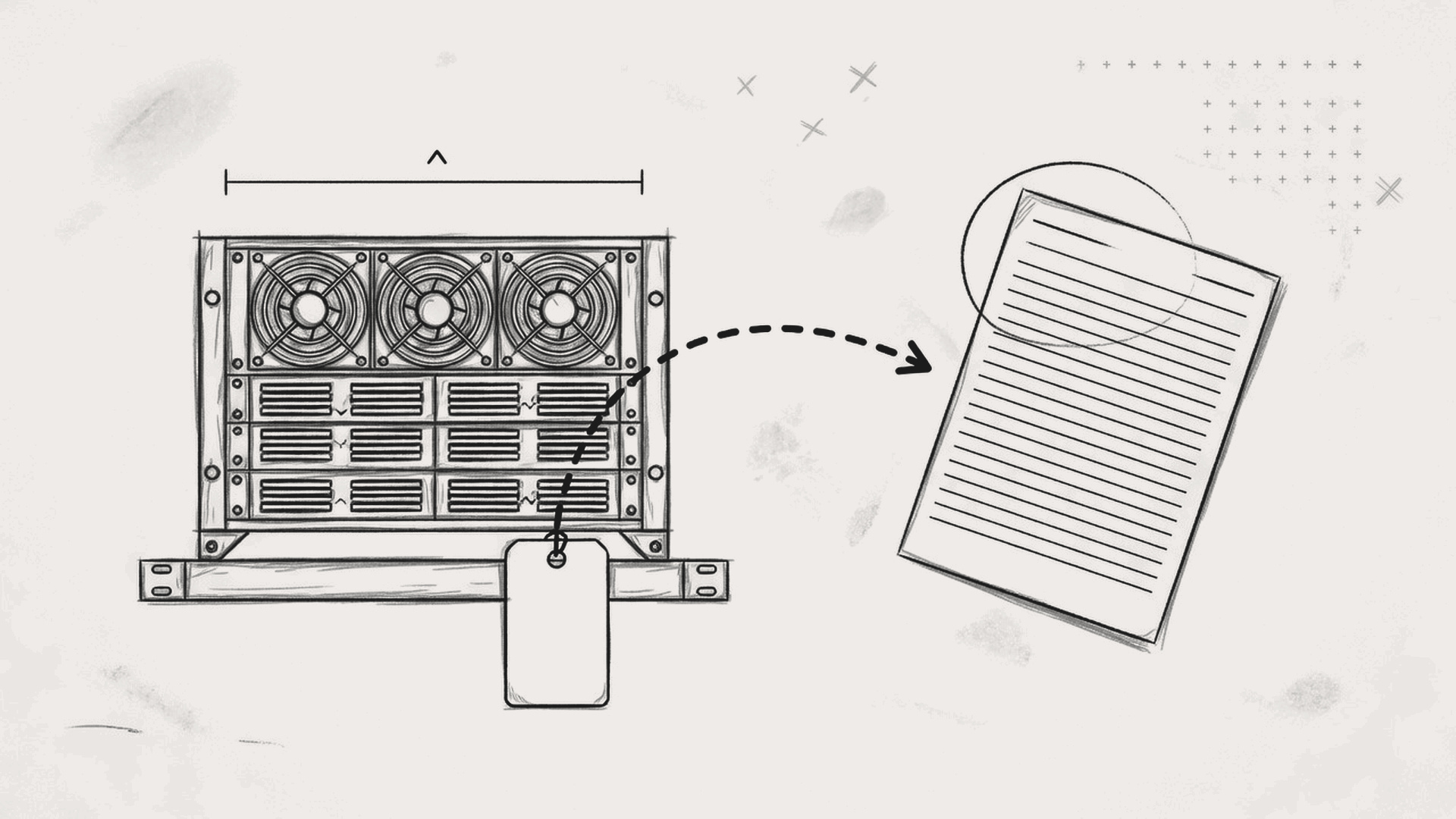
Sell the GPUs, lease them back, keep them in the same hall. The sale stands only as an operating lease. The clause that keeps the cards is usually the clause that fails it.
02
Article architecture · 1–6
Six questions, in order
01Mechanism Sequence, four tests, two books, one example
02Callback Operating and finance, for lessee and lessor
03SpaceX Three failed sales, booked as GPU borrowings
04Amazon An $8 billion attempt to pass every gate
05IREN Same economics, never a sale-leaseback
06Dual SPV What an outside counterparty can change
03
Chapter 01
Does the sale succeed?
Control, classification, and any repurchase option decide the book before the cash does.
1.1 Buy, sell, lease back, then three endings
1.2 Four tests, and why a GPU fails them
1.3 Success spends EBITDA. Failure keeps it
1.4–1.5 A worked year, beside a sales-type lease
04
Chapter 1 · Sequence
Buy, sell, lease back
01Buy
Pay, or sign the purchase order. Control has to exist first.
02Sell
Title moves to the funder or SPV. Cash comes back.
03Lease back
The GPUs stay in the same hall. Rent is monthly or quarterly.
04Term ends
One of three endings. The price decides the book.
AReturn
The residual stays with the funder.
BBuy back
$1, a fixed percent, or fair value.
CRenew
The company keeps paying rent.
05
Chapter 1 · Tests
Four gates, in order
0Controlled before the sale?Yes
NoOrdinary lease
Funder paid the OEM. Not a sale-leaseback.
1 · 606Control reaches the buyer?Yes
NoFinancing
The sale fails.
2 · 25-2Finance or sales-type?None
AnyFinancing
Any one condition fails the sale.
3 · 25-3A repurchase option?Pass
$1Financing
$1, a fixed price, or no substitute.
SaleOperating leaseback
No option, or exercise at fair value where a substitute is readily available.
06
Chapter 1 · 842-40-25-2
Any one fails the sale
1Ownership
Title transfers under the leaseback.
2Bargain call
Exercise is reasonably certain.
3Life
Term is a major part. Practice: about 75%.
4Value
Rent PV is substantially all. Practice: about 90%.
5Specialized
The buyer has no other use for the asset.
Any oneSale fails
Account for the proceeds as financing.
None of themOperating lease
Continue to the repurchase test.
75% and 90% are practice thresholds, not a bright line written into the five conditions.
07
Chapter 1 · Why a GPU fails
A five-year term does not pass
B term, 3 of 560%
Life gate75%
B rent PV74.6%
Value gate90%
C term, 5 of 5100%
Lives are often 4–6 years. Amazon cut part of its servers from 6 to 5. Case B also has no repurchase option. Case C adds a $1 buyback. Illustrative, discounted at 10%.
08
Chapter 1 · Two books
Same cash, two books
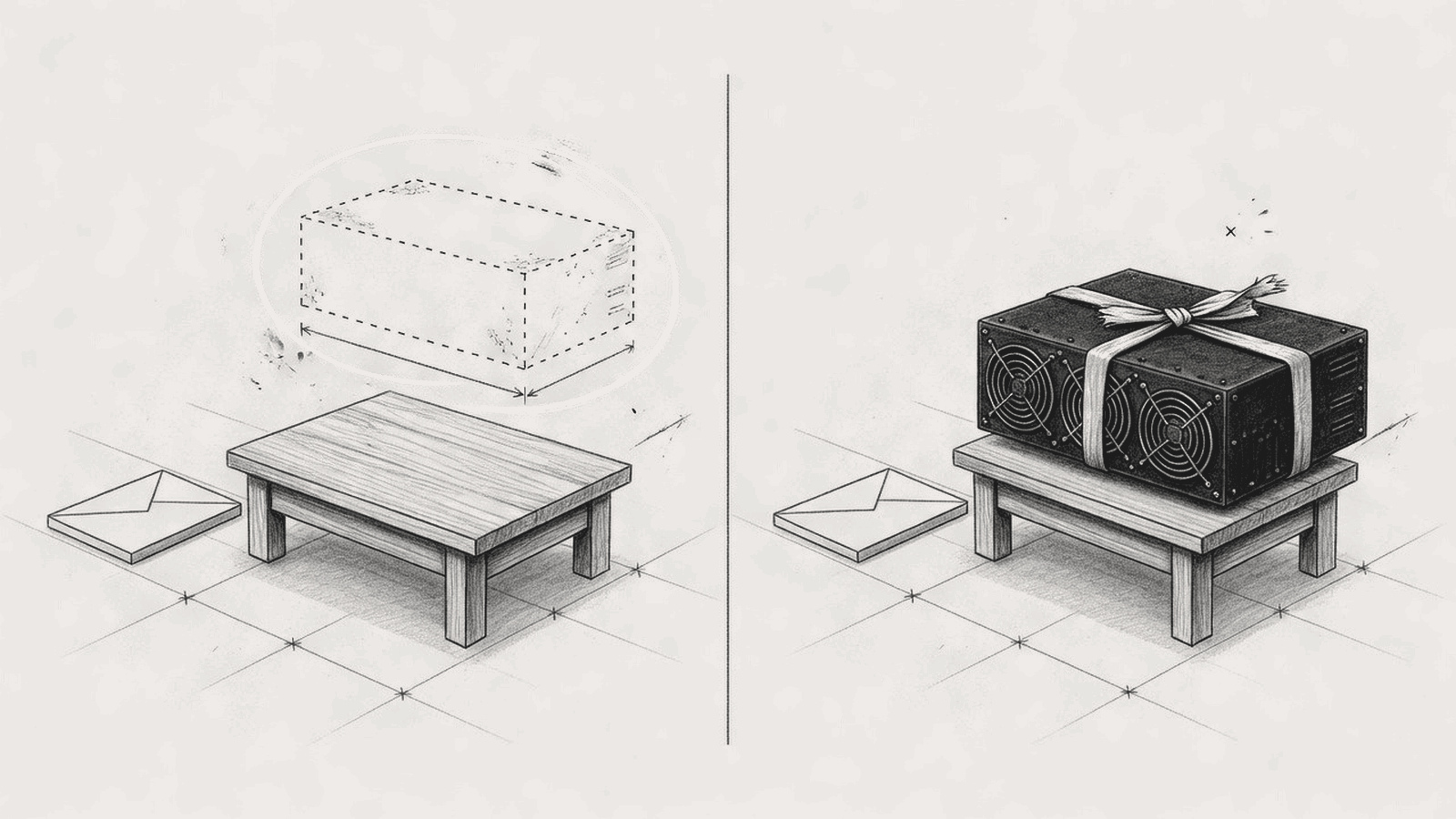
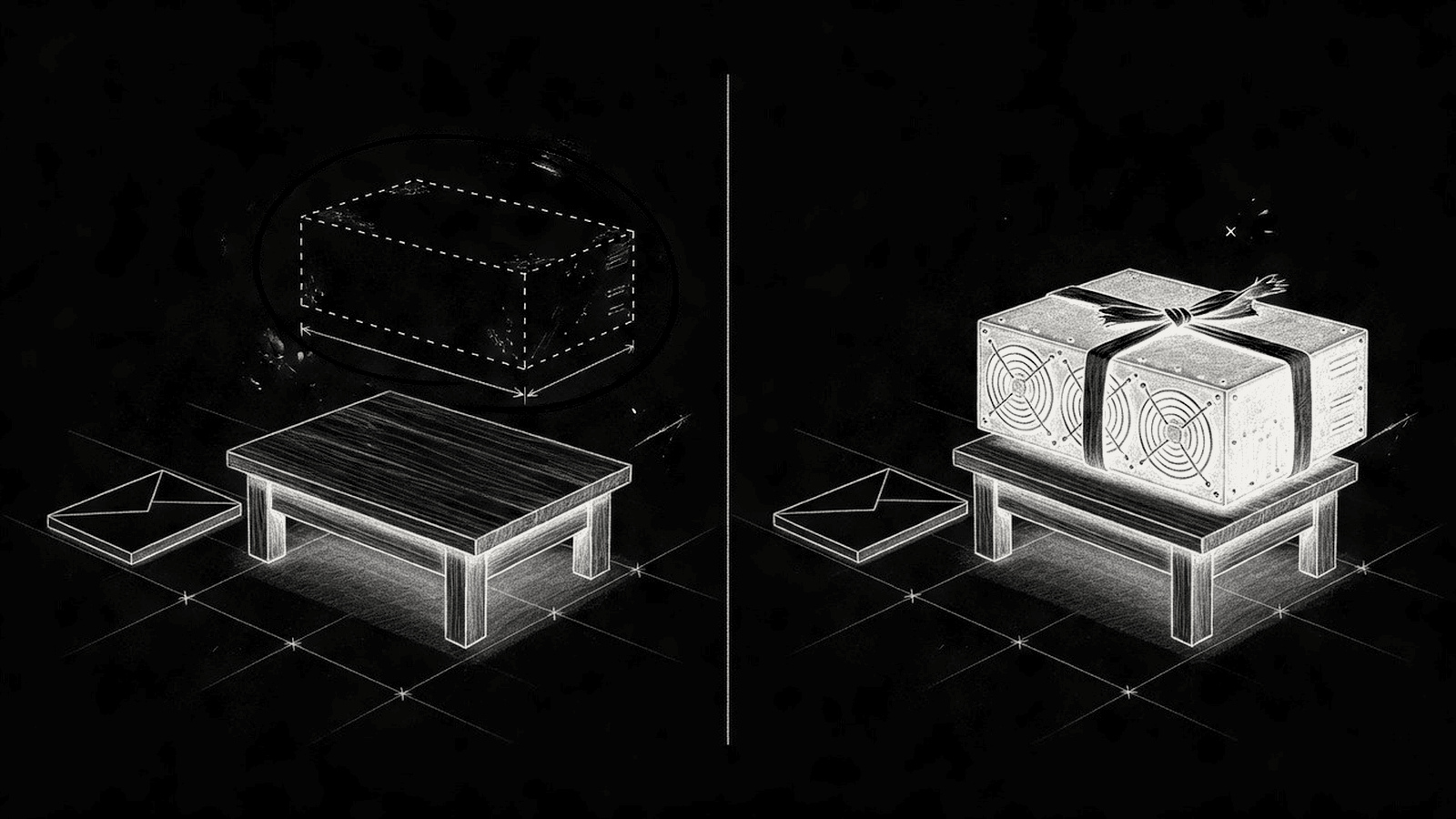
Left, the sale succeeds: the server leaves, and only a right of use remains. Right, the sale fails: the server stays, and the strap is the funder’s title.
09
Chapter 1 · Sale succeeds
Success spends EBITDA
Balance sheet
GPUs leave PP&E. Cash in. Right-of-use asset and lease liability at the present value of rent. Only a lease of 12 months or less can stay off.
Income
Gain or loss now. A cheap price is prepaid rent. A rich price is extra borrowing. Then one level lease expense. No depreciation, no interest. EBITDA falls.
Cash
Proceeds are an investing inflow, so near-term free cash flow looks better. Later rent is operating, so operating cash flow gets worse.
Residual
Moves to the buyer. A rise is not earned. A fall is not borne.
10
Chapter 1 · Sale fails
Failure keeps EBITDA
Balance sheet
GPUs stay in PP&E and keep depreciating. Cash in, and a borrowing of the same amount. No right-of-use asset. No lease liability.
Income
No sale gain and no revenue. Depreciation plus interest, both outside EBITDA. Interest falls as the balance falls.
Cash
Proceeds are financing, so free cash flow does not improve. Principal is financing. Interest is generally operating.
Residual
Stays here. A cheap call usually brings title back. Remedies follow the contract and local law.
11
Chapter 1 · Year 1 of 100
Year one is 40, 10, 40
A hold40
B sale works10
C sale fails40
Revenue 50, cash cost 10. B adds operating rent of 30. C keeps depreciation of 20 and interest of 10, both below EBITDA. Pretax is 20 / 10 / 10. Units are the example’s 100.
12
Chapter 1 · Day 0
+100 is not one cash line
A hold
B sale works
C sale fails
Day 0 stock
PP&E 100
PP&E 0. Cash +100. ROU 74.6 and lease liability 74.6
PP&E 100. Cash +100. Borrowing 100
Day 0 cash
Investing −100 at purchase
Investing +100
Financing +100
Year-1 payment
—
Operating 30
Operating 10 interest. Financing 16.4 principal
B: rent PV 74.6 is 74.6% of fair value, term 60% of life, no repurchase. C: payment 26.4, from 100 / 3.791 at 10%.
13
Chapter 1 · Versus a finance lease
The GPU never left PP&E
Failed sale-leaseback
Finance lease, lessee
How the cards arrived
Bought, then “sold”
Never bought. Leased in
Asset / liability
PP&E stays. Borrowing equals price
Right-of-use asset. Lease liability at rent PV
Expense
Depreciation + borrowing interest
ROU amortization + lease interest
Cash at start
Selling price in, financing
None
Residual
Stays
Usually stays
14
Chapter 1 · The other side
The funder books a loan
Failed sale-leaseback, funder
Sales-type lessor
Asset
Loan receivable
Net investment in the lease
At commencement
No revenue
Revenue and cost. Near fair value, almost no profit
Later
Interest income
Interest income
Rules
A financial asset
ASC 842, lessor
Same financing substance, two books. If the leaseback is sales-type for the buyer, 842-40-25-2 has already failed the seller’s sale. See the Bird case.
15
Chapter 02
The shape, not the asset
Past 12 months, both leases are on the balance sheet. The income statement is where they split.
2.1 Lessee: one rent line, or amortization plus interest
2.2 Lessor: day-one profit, or a depreciating asset
16
Chapter 2 · Lessee
Operating lease cuts EBITDA
Operating
Right-of-use asset and lease liability. One level lease expense, inside EBITDA. All rent is operating cash. The asset is backed into expense minus interest, so the two balances match when rent is level.
vs
Finance
Same two balance-sheet lines. Straight-line amortization plus interest, higher at the front, both outside EBITDA. Principal is financing cash. Interest is generally operating. Balances meet again at zero.
Finance keeps a higher EBITDA, better-looking operating cash, and usually the residual. Early net income is lower. Operating is the reverse, and it does not carry residual risk.
17
Chapter 2 · Lessor
Sales-type takes day one
Sales-type
Profit can be recognized at commencement. Most GPU depreciation risk moves to the lessee. What remains is a receivable. Later years are interest only, and thinner each year. Asset turnover looks better.
vs
Operating
The asset stays and depreciates. Residual risk stays. The financing against it stays. Leverage looks higher. Rent is recognized over the term.
18
Chapter 03
Three failed sales
CTC sold GB200 hardware it already held to Valor and leased it back for about five years. All three are borrowings.
3.1 From the October talks to the 30 June balance
3.2 Who sits inside SpaceX, and who was paid
3.3 9–12% against 12.5%, then against 5.855%
19
Chapter 3 · Through the merger
On the books before the merger
Talks
Bloomberg: about $20bn of GPU financing. Press.
Deal I
Signed. Amended 10 Nov. Closed in November.
$4.507bn
Valor-related debt. 2025 rent paid $885m.
Deal II
Apollo $3.5bn for VCI. Debt booked $5.365bn. Amended 18 Feb.
Merger
xAI into SpaceX.
20
Chapter 3 · After the merger
$13.329bn after the IPO
$9.041bn
Two deals. Q1 interest $186m.
Deal III
Five years. Payments $6.587bn.
IPO notes
$25bn unsecured. Coupon 5.855%. Effective 6.03%.
$13.329bn
Three deals. Q2 interest $327m.
21
Chapter 3 · Structure
Title leaves. The hall does not
01Deliver
Suppliers deliver GB200 hardware to CTC, inside SpaceX after 2 February 2026.
02Transfer title
CTC to Valor Compute Infrastructure. PP&E stays.
HallMachines stay
They keep running in xAI’s halls.
03Pay the price
Part of Deals II and III never hits an xAI account. Q1 non-cash PPE $2.684bn. First half $3.921bn.
04Pay rent
$6.986bn + $6.633bn + $6.587bn = $20.206bn. xAI, and SpaceX or a subsidiary, guarantee.
Non-cash line is primary, 424B4 F-69 and the Q2 10-Q. Non-Valor “other financings” are about $77m, so the rest is inferred to be Valor. Deal I had no such 2025 line. Inferred cash closing. Antonio Gracias sits on both sides.
22
Chapter 3 · Amounts
Borrowed less than it will pay
$13.329bnBorrowing at 30 June 2026
$20.206bnRent over the three terms
$5.4bnVCI buys and leases. Apollo leads $3.5bn
~65%Loan to the $5.4bn price. Equity about $1.9bn
Triple-net lease, described for xAI’s second data center. NVIDIA is an anchor LP. The amount is undisclosed. The 65% uses the $5.4bn announcement, not only the $5.365bn booked on Deal II.
23
Chapter 3 · Cost
11.7% against 5.855%
xAI secured12.5%
Valor, Q2 simple11.7%
Deal II, 5-year8.7%
SpaceX coupon5.855%
Q2 simple average is interest × 4 over the average balance. Deal II’s 8.7% assumes five level years on $5.365bn against $6.633bn of payments. Deal III’s principal is unstated, so its 8.9–14% band is not a bar. Inferred, except the two coupons.
24
Chapter 3 · Why accept failure
Failure was the cheaper ticket
What failure keeps
EBITDA and operating cash. The cards, through a cheap end-of-term call. A four- or five-billion-dollar ticket against hardware already bought, before an IPO sets an equity price. Title at Valor is safer for the funder than a mortgage, so the ticket can be larger.
vs
What it cost then
About 9–12%, below the 12.5% secured notes ($3.0bn, repaid early, $1.545bn extinguishment loss in the half). Far above the later 5.855% unsecured coupon. The cheap call is also why the sale failed.
25
Chapter 04
Four gates, or a borrowing
Amazon wants about $8 billion of installed Grace Blackwell off the balance sheet. Miss a gate and the chips stay, with a new loan.
4.1 Control, operating lease, no call, and no consolidation
4.2 Who would hold 10%, told three ways
4.3 Free cash flow and the residual, paid for with a spread
26
Chapter 4 · The aim
Miss one gate, stay on books
1ControlledYes
NoCannot sell in
A leased-in chip never enters.
2Operating leaseYes
NoBorrowing
Term or rent PV fails the finance test.
3No repurchaseYes
CallBorrowing
A guarantee is unreported.
4Not consolidatedYes
NoStill on books
Outside ASC 842-40. Required for the lighter sheet.
All fourChips leave
Rent expense then reduces EBITDA.
Press account: thousands of Grace Blackwell chips, a dozen or so halls, five U.S. states including Nevada and Virginia. Amazon’s view, as relayed: each generation should run at least five years.
27
Chapter 4 · Equity
Three stories about 10%
Dealroom
Amazon holds none
“Offering up to a 10% equity stake in the vehicle while retaining no ownership itself.”
Yahoo Finance
Amazon holds it
Paraphrase: “Amazon would hold an equity interest of as much as 10%.”
Bloomberg Law
Sold to investors
“The vehicle could issue debt and sell up to a 10% equity stake to investors.”
Who holds the stake decides whether the SPV is easy to keep outside the consolidation. The reports do not settle it.
28
Chapter 4 · Motives
The spread is the price
What success would buy
On Amazon’s own free-cash-flow definition, sale proceeds reduce capital expenditure. Selling the GB generation before Vera Rubin hands the next-generation write-down to the SPV’s investors. Amazon already cut a server life from 6 years to 5.
vs
What investors would charge
An investment-grade rating tied to double-A credit would price far below xAI’s 9–12%. It would still sit above Amazon’s own unsecured bonds, because the SPV also bears the residual. No SPV coupon is disclosed.
29
Chapter 05
Not a sale-leaseback
IREN signed the purchase, then the lessor paid the supplier. Control never arrived, so the sale-leaseback tests never start.
5.1 Three facilities, 24 or 36 months, a $1 or 18% call
5.2 About 9.9%, against cheaper paper that has an offtake
30
Chapter 5 · Structure
The lessor pays, and holds title
01Order
IREN signs. The November seller is Dell Marketing L.P. A deposit may already be paid.
02Lessor pays
100% of the price goes to the supplier.
TitleTests never open
Title does not pass through IREN.
03Deliver
GPUs arrive at Prince George and the other halls. Title is the lessor’s.
04Call
$1, or the lower of fair value and 18% of cost. IREN Limited guarantees every payment.
23 Aug 2025, about $101.8m, 36 months, 18% call, rent $2.8m a month. 28 Aug, about $96.2m, 24 months, 1,200 GB300s, $1 call, rent $4.4m. 5 Nov, Dell Financial Services, $199.8m, 24 months, $1. FY26 lease liability $243.8m. The cloud customer is ASC 606, a different book.
31
Chapter 5 · Cost
9.9%, on about 3% of debt
Lease, weighted9.9%
USPP, Dec 20315.96%
Implied lease rates from rent and the call are about 8.8–9.9%, next to the 10-K weight and the “high single digit” release. The $3.6bn Microsoft financing is largely non-recourse: $1.5bn DDTL at SOFR+2.25, $2.1bn USPP at 5.96%. Finance leases are about 3% of principal (2.704 ÷ 79.76). Fast, undiluted, and a poor fit at scale.
32
Chapter 06
Only an outsider counts
A lease between two subsidiaries disappears in the consolidation. The structure matters only when the counterparty is outside.
6.1 Scale with expensive money, or tune a large balance sheet
6.2 Owned cards are a loan. Uncontrolled cards skip the test
33
Chapter 6 · The choice
Three choices, two prices
The choiceWhere are the cards?
Already ownedBorrowing
A failed sale keeps EBITDA. xAI paid about 9–12%. Compare a GPU mortgage and a DDTL.
Not controlledOrdinary lease
The lessor pays the OEM and takes title, as IREN did. The sale tests never open.
Off the booksGive up EBITDA
Operating lease, no cheap call, buyer bears the residual, vehicle unconsolidated.
Used for scale, the money is more expensive and the risk is larger. Used by a company that is already large, it is usually a small sleeve.
34
Boundary
Keep the cards, or lighten the books
Protect EBITDA and the residual, and the sale fails. The cash is a borrowing, and the GPUs stay in PP&E. Lighten the balance sheet, and the lease expense cuts EBITDA, and the next generation’s price is someone else’s.
Year-one illustration, on a base of 40: hold 40, successful sale 10, failed sale 40.