The sale-leaseback mechanism
The usual sequence
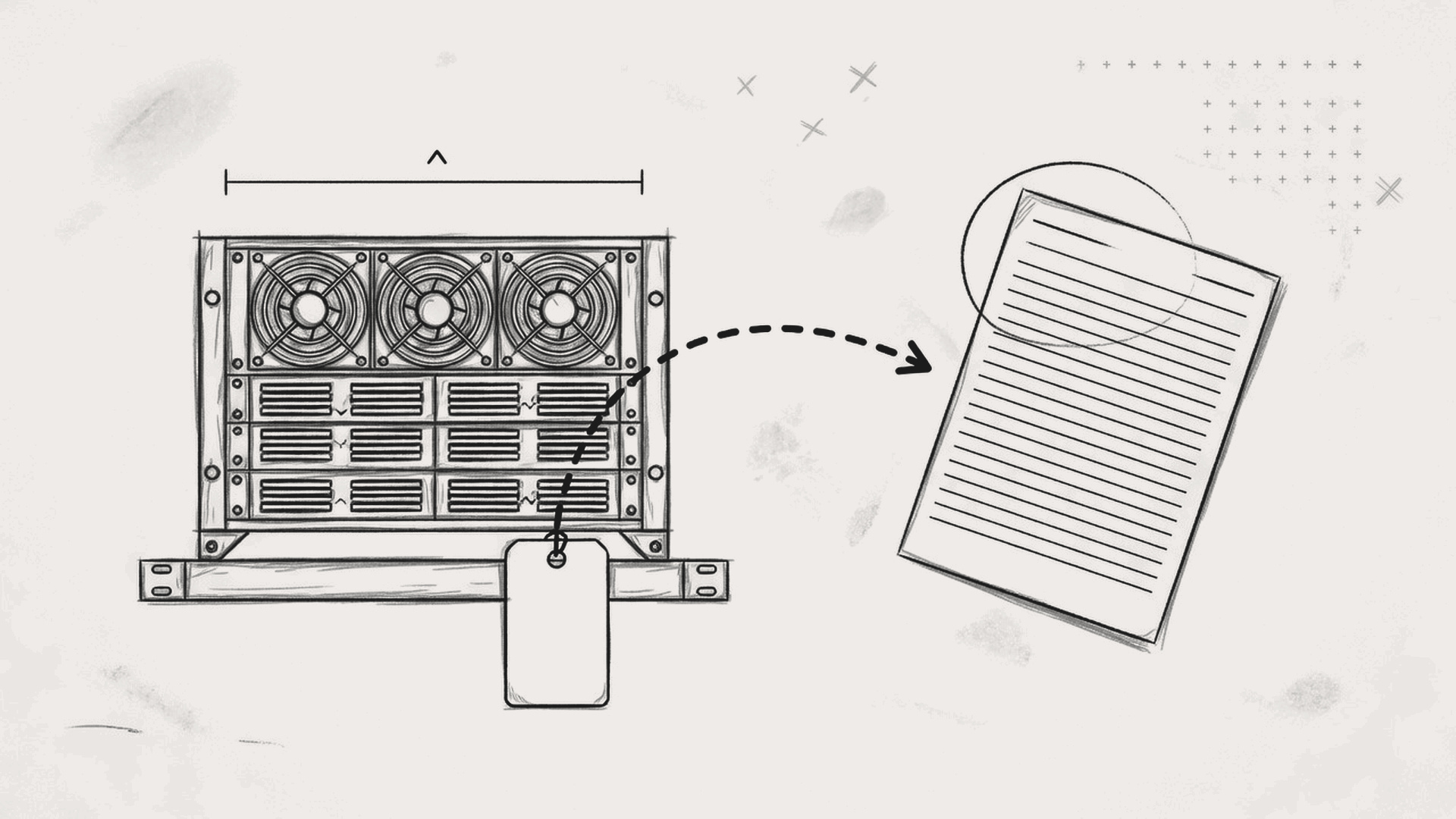
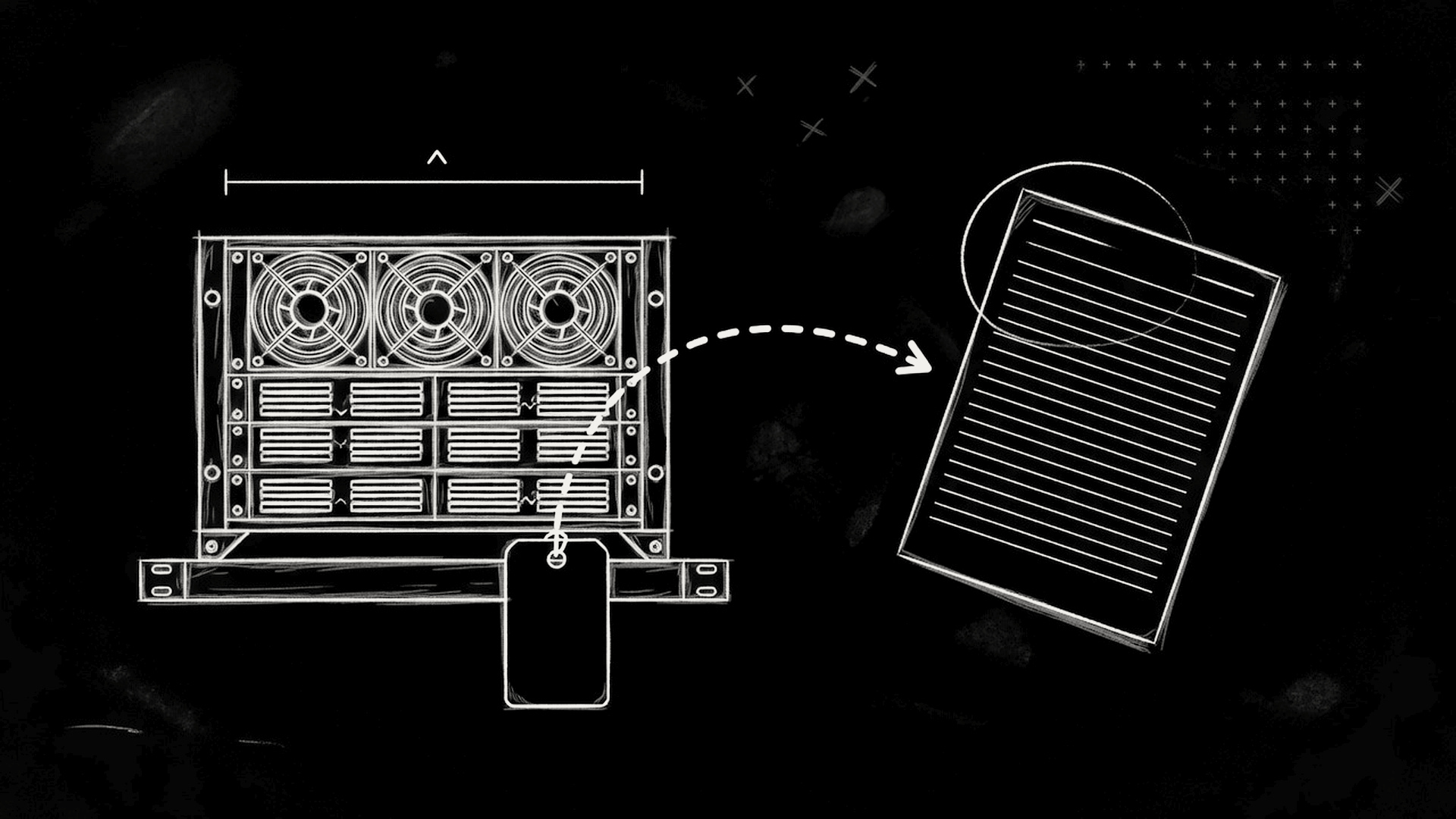
A company buys GPUs, pays, or signs a purchase order. It sells the machines to an SPV or other lessor and takes cash back. It leases them back and keeps using them, paying rent monthly or quarterly. At the end of the term it returns the machines (the residual stays with the SPV), buys them back at $1, a fixed percentage, or fair value, or renews the lease.
-
01 Buy
The company buys the GPUs. It pays, or it signs a purchase order.
-
02 Sell
It sells the GPUs to the funder or SPV and takes the cash back.
-
03 Lease back
The GPUs stay in its own hall. Rent is monthly or quarterly.
The price and the residual decide the book.
-
A · Return
Residual stays with the funder
The company gives the machines back.
-
B · Buy back
Residual returns to the company
The price is $1, a fixed percentage, or fair value.
-
C · Renew
Rent continues
The company keeps the machines and keeps paying.
The tests that decide whether the sale succeeds
Start from the transaction itself: the company sells the GPUs to a buyer and leases them back. Four questions follow, in order.
The company is the seller and the lessee. The buyer is the funder or SPV.
-
0 Did the seller control this batch before the sale? YesNo Not a sale-leaseback
Ordinary lease. Example: the funder paid the manufacturer and took delivery.
-
1 · ASC 606 Did control transfer to the buyer? YesNo Sale fails
Account for the proceeds as financing.
-
2 · ASC 842-40-25-2 Is the leaseback a finance lease, or a sales-type lease?
Any one is enough: ownership transfer, a bargain call reasonably certain of exercise, a term of about 75% of remaining life, rent present value of about 90% of fair value, or a specialized asset.
NoneAny Sale failsAccount for financing. 75% and 90% are practice, not a bright line.
-
3 · ASC 842-40-25-3 Does the seller have a repurchase option?
-
No option
Sale succeeds
Derecognize the asset. Operating leaseback.
-
Fair value, and a substitute
Sale succeeds
Exercise price equals fair value then, and a near-identical asset is readily available.
-
$1, fixed, or no substitute
Sale fails
Account for financing.
-
No option
Sale succeeds
| Test | The sale fails when |
|---|---|
| 0. Did the seller control the asset before the sale? | If the seller never obtained control — for example, the lessor paid the manufacturer and took delivery — this is not a sale-leaseback at all. Account for an ordinary lease. |
| 1. Did control transfer under ASC 606? | If the buyer of the machines does not obtain the main benefits, because those benefits stay with the seller, the sale does not succeed. |
| 2. Is the leaseback a finance lease for the seller, or a sales-type lease for the buyer? (842-40-25-2) | Any one of these is enough: ownership transfers; a bargain purchase option is reasonably certain of exercise; the term is a major part of the remaining economic life (in practice, about 75%); the present value of the rent is substantially all of fair value (in practice, about 90%); the asset is specialized and has no alternative use to the buyer. |
| 3. Does the seller have a repurchase option? (842-40-25-3) | A repurchase option fails the sale unless both are true at once: the exercise price equals fair value at the exercise date, and substantially identical substitute assets are readily available. |
GPUs fail this sale often. Their depreciable life is generally only 4–6 years. Amazon, for example, shortened part of its server life from 6 years to 5. A leaseback of 2–5 years easily covers a “major part” of that economic life. Add a repurchase option at $1, or at something like 18% of original cost, and the arrangement is classified as a finance lease.
What a successful sale-leaseback does to the statements
Looked at the other way: the leaseback has to be an operating lease. The term is clearly shorter than the GPU’s life. The present value of the rent is clearly below fair value. There is no repurchase option priced below fair value. The buyer actually obtains control and bears the residual.
If the sale-leaseback succeeds, the seller of the cards has sold the asset at inception. Each year after that, it rents the cards back from the buyer under an operating lease.
- Balance sheet. The GPUs leave property, plant, and equipment and cash comes in. A right-of-use asset and a lease liability appear, measured at the present value of rent over the leaseback term. Under current U.S. GAAP the lessee in an operating lease also puts the lease on the balance sheet. Only a short-term lease of 12 months or less can be exempt.
- The right to use this batch of cards is the right-of-use asset.
- The obligation to pay rent on schedule is the lease liability.
- Income statement. The difference between the selling price and the carrying amount is a gain or loss on sale in the current period. If the price is off fair value, adjust it. Sold too cheap: the shortfall is prepaid rent. Sold too dear: the excess is additional borrowing. After that there is no depreciation and no interest. Each period records one level lease expense inside operating cost, so EBITDA falls.
- Cash flow statement. Cash from selling the cards is an investing inflow. Free cash flow looks better in the current period and can lift the near-term cash flow statement. Later rent is an operating outflow, so operating cash flow gets worse.
- Residual. It moves to the buyer. If the cards rise in value, the seller does not earn it. If they fall, the seller does not bear it.
If the sale fails
A failed sale-leaseback is a borrowing from the party that took the cards, in the amount of the selling price. Later “rent” is principal and interest. It has one extra protection compared with an ordinary loan: legal title to this batch of cards sits with the funder. On a default, the funder does not first have to ask a court to seize collateral the way an ordinary lender would, because the cards are already registered in its name. The contract and local law control that point. The more precise description is a borrowing collateralized by the cards, with title transferred to the funder up front. Economically the company still owns the batch. It took a principal amount from the buyer of the cards at the start, and each period after that it is repaying principal and interest.
- Balance sheet. The GPUs stay in property, plant, and equipment at an unchanged carrying amount and keep depreciating. Cash comes in, and a borrowing of the same amount is recognized as a financial liability.
- No right-of-use asset. No lease liability.
- Each payment thereafter reduces principal in part. The borrowing balance falls year by year.
- Income statement. No gain or loss on sale, and no revenue. Each period’s expense is GPU depreciation plus interest on the borrowing. Depreciation stays out of EBITDA. Interest sits below EBITDA. EBITDA is unchanged. Interest is computed on the outstanding balance. The balance shrinks, so total expense is higher at the front and lower later.
- Cash flow statement. The cash received is a financing inflow, not an investing inflow, so free cash flow does not improve. Of the later payments, principal is a financing outflow. Under U.S. GAAP, interest is generally an operating outflow.
- Residual. It stays with the company. If the cards fall in value, the company takes the impairment. If they rise, the benefit is the company’s. The contract usually carries a bargain repurchase option, for example $1 or a percentage of original cost. At the end the company buys the cards back and title returns to its own name.
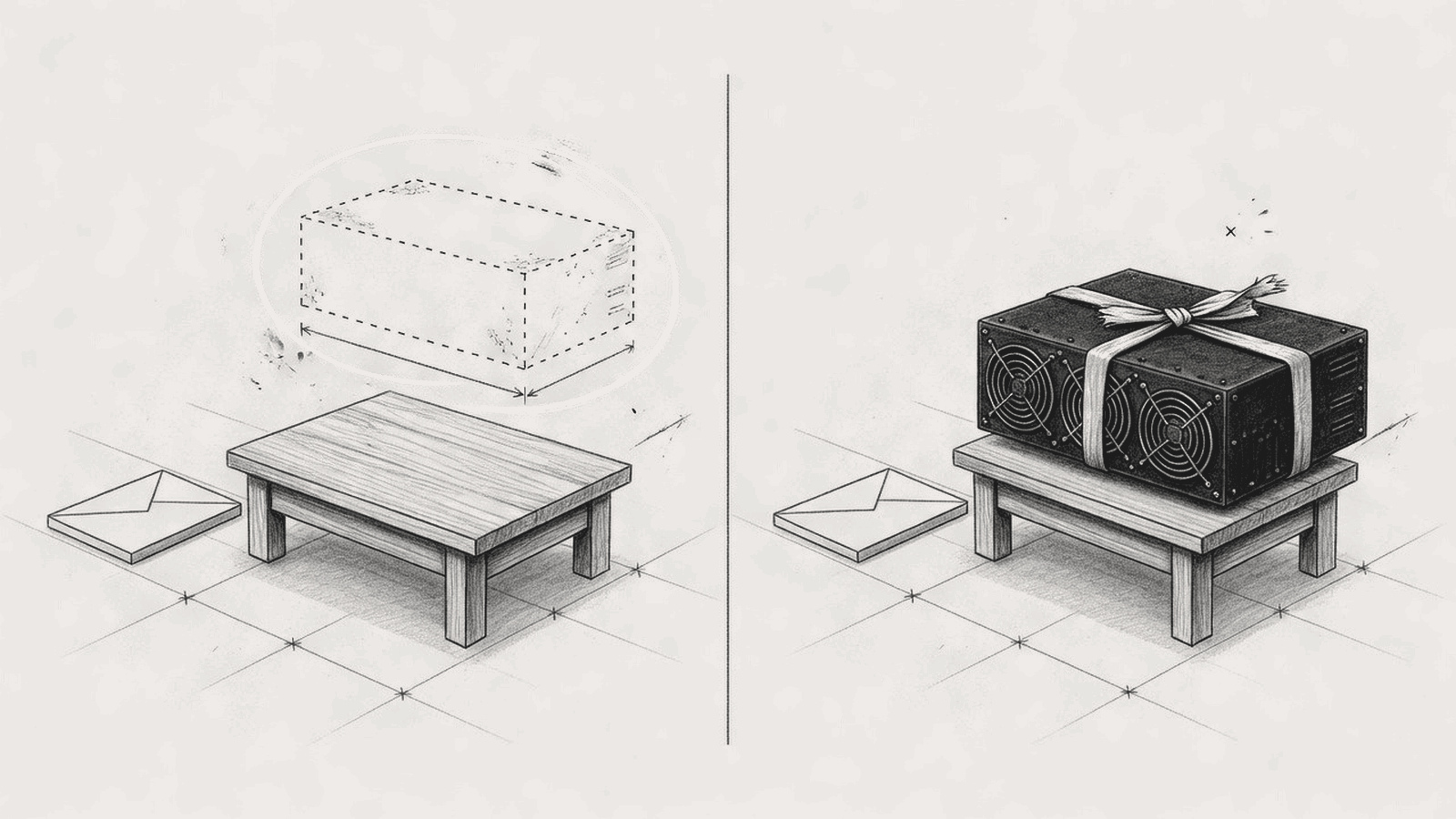
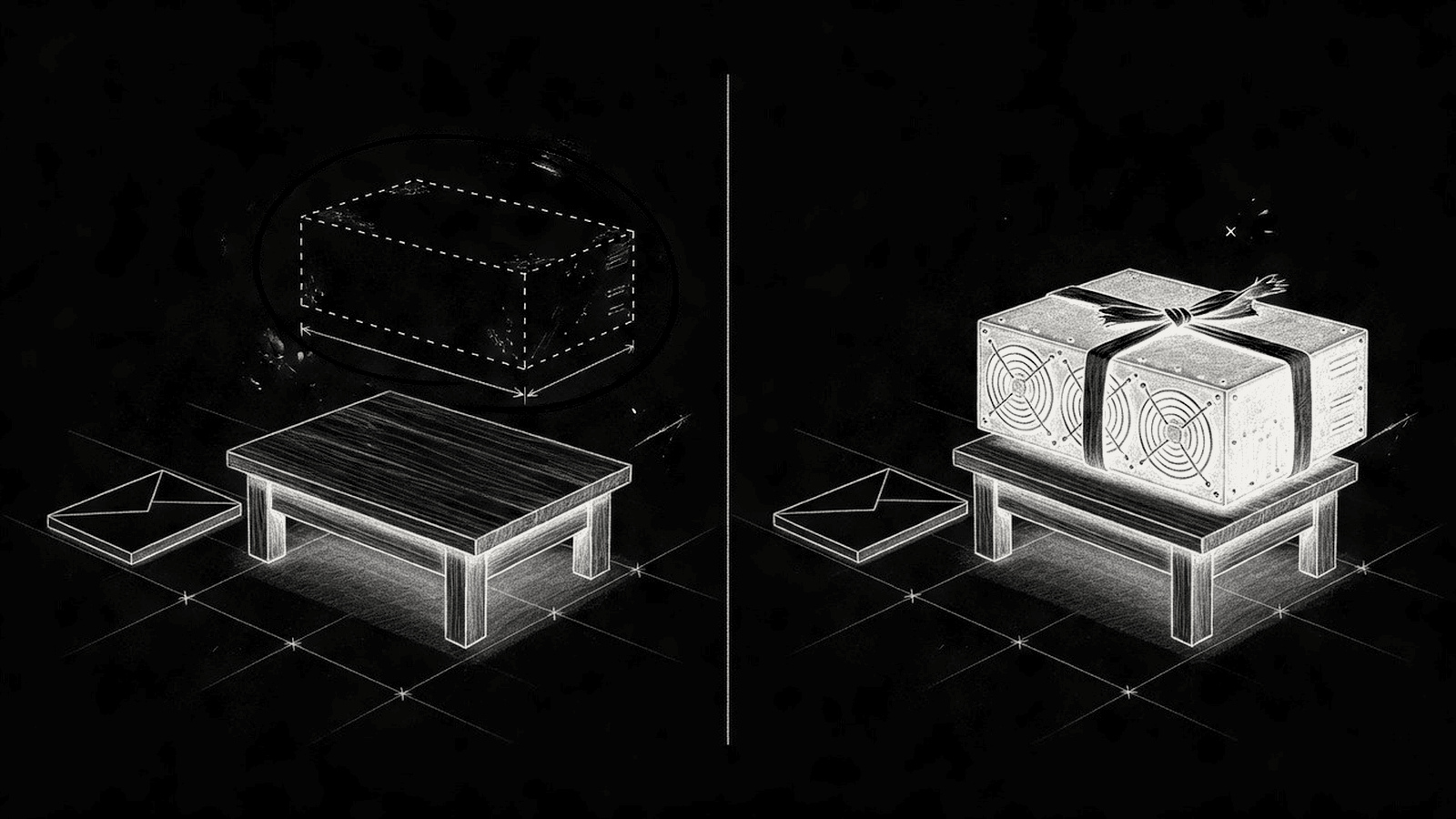
Same cash, two books. Left, the sale succeeds: the server leaves the shelf and only a right of use remains. Right, the sale fails: the server stays, and the strap is the funder’s title. The envelopes are the proceeds in both cases.
A worked example
A company has just spent 100 on a batch of GPUs. Carrying amount equals fair value equals 100. Life is 5 years. Straight-line depreciation is 20 a year. The batch produces revenue of 50 a year. Cash costs for power, operations, and the like are 10 a year.
- Case A. Hold the cards. No financing.
- Case B. The sale succeeds. Sell to the SPV for 100. Lease back for 3 years at rent of 30 a year. No repurchase option. Inferred Present value of rent = 30 × [1 − 1.1−3] / 0.1 ≈ 74.6 at a 10% discount, which is 74.6% of fair value (below 90%). The term is 3 / 5 = 60% (below 75%). The leaseback qualifies as an operating lease.
- Case C. The sale fails. Sell to the SPV for 100. Lease back for 5 years. Buy the cards back for $1 at the end. That is a finance lease, so the sale fails. Inferred Annual payment = 100 / annuity factor (10%, 5 years) = 100 / 3.791 ≈ 26.4. Year 1 interest is 10. Principal repayment is 16.4.
| Year 1, illustrative | A. Hold | B. Sale succeeds | C. Sale fails |
|---|---|---|---|
| Revenue | 50 | 50 | 50 |
| Cash cost | −10 | −10 | −10 |
| Lease expense (operating) | 0 | −30 | 0 |
| EBITDA | 40 | 10 | 40 |
| Depreciation | −20 | 0 | −20 |
| Interest | 0 | 0 | −10 |
| Profit before tax | 20 | 10 | 10 |
| Balance sheet, day 0 | PP&E 100 | PP&E 0; cash +100; ROU 74.6 / lease liability 74.6 | PP&E 100; cash +100; borrowing 100 |
| Cash flow, day 0 | Investing outflow 100, when the cards were bought | Investing inflow +100 | Financing inflow +100 |
| Classification of the year-1 payment | — | Operating outflow 30 | Operating outflow 10 (interest) + financing outflow 16.4 (principal) |
Units are the example’s 100, not dollars of a filing. The 10% discount rate is an assumption used to test the 90% and finance-lease thresholds. Case B clears both practical gates. Case C fails on the term and on the $1 repurchase.
Read the table against what the company wants at the time. To get the asset off the balance sheet and to lower leverage, it has to accept a smaller EBITDA and hand the residual to the other side (B). To protect EBITDA and still take cash, the result is a borrowing that stays on the balance sheet (C).
Set beside a sales-type lease
A sale-leaseback is a transaction structure, told from the seller / lessee: sell first, then lease back. Sales-type, operating, and direct financing are the lessor’s classification of a lease, told from the lessor. They meet inside one sale-leaseback. If the leaseback is a sales-type lease for the buyer, which means it is a finance lease for the seller, ASC 842-40-25-2 fails the “sale” immediately. In the Bird case we were the sales-type lessor. A failed sale-leaseback is the same economic substance — a lease with a financing character — read from the two sides.
The economics look like installment financing on both sides. The books do not. A failed sale-leaseback is accounted for as a borrowing / loan. The cards stay in the user’s property, plant, and equipment. An ordinary finance lease or sales-type lease is accounted for as a lease. The user records a right-of-use asset. The funder records a net investment in the lease.
| Failed sale-leaseback | Ordinary finance lease (lessee) | |
|---|---|---|
| How the cards arrived | The company bought them, then “sold” them | The company never bought them. It leased them in |
| Asset | GPUs stay in PP&E | Right-of-use asset (present value of rent) |
| Liability | Borrowing (the selling price) | Lease liability (present value of rent) |
| Expense | Depreciation + interest on the borrowing | Amortization of the right-of-use asset + lease interest |
| Cash at commencement | Yes. A large selling price comes in, as a financing inflow | No |
| Residual | Stays with the company | Usually stays with the company as well |
| Failed sale-leaseback (funder) | Sales-type lease (lessor) | |
|---|---|---|
| Asset | Loan receivable | Net investment in the lease (also a receivable) |
| At commencement | No revenue | Revenue and the matching cost. If the purchase price is close to fair value, almost no profit |
| After that | Interest income each period | Interest income each period |
| Which rules | A financial asset / a loan | ASC 842, lessor |
Callback
The basic operating lease and the finance lease
The base pair is the finance lease and the operating lease. For the lessee, once the term exceeds 12 months, both an operating lease and a finance lease are recorded as a right-of-use asset plus a lease liability. The real difference is how expense lands on the income statement.
| Lessee | Operating lease | Finance lease |
|---|---|---|
| Balance sheet | Right-of-use asset + lease liability | Right-of-use asset + lease liability |
| Income statement | One “lease expense,” the same amount each year | Amortization of the right-of-use asset + interest, higher at the front |
| EBITDA | Lease expense is inside it, so EBITDA is lower | Neither amortization nor interest is inside it, so EBITDA is higher |
| Cash flow statement | All of the rent is operating | Principal is financing. Interest is generally operating |
In short, a finance lease records “bought a piece of equipment” and “borrowed a sum of money” as two separate things. The equipment amortizes straight-line. The borrowing accrues interest at the effective rate and is repaid with the rent.
- Amortization of the right-of-use asset. Usually straight-line, over the shorter of the lease term and the asset’s life. If the contract transfers ownership, or exercise of a purchase option is reasonably certain, amortize over the asset’s life.
- Lease interest. Opening liability × rate. Each rent payment covers interest first. Only the remainder reduces principal. The liability shrinks, so interest shrinks. A home mortgage works the same way.
Operating lease. The accounting treats it as “renting.” The income statement has one average rent expense. The right-of-use asset is not amortized on its own. It is backed into as “lease expense − interest on the liability,” so it moves with the liability. Interest is opening liability × rate, added to the liability; paying rent reduces the liability. Interest is not presented as its own interest expense. At each period end the two balances are equal, provided rent is level and there is no prepaid rent, accrued rent, or lease incentive.
Finance lease. The accounting treats it as “bought a piece of equipment and borrowed the money at the same time.” Each side is computed on its own. The equipment side, the right-of-use asset, amortizes straight-line. The borrowing side, the lease liability, accrues interest and is serviced by the rent. The two sides decline at different speeds, so they do not match in the middle periods. Both reach zero at the end of the term.
For the lessee:
- A finance lease produces higher EBITDA and better-looking operating cash flow, and the residual and ownership can stay with the lessee. The cost is lower net income in the early years, because interest expense is high, and a liability that looks like a borrowing.
- An operating lease is the reverse. There is no residual risk, but EBITDA is lower, and net income is higher in the first two years.
For the lessor:
- A sales-type lease can recognize profit on the commencement date. Revenue and profit arrive quickly on the books. Most of the GPU depreciation risk moves to the lessee. What remains in hand is a receivable, closer to a loan. The balance sheet does not carry a large depreciating asset, so asset turnover looks better. The cost is that later years produce only interest income, and less of it each year, so profit in the outer years is thin.
- The cost of an operating lease is that residual risk stays entirely with the lessor. A heavy asset, and the financing against it, stay on the books, so leverage looks higher.
SpaceX
Financing history
CTC Property LLC, a subsidiary of xAI, sold AI hardware it had already bought, including GB200 systems, to funds under Valor, then leased the equipment back on a term of about five years, guaranteed by xAI or SpaceX. All three transactions were determined to be failed sale-leasebacks. On the books they are borrowings collateralized by the GPUs:
- At 30 June 2026, the on-balance-sheet borrowing is $13.329 billion.
- Rent payable over the three terms totals $20.206 billion.
- The implied rate is about 9–12%, much more expensive than the unsecured notes SpaceX issued after its listing, at a weighted coupon of 5.855%.
- BloombergReports that xAI is discussing about $20 billion of GPU-related financing. Press.
- Deal I signedAmended 10 November 2025. Closed in November 2025.
- Valor-related debt $4.507 billionRent already paid in 2025: $885 million.
- ApolloAnnounces a $3.5 billion financing led for VCI. VCI acquires and leases equipment for $5.4 billion.
- Deal II signedAmended 18 February 2026. Debt booked at $5.365 billion.
- xAI merges into SpaceX
- Two deals, balance $9.041 billionQ1 interest $186 million.
- Deal III signedFive-year term. Total payments $6.587 billion.
- SpaceX IPOIssues $25 billion of unsecured notes. Weighted coupon 5.855%.
- Three deals, balance $13.329 billionQ2 interest $327 million.
How the three deals are built
Space Exploration Technologies Corp., the listed parent. X.AI Corp. / xAI, merged in on 2 February 2026. CTC Property LLC sells and leases back. The GPUs stay in PP&E.
- Title
- Cash
- Rent
Valor Compute Infrastructure L.P., the VCI fund. Institutional LPs. NVIDIA is an anchor LP; the amount is undisclosed. Apollo-managed funds lead $3.5 billion of financing, Deal II only. Director Antonio Gracias is also Valor’s founder and CEO.
- CTC first takes delivery of the GB200 and other hardware from suppliers.
- CTC transfers title to a Valor entity and signs an equipment lease to take the machines back. The machines keep running in xAI’s data centers.
- Valor pays the purchase price. Part of the price on Deals II and III never passed through an xAI account. In the supplemental cash flow disclosure, SpaceX reports $2.684 billion in Q1 2026 and $3.921 billion for the first half under “Purchases of property, plant, and equipment financed by other financings,” a non-cash investing and financing activity. Verified, primary 424B4, F-69; Q2 10-Q cash flow statement. Of that “other financings” line, the non-Valor piece is only about $77 million, so the non-cash amount is essentially the Valor deals. Inferred Part of the price was paid by the funder directly to suppliers, or applied directly against xAI’s equipment payables. The cash xAI actually received is less than the borrowing on the books. The 2025 cash flow statement has no such line, so Deal I was likely a cash closing. Inferred
- CTC pays rent monthly or quarterly. Across the three deals, payments over the terms are $6.986 billion + $6.633 billion + $6.587 billion = $20.206 billion.
The guarantee is described two ways:
- The FY2025 debt footnote in the 424B4 says “X.AI Corp. guarantees certain of CTC’s obligations.”
- The related-party section of the 424B4 says the lessee’s payment and performance obligations are “guaranteed by Space Exploration Technologies Corp. or one of its subsidiaries.”
Funding on the VCI side: the fund used $5.4 billion to acquire and lease the equipment. Apollo led $3.5 billion of financing. NVIDIA is the anchor LP. The structure is a triple-net lease, for “xAI’s second data center.” On those figures the equity piece is about $5.4 billion − $3.5 billion ≈ $1.9 billion, and the loan is about 65% of the purchase price.
Why the cost was acceptable
Method A. Interest expense divided by the average balance.
- Simple average:
- Q1: 1.86 × 4 ÷ [(45.07 + 90.41) ÷ 2] ≈ 11.0%
- Q2: 3.27 × 4 ÷ [(90.41 + 133.29) ÷ 2] ≈ 11.7%
- Weighted by the days each new deal was actually outstanding inside the quarter:
- Q1: Deal II from mid-January is about 8.4%; from 18 February it is about 11.1%.
- Q2: Deal III from 24 April, with the booked amount taken as $4.29–5.3 billion, is about 10.4–11.1%.
The inputs above are in the filing’s hundred-million units ($1.86 hundred million is $186 million). The unit cancels in the ratio. The day-weighted figures are sensitive to when Deal II and Deal III are assumed to start, and to the unstated principal of Deal III.
Method B. Total payments against principal, assuming level monthly payments.
| Deal | Principal | Total payments | If 4 years | If 5 years |
|---|---|---|---|---|
| II | 5.365, primary | 6.633 | 10.8% | 8.7% |
| I | about 5.33, inferred | 6.986 | 14.0% | 11.2% |
| III | about 4.5–5.3, inferred | 6.587 | — | 8.9–14% |
Principal and payments are in billions of dollars. Deal III’s term is known to be five years. Its principal is not, so the rate band is wide. Inferred except Deal II’s principal, which is primary.
The secured notes xAI issued in 2025 carried a coupon of 12.5% (balance $3.0 billion at 31 December 2025, repaid early in 2026; the first half recorded an early-extinguishment loss of $1.545 billion). The unsecured notes SpaceX issued after the June 2026 IPO, $25 billion, carry a weighted coupon of 5.855% (effective rate 6.03%).
Why SpaceX and xAI would accept a failed sale:
- xAI’s own credit was expensive at the time. The 12.5% secured notes are the comparison. Borrowing at 9–12% against the GPUs alone was cheaper than issuing more high-yield debt, and it did not dilute equity.
- They care about growth and EBITDA, and less about book profit. Failure means borrowing against the cards. EBITDA and operating cash flow are both untouched.
- One ticket is four or five billion dollars, against cards already bought or about to be bought. The funder looks mainly at what the cards are worth and at the SpaceX guarantee. It does not have to wait for an IPO.
- Issuing equity before the IPO would have been priced off the valuation at the time. Borrowing does not have that problem.
- They wanted to keep the cards, and to buy them back cheaply at the end. That is a finance-lease term, and it is exactly why the transaction was determined to have failed.
- For the funder, Valor, title to the cards moves into its own name first. That is safer than an ordinary mortgage, so it will lend a larger amount or on better terms. The borrower benefits from that too.
Amazon
Amazon wants to sell about $8 billion of Grace Blackwell chips already installed in its halls to an SPV funded by outside investors, then lease them back for AWS to use. The stated aim is a lighter balance sheet. To get that in the accounting, all four gates have to be passed. Miss any one and the result is the xAI result: the asset and the liability both stay, and what has been added is a borrowing.
-
1 Amazon controlled the chips before the sale YesNo Cannot sell them in
A chip Amazon only leases never enters the test.
-
2 The leaseback is an operating lease YesNo Borrowing
The chips stay on the balance sheet.
-
3 There is no repurchase option YesCall Borrowing
A guarantee or residual guarantee is unreported.
-
4 · Not in ASC 842-40 Amazon does not consolidate the SPV YesNo Still on the books
This gate is outside the sale test. It is required for the lighter balance sheet.
-
All four Lighter balance sheet
The chips leave. Rent expense reduces EBITDA.
How the vehicle would be built
Amazon.com, Inc., AA credit. AWS sells and leases back. The chips keep running in a dozen or so halls across five U.S. states.
- Chips
- Cash
- Rent
Bond investors: insurers and pensions, asking for an investment-grade rating. Equity investors: up to 10%, and the reports disagree on who holds it. A rating agency would tie the rating to Amazon’s credit. Any Amazon guarantee, residual guarantee, or repurchase is unknown.
On what the press has reported so far:
- The scale is about $8 billion: “thousands” of Grace Blackwell chips, installed in a dozen or so data centers in five U.S. states, including Nevada and Virginia.
- The chips go into an SPV. The SPV issues debt, and may also sell some equity, to outside investors, then leases the chips back to AWS.
- Who holds at most 10% of the equity is told three different ways:
- Dealroom: “Amazon is said to be offering up to a 10% equity stake in the vehicle while retaining no ownership itself.” Amazon does not hold the stake.
- Yahoo Finance, paraphrasing: “Amazon would hold an equity interest of as much as 10%.” Amazon holds the stake.
- Bloomberg Law: “The vehicle could issue debt and sell up to a 10% equity stake to investors.”
- The chips are ones Amazon “bought or leased.” Some of them were leased in the first place. A chip Amazon only leases cannot be sold into the SPV. Only a batch it controls can move.
- Dealroom also relays two points: investors want an investment-grade rating tied to Amazon’s double-A credit, and Amazon believes each generation of chips should be used for at least five years.
What Amazon would be buying
- A higher free cash flow. On Amazon’s own definition of free cash flow, proceeds of a sale reduce capital expenditure directly.
- A transfer of residual risk. Amazon has already said AI hardware depreciates faster, cutting a 6-year life to 5. Selling the GB generation before Vera Rubin arrives hands the “old cards fall when the next generation ships” risk to the SPV’s investors.
- The cost of funds. If the SPV’s debt can be rated investment grade off Amazon’s credit, the cost will be far below xAI’s 9–12%. It will still sit above Amazon’s own unsecured bonds, because SPV investors also bear residual risk. That spread is the price of getting the asset off the balance sheet.
IREN
IREN’s GPU lease financing is the same economics as a sale-leaseback and, in the accounting, an ordinary finance lease.
IREN signed GPU purchase contracts first, then had the lessor pay 100% of the purchase price, and leased the machines back for 24–36 months. At the end it can buy them for $1, or for the lower of fair value and 18% of original cost. The press release says this “frees capital” to buy more GPUs. Economically it is “buy first, then finance by leasing back.” In the accounting it is not a sale-leaseback. It is an ordinary finance lease of a lessee. The asset and the liability are both on the balance sheet. At FY26 year-end the lease liability is $243.8 million, at a weighted rate of 9.9%. The decisive clause is the bargain purchase option. The term itself is not long.
How the leases are built
-
01 Order
IREN signs the purchase contract. Part of the deposit may already be paid. The November 2025 seller is Dell Marketing L.P.
-
02 Lessor pays
The lessor pays 100% of the price to the supplier.
Title Not a sale-leasebackTitle never sits with IREN. This is an ordinary finance lease.
-
03 Deliver
GPUs arrive at IREN’s halls, including Prince George. Title is the lessor’s.
-
04 Rent, then buy
Fixed monthly rent. At the end, $1, or the lower of fair value and 18% of cost. The parent guarantees every payment.
| Lessor | Signed | Term | Amount | Purchase option |
|---|---|---|---|---|
| Lessor A, undisclosed | 23 August 2025 | 36 months | about $101.8 million | Lower of fair value and 18% of original cost. Monthly rent $2.8 million. |
| Lessor B, undisclosed | 28 August 2025 | 24 months | about $96.2 million | $1. 1,200 GB300s. Monthly rent $4.4 million. |
| Dell Financial Services | 5 November 2025 | 24 months | $199.8 million | $1. Monthly fixed rent. Parent guarantee. |
- IREN signs the purchase contract with the supplier first.
- The lessor pays 100% of the purchase price for IREN. The GPUs are delivered straight into IREN’s halls. Title sits with the lessor.
- After delivery, IREN starts paying fixed monthly rent, and can buy the machines cheaply at the end.
- Every payment obligation is guaranteed by IREN Limited, the parent.
Customers of the AI cloud are billed as cloud-service revenue under ASC 606. That revenue line is separate from the lease that brought the cards in.
Why a finance lease, and where it fits
IREN only signed a purchase contract. Before delivery it had not obtained control. The lessor took over payment and title directly from the supplier.
The implied rates below sit next to the press release’s “high single digit” and the 10-K’s weighted 9.9%.
- The 36-month deal: principal 101.8, monthly 2.8 for 36 periods, and a balloon of 18% × 101.8 = 18.3, is about 9.1% annualized. On the 10-K total of 100.2 (about 2.78 a month), about 8.8%.
- The GB300 deal: principal 96.2, monthly 4.4 for 24 periods, is about 9.1%. On the total of 106.4 (about 4.43 a month), about 9.9%.
Principal figures in this paragraph are in millions of dollars, matching the deal sizes above. Inferred from the stated rent, term, and purchase option. They are close to the filing’s weighted 9.9%, not a quote of a contractual rate.
Set against IREN’s other financing:
- The roughly $3.6 billion GPU financing against the Microsoft contract (May 2026) sits in a financing SPV, IE US Hardware 3, LLC, and is largely non-recourse to the parent. Only a limited guarantee. Of that, $1.5 billion is a DDTL at SOFR + 2.25%, and $2.1 billion is USPP notes at 5.96%, due December 2031.
- Project debt backed by a long Microsoft contract therefore costs about 3–4 percentage points less than these GPU leases.
- At FY26 year-end, finance leases are only about 3% of IREN’s total debt principal (2.704 ÷ 79.76).
Reasons to use the lease anyway, and why the shape can fit a smaller sleeve of the business:
- One hundred percent financing, no equity dilution, and fast funding. The press release’s words are “competitively priced, non-dilutive capital.”
- No need to sign a long customer contract first. It fits the stage of “get the cards, then find the customer.”
- If the supplier’s finance arm, here Dell Financial Services, will do the deal, it can be packaged with the purchase contract, with almost no separate negotiation.
The costs that come with it are a higher rate, recourse to the parent, a short term, and heavy repayment pressure. It is a poor fit at large scale. It fits as a small share of the company’s financing.
What this implies for a dual-SPV business
- A lease or a service contract between two subsidiaries is eliminated in the listed company’s consolidated statements. Only a transaction with an outsider can change the consolidation.
- The point of a sale-leaseback or a finance lease, when the goal is scale, is to control more cards with little of one’s own cash. It is common when a small amount of equity is being asked to hold a larger fleet. The money is more expensive, and the risk is magnified.
- Inside a company that is already large, a sale-leaseback or a finance lease is usually a small tool for tuning the balance sheet. A successful sale-leaseback, for example, is how residual risk is moved out.
- A failed sale-leaseback is financing that uses the cards as collateral and protects EBITDA. When a GPU subsidiary already holds cards that are paid for, and a bank loan is too small or too slow, the cards can be sold to an outside fund and leased back, as xAI did with Valor. The benefits: cash comes in, EBITDA does not change, and the cards remain with the company. Treat it as a borrowing. Compare the rate first with a GPU mortgage and with a DDTL. xAI’s cost of doing it this way was about 9–12%.
- Have the lessor pay the supplier directly, as IREN did. On a new purchase, bring the funder in before the order, and have the funder pay the OEM and take title. The transaction never enters the sale-leaseback tests. The accounting is cleaner.