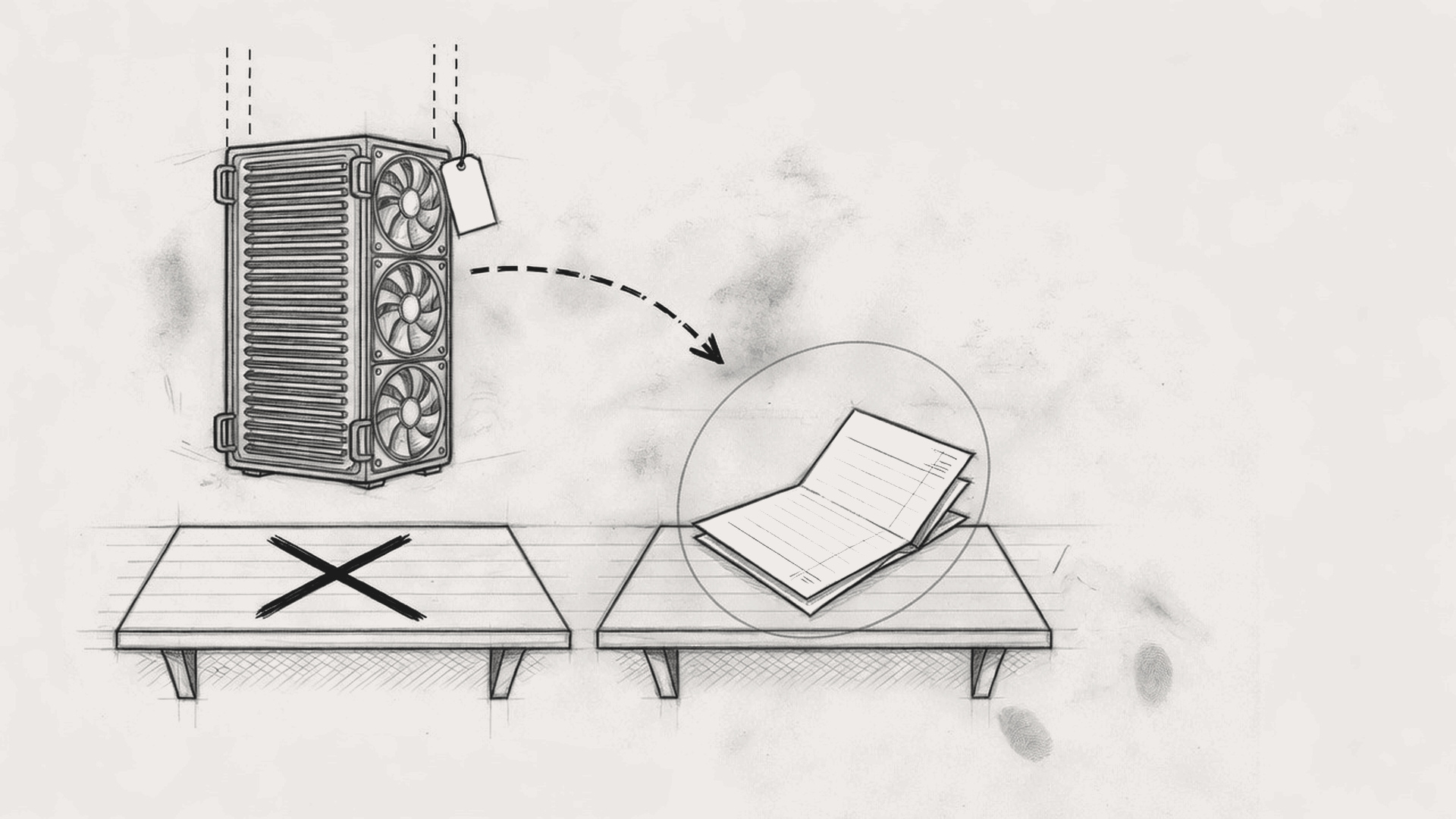
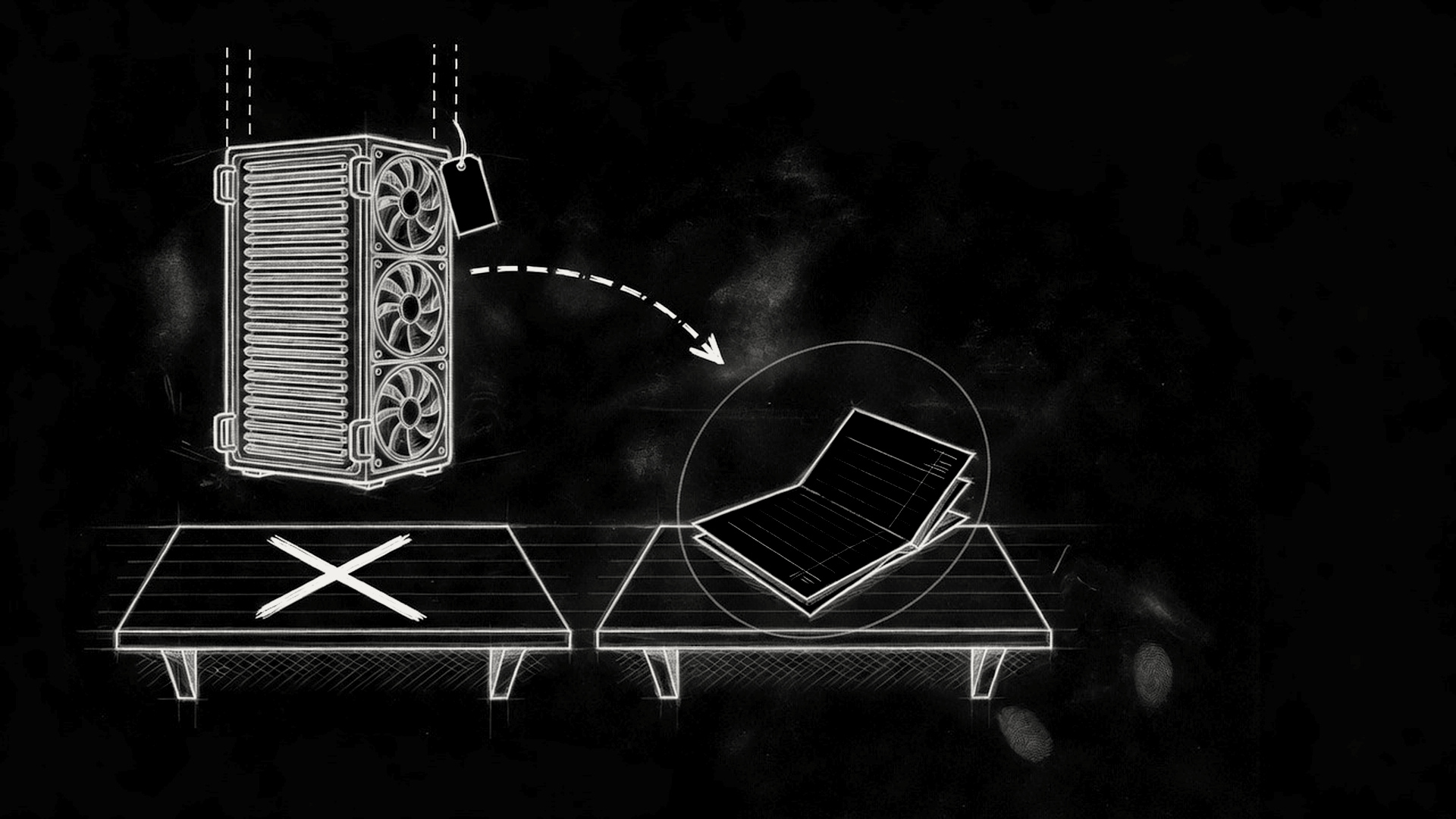
A research-in-public note. Figures come only from the primary sources and entity notes cited below. Alpha Compute’s July lease-classification language is a company press release, not an audited Form 20-F lessor note. This is not investment advice. Factual cutoff and the EDGAR rescan are about 21 September 2026 (PT).
TL;DR
Object of study. Inside U.S. small caps, a class of lessor that rents identified NVIDIA GPU servers to a customer and accounts for the contract under ASC 842 (or the IFRS 16 family) as a sales-type / finance lease: on the commencement date the lessor derecognizes equipment PPE and replaces it with a net investment in lease (NIL); at commencement it may record one line of “revenue” roughly equal to carrying amount, plus matching cost; after that the income-statement engine is interest / finance income, not the straight-line monthly rent of an operating lease. This essay uses Smartbird (NASDAQ: BIRD, formerly Allbirds) as the anchor case and Alpha Compute (NASDAQ: ALP, formerly Portage / AlphaTON) as the near neighbor.
Core judgment. Sales-type and operating belong to the same “lessor” family, but the P&L shape is entirely different — the former looks like “a financed sale plus a receivable,” the latter like “the machine stays on the books and rent is collected by the month.” In the public record so far, BIRD is the cleanest sample of “buy Blackwell → sales-type → the lessee operates.” ALP is a narrative neighbor in the same finance / sales-type family, but the stack is a Buzz lease-in / lease-out lessee-sublessor, and the classification language comes mainly from a subsequent company monthly press release, not an audited 20-F lessor note. Neither is a bare-metal NeoCloud operator, and neither is CRWV-style ASC 606 cloud service.
Main findings.
- BIRD. A footwear asset purchase agreement is sold (cash delivered about $40.7M) → the shell is renamed Smartbird → the subsidiary NewBird AI, LLC uses convertible-note cash to buy about $2.8M of current-generation NVIDIA Blackwell, then leases it to a subsidiary of QumulusAI, Inc. (about 36 months, sales-type). Q2'26 continuing revenue is $2.758M (100% recognized at commencement for a single customer, cost matches, gross profit about zero); NIL at 30 June is $2.664M; subsequent interest is about $0.1M. Do not multiply commencement revenue by four and call it this year’s ARR. GPU count and the specific SKU are undisclosed — this essay does not invent them.
- ALP. ALPHA-01 is 504× B200, Canadian hydro, a two-year offtake with TCV $32.2M / management ARR $16.1M. The cards come in from Buzz at about $29.6M / 24 months, then go out to an unnamed frontier lab. The July monthly says the company accounts for the arrangement under IFRS 16 / ASC 842 as a finance or sales-type lease. That month: lease finance income $465k, and on the other side lease interest expense $270k. Audited FYE 31 March 2026 revenue is only $97k (IFRS 15) and does not include ALPHA-01. The classification wording is a company press release, not an audited 20-F lessor note. GAMEE game revenue sits on top, so the GPU-lessor purity is lower than BIRD.
- Boundary. WYFI has an NIL, but the underlying assets are storage / network / cloud-service equipment. Its GPU cloud runs through 606, and WYFI itself is a GPU lessee. BTBT consolidates WYFI and has no separate GPU sales-type franchise. BRUN / DGXX are operating 842 (see the companion essay). Mainstream NeoCloud (CRWV and others) is 606.
The accounting skeleton: sales-type vs operating vs 606
The same “dedicated GPU” contract can enter only one of ASC 842 or ASC 606 under U.S. GAAP. Once it is inside 842, the lessor still has to split operating from sales-type (including direct financing). Pin the journal-entry shape before reading the income statement — otherwise BIRD’s commencement pulse gets mistaken for a NeoCloud ARR.
Three standards, three P&Ls
| ASC 842 sales-type (BIRD) | ASC 842 operating (BRUN) | ASC 606 service (CRWV and others) | |
|---|---|---|---|
| Core test | Identified asset + the customer controls the use; and a sales-type condition is met (for example PV ≈ fair value, or the term covers economic life) | Identified asset + the customer controls the use; sales-type conditions are not met | No identified asset, or the supplier keeps a substantive substitution right / the customer does not direct the machine |
| Asset at commencement | Derecognize PPE → recognize NIL (net investment receivable) | The GPU stays in PPE and keeps depreciating | The GPU usually stays in the operator’s PPE, but revenue is not “rent” |
| Revenue at commencement | May record selling profit or loss. If fair value ≈ carrying amount, revenue ≈ cost and gross profit is about zero (this is BIRD) | No large commencement revenue. Rent starts to be recognized period by period | No “commencement.” Prepayments go to deferred revenue / RPO |
| Subsequent revenue | Interest income (effective interest on the NIL) | Lease revenue, straight-line (fixed rent) | Cloud / service revenue; stand-ready or usage |
| Can you annualize commencement revenue? | No — commencement recognition is one-time (or close to it) | Rent can be discussed as a run-rate / ARR (management basis) | ARR / RPO can be discussed, but on a 606 basis |
| Residual | Unguaranteed residual goes into the NIL. A purchase option goes into the contractual flows | Residual risk stays on the lessor’s balance sheet | Economically it sits with the operator, but it does not go through lease classification |
One sentence to keep: sales-type pulls “financing the sale of a machine” forward to the commencement date; operating spreads “the fee for using a machine” across the term; 606 recognizes “a compute service” against a performance obligation. BIRD and BRUN are both lessors. Comparing their ARR sideways will lie to you.
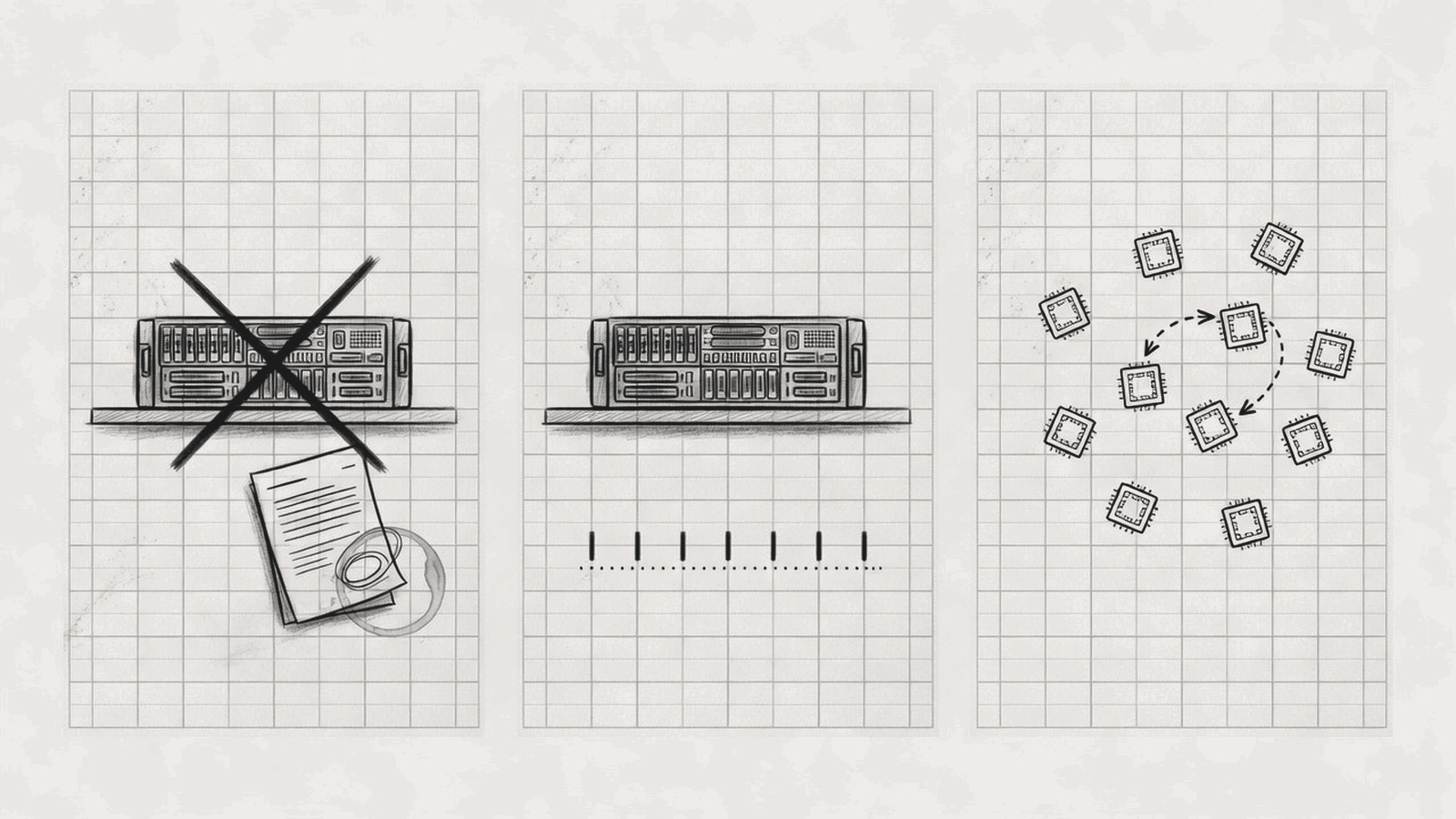
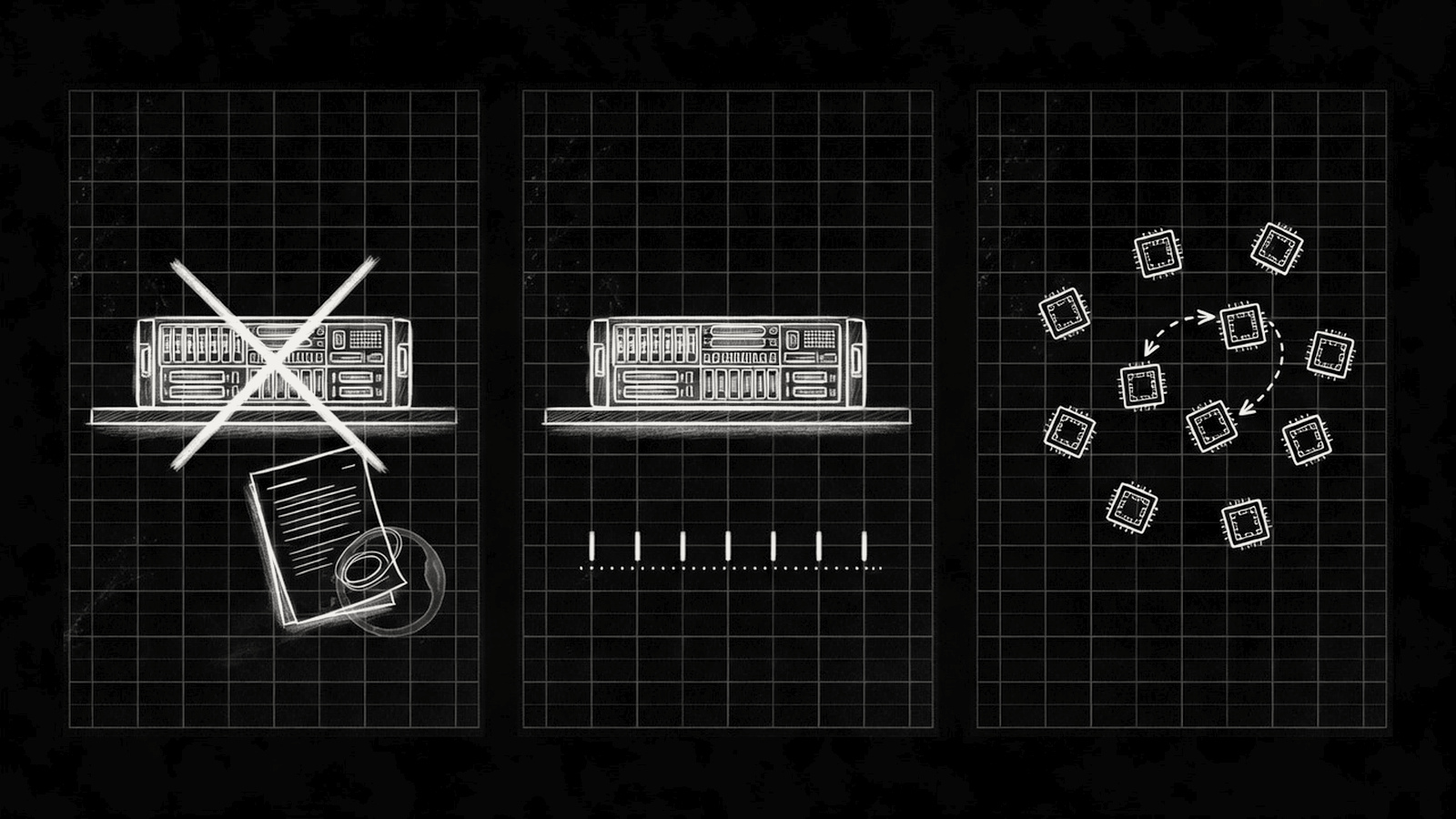
Three mutually exclusive books for one dedicated-GPU contract. Left, sales-type: the server is derecognized and a receivable note remains. Center, operating: the server stays, and rent is a row of equal ticks. Right, ASC 606: there is no identified server; one unit of compute can be substituted for another. The zones are alternatives, not a sequence.
What happens on the books at commencement (the BIRD type)
Compressed into four steps. The figures are taken from BIRD’s Q2'26 10-Q and are only the skeleton:
- Buy the cards. Cash out → PPE (about $2.758M purchase of PPE).
- Commence. PPE moves out → net investment in lease (a non-cash reclassification of the same amount). The P&L records net revenue ≈ $2.758M and costs of net revenue ≈ $2.758M → gross profit about zero (fair value ≈ carrying amount; no material selling profit).
- Collect. Monthly rent cash comes in. Part reduces NIL principal. Part is recorded as interest income.
- Period end. The balance sheet barely shows this batch of GPU PPE. What it shows is current and non-current NIL (BIRD at 30 June: $0.515M + $2.149M = $2.664M) and unearned interest ($0.832M).
- 01BuyCash out → PPE. Purchase of PPE $2.758M.
- 02CommencePPE out → NIL. Revenue $2.758M equals cost $2.758M. Gross profit ~0.
- 03CollectCash splits. Principal reduces the NIL. The rest is interest income.
- 0430 JuneNIL $0.515M + $2.149M = $2.664M. Unearned interest $0.832M. Continuing GPU PPE is gone.
Commencement is a substitution of objects, then a split of each cash receipt. The $2.758M is the day-one pulse, not a quarterly run-rate. Q2'26 10-Q.
Discipline: seeing “Q2 revenue $2.8M” is not a reason to multiply by four. That is commencement recognition, not a quarterly rent run-rate. The recurring P&L contribution that follows is, in the near term, often only interest — and a public company’s SG&A can be an order of magnitude larger than that interest.
Put operating and 606 on the same desk
| Question | Sales-type answer | Operating answer | 606 answer |
|---|---|---|---|
| Whose books still hold the machine? | After commencement, not the lessor’s PPE | On the lessor’s PPE | Usually the operator’s PPE |
| Where does a customer prepayment go? | Often into the NIL / the contractual collection structure | Deferred lease income / deposits | Deferred revenue; RPO is disclosed |
| Largest misread | Annualizing commencement revenue | Treating TCV as RPO | Treating a dedicated cluster as 842 |
The companion note asc-842-gpu-lessor-brun-dgxx.md writes operating versus 606 all the way through. On this site that essay is Who Books GPU Use Rights as Rent. This essay keeps only the skeleton, so the two case numbers below have somewhere to hang.
BIRD
Company history and management
Smartbird (ticker BIRD) is not a native AI-infrastructure company. It is the listed shell left after Allbirds, the sustainable-footwear brand, sold its brand assets. To read the QumulusAI lease, the two completely different APA / transactions have to be separated first — otherwise “cash in from selling shoes” gets read as “cash in from buying GPUs.”
History, compressed. Allbirds is formed in Delaware in 2015. It IPOs in November 2021 under the ticker BIRD. From 2022 to 2025 demand is weak, stores close, and losses continue. FY24 net revenue is about $189.8M and the net loss about $93.3M. FY25 net revenue is $152.5M (−19.7%) and the net loss $77.3M. On 29 March 2026 it signs a footwear Asset Purchase Agreement (buyer Allbirds IP LLC / an American Exchange Group affiliate). In April 2026 it simultaneously starts a convertible-note facility, buys Blackwell, signs the QumulusAI lease, and markets “NewBird AI.” On 3 June 2026 a special meeting of stockholders approves the sale. On 9 June 2026 the footwear business closes (cash consideration about $40.7M). On 15 June 2026 the legal name becomes Smartbird, Inc. and the facility cap expands to $100M. Around 18 June 2026 Nadia Carlsten becomes CEO. On 19 August 2026 the first Q2 10-Q lands with Smartbird as the reporting entity and footwear as discontinued operations.
The full event table is below, so the dates can be checked. The narrative above controls.
| Date | Event |
|---|---|
| 6 May 2015 | Allbirds, Inc. is formed in Delaware (footwear / DTC) |
| November 2021 | IPO. Class A BIRD lists on Nasdaq |
| FY2024 / FY2025 | Footwear net revenue about $189.8M / $152.5M. Losses continue |
| 30 June 2025 | Second Avenue $50M revolving credit (the footwear period) |
| 29 March 2026 | Footwear APA signed. Proposed purchase price about $39.0M. Escrow $3.0M |
| 14 / 19 April 2026 | Convertible SPA. Buy Blackwell and sign the QumulusAI lease. First notes $3.25M |
| 20 April 2026 | 8-K summarizes the facility, Electronics Assets, and the GPU lease |
| End of April 2026 | Chardan ATM, initial cap about $50M |
| 8 May 2026 | DEFM14A: the sale, Nasdaq 19.99% issuance approval, and related items |
| 3 June 2026 | Special meeting approves the asset sale / charter amendments |
| 4 June 2026 | Additional convertible notes, principal $5.0M |
| 9 June 2026 | Footwear closes. Cash about $40.7M. Second Avenue is repaid, about $19.7M |
| 11 June 2026 | ATM cap, in aggregate, up to about $98.1M |
| 15 June 2026 | Legal name → Smartbird. Facility → $100M. The PBC formulation is dropped |
| 18 / 19 June 2026 | Nadia Carlsten becomes CEO. Joe Vernachio resigns |
| 29 July 2026 | Auditor is replaced (8-K Item 4.01) |
| 6 August 2026 | A special dividend of $0.31 per share is announced (about $3.6M; intended payment 20 August) |
| 19 August 2026 | Q2'26 10-Q and Carlsten’s stockholder letter |
| Through 21 September 2026 | Another EDGAR pass: no new 10-Q and no new GPU-lease 8-K (only Form 144 / Form 4). Public interviews still describe a managed customer pipeline and have not announced a second customer |
The split that has to be read.
| Transaction | Subject | Direction of cash | Do not mix this up |
|---|---|---|---|
| Footwear APA | Allbirds brand, IP, inventory, and related assets are sold | Cash in to the shell | Not a GPU purchase |
| GPU purchase + QumulusAI lease | Blackwell servers | Convertible cash out to buy cards → lease cash in | Not part of the footwear APA |
| “NewBird AI” | An April vision name. It lands as the subsidiary NewBird AI, LLC | — | The parent’s legal name is Smartbird. The ticker is still BIRD |
| “>$200M access” | Cash + undrawn facility + ATM cap | Not cash already received | A management formulation. Do not treat it as net cash |
Management. After the pivot, both power and résumés change generation. The CEO faces AI-infrastructure product. The CFO stays from the footwear period and gives the statements continuity. But the revenue contract that has actually landed is still one equipment lease. Governance also stacks Class B super-voting on top of covenants with the convertible investors.
| Role | Name | Point |
|---|---|---|
| CEO / President / Director | Dr. Nadia Carlsten | From 18 June 2026. Base salary $700k plus a 100% target bonus. Inducement RSU 1,532,379. Résumé includes DCAI CEO, SandboxAQ, AWS quantum product, and DHS |
| CFO | Ann Mitchell | Stays. Salary reset to $450k plus a 50% target bonus. RSU 766,190 |
| Board chair | Lily Yan Hughes | Joins the board in October 2025. Ingram Micro / Arrow background |
| Former CEO | Joe Vernachio | Resigns 19 June 2026 |
| Auditor | Replaced 29 July 2026 | Information risk rises during the transition |
Dual-class equity: Class A has 1 vote, Class B has 10. The facility investors separately have a 24-month ≥55% co-invest, a COO appointment right, registration rights, and covenants on debt, assets, and changes of business — a double constraint of “founder votes + creditor covenants.” Authorized capital far exceeds shares outstanding (A 2.0B / B 200M), which leaves room for the ATM, the convert, and incentives.
Where the business actually is
Put the press-release business lines next to the statement facts and only one conclusion is left. As of Q2'26, the only evidence of continuing revenue is a single sales-type commencement. Footwear has gone to discontinued operations. The managed dedicated / GPUaaS vision in the stockholder letter has not yet become service-fee revenue.
| Line | What the company says | What can be checked | Status |
|---|---|---|---|
| Footwear / Allbirds brand | The historical main business | Sold on 9 June 2026 for about $40.7M cash. Gain on disposal about $21.6M | Divested (discontinued) |
| AI infrastructure / Electronics Assets | “Design, procure, deploy, and operate execution engines” | The statement evidence is one NewBird → QumulusAI sales-type lease | A miniature lessor |
| GPUaaS / NeoCloud / managed | The long-term vision in the stockholder letter | No multi-tenant cloud revenue line. No disclosure of a self-operated hall | Prospective |
| Financing-capacity narrative | “>$200M capital access” | Cash at 30 June about $37.4M + undrawn facility $91.75M (an investor option) + remaining ATM cap | Capacity ≠ cash received |
The model in one sentence: Smartbird / NewBird AI LLC is a lessor that holds (and held) Blackwell. The QumulusAI subsidiary is the lessee / operator. The company is not operating a data-center hall — at least not inside the contract that has been disclosed.
The pivot’s capital toolbox, in time order
- Second Avenue $50M revolver (30 June 2025) → amended several times during the sale → paid off in full on 9 June 2026 (payment about $19.7M; a loss on extinguishment of $3.2M goes to discontinued operations).
- Convertible facility (14 / 19 April 2026), initially $50M → expanded to $100M on 15 June. Principal issued $8.25M (19 April: $3.25M; 4 June: $5.0M). The undrawn $91.75M is entirely an investor option.
- Chardan ATM (end of April 2026), initially about $50M → expanded on 11 June to an aggregate of up to about $98.1M. Net proceeds used in the first half about $15.4M.
- Special dividend (announced 6 August 2026): part of the footwear-sale proceeds returned to stockholders ($0.31 per share ≈ $3.6M).
| Facility term, compressed | Disclosure |
|---|---|
| Coupon | 12.0%. Payable in stock or cash. Paid quarterly |
| OID | 5% |
| Tenor | 2 years after each tranche is issued |
| Collateral | AI infrastructure + NewBird equity. After the sale, almost all of the assets |
| Conversion, initial tranche | 120% × a mechanism tied to the closing bid on an agreed pricing day |
| Incremental $50M tranche | Conversion price steps up to $4.00 (the increment only) |
| Alternate conversion | min(prevailing price, a 93% / 85% lowest-VWAP path) |
| Ownership cap | 4.99% / 9.99% |
| Accounting | Fair value option. Fair value at 30 June $8.187M |
| Net cash in, both draws | About $7.3–7.8M |
How to read the governance: Class B super-voting is still there. Facility investors have covenants, co-invest, and the COO right. The slope at which the convert and the ATM intercept the economic upside may be steeper than the slope at which the operating proof arrives. That is the core of the base and bear cases, not “whether there is a GPU.”
The sales-type lease, in depth (QumulusAI)
Start timeline
| Date | Event | Status / note |
|---|---|---|
| 14 / 19 April 2026 | Path on which the facility and the GPU lease are signed | Lessor = NewBird AI LLC. Lessee = a QumulusAI subsidiary |
| 20 April 2026 | 8-K summary | Electronics Assets are defined to include sale, lease, sale-leaseback, and similar |
| Commencement (inside Q2) | PPE → NIL. Revenue and cost of about $2.758M each are recognized | 10-Q Note 11 |
| 30 June 2026 | Balance-sheet date | NIL $2.664M. PPE, net (continuing computer equipment) $0 |
| 19 August 2026 | 10-Q and stockholder letter | First quarterly report with Smartbird as the entity. The managed narrative is upgraded. The evidence is not upgraded with it |
What was actually bought, and what was actually leased out
The public filings confirm current-generation NVIDIA Blackwell servers, purchased at a cost of about $2.8M (statement of cash flows: purchase of PPE $2.758M). Count, specific SKU (B200 / B300 / GB200 and so on), GPUs per machine, supplier name, and hall location are all undisclosed. Research discipline: say the cost and the generation, and do not invent a card count.
| In name, or in the narrative | The reality the public filings can confirm |
|---|---|
| “AI infrastructure platforms,” “managed dedicated” | The contract that has landed is an equipment sales-type lease |
| A Blackwell cluster | The generation is confirmed. The count is UNFILED |
| The customer operates | Company narrative: the lessee (QumulusAI) bears the operating duties |
| Terminal residual | Purchase option about $0.1M. Total contractual payments including the purchase option about $3.7M |
Contract terms
| Term | Disclosed value | Source |
|---|---|---|
| Lessee | A subsidiary of QumulusAI, Inc. The subsidiary’s full legal name is not given | 8-K / 10-Q |
| Lessor | NewBird AI, LLC (wholly owned) | 8-K |
| Classification | ASC 842 sales-type | 10-Q Note 11 |
| Term | 36 months, noncancelable | Note 11 |
| April marketing formulation | About $2.75M / three years | 8-K |
| Rent structure | About $0.1M per month for the first 30 months; about $0.2M per month for the last 6 months | Note 11 |
| Terminal purchase option | About $0.1M | Note 11 |
| Total contractual payments, including the purchase option | About $3.7M | Note 11 |
| Revenue concentration | 100% of continuing revenue comes from that single U.S. customer | Note 7 |
| Lessee credit / guarantee | Undisclosed | UNFILED |
Contractual cash schedule (30 June, $ thousands)
| Period | Undiscounted collections |
|---|---|
| Remainder of 2026 | 520 |
| 2027 | 1,039 |
| 2028 | 1,177 |
| 2029 | 760 |
| Total | 3,496 |
| Less: unearned interest | (832) |
| Net investment | 2,664 |
Collections are back-loaded into 2027–2028, then step down in 2029. The net investment is the discounted remainder, not the sum of the checks. Q2'26 10-Q, 30 June.
The 10-Q table header was once mislabeled “Operating Lease,” but the body is explicit that the lease is sales-type. Follow the body, and follow finance-lease payments / net investment.
Lessee risk and holes in the contract record
| Gap | Why it matters |
|---|---|
| The full legal name of the QumulusAI subsidiary is not disclosed | Credit and litigation cannot be searched independently |
| Lessee financial statements / guarantee / parent guaranty | Under single-customer concentration, the ceiling on loss given default is not clear |
| The full lease exhibit’s commercial schedules (SLA, hosting site, insurance, early termination) | The public 8-K is only a summary |
| Whether the hosting site / power contract is signed by the lessee | It changes how far “who operates” can be verified |
| Insurance and allocation of loss | Residual value and disaster cases |
Concentration: continuing revenue is 100% one U.S. customer. Any collection problem punches straight through the AI-business narrative.
| BIRD / QumulusAI | A large disclosed BRUN contract, as an example | |
|---|---|---|
| TCV / contract consideration | ~$2.75–3.7M | Thinking Machines path $472M; other single contracts $200M+ |
| Term | 36 months | Often 36–48 months |
| Prepayment | A large prepayment is not emphasized | A construction prepayment on the order of 25% is common |
| Accounting | Sales-type | The body is an operating lease |
The accounting path (H1'26)
- Blackwell is purchased with the net convertible proceeds → purchase of PPE $2.758M.
- On the commencement date, a non-cash transfer of PPE to net investment in lease of $2.758M.
- Continuing balance sheet: PPE, net is —. NIL is $2.664M (after collections / amortization).
- The company as a lessee still has operating-lease right-of-use assets for offices and similar of $2.502M (unrelated to the GPU lessor position).
| Item | Amount / treatment |
|---|---|
| Selling profit at commencement | Not material (fair value ≈ carrying amount) |
| Q2 net revenue | $2.758M (commencement recognition) |
| Costs of net revenue | $2.758M |
| Subsequent interest income (Q2 / H1) | About $0.1M (the P&L line is $79k of interest income) |
| NIL at 30 June | $0.515M current + $2.149M non-current = $2.664M |
| Unearned interest | $0.832M |
Financial condition
Basis warning. The Q2'26 10-Q reclassifies footwear as discontinued. The FY24 / FY25 annual reports are the history of a footwear entity. They cannot be added sideways to continuing AI revenue. Units are $ thousands unless noted.
Continuing P&L (Q2 / H1'26)
| Line | Q2'26 | H1'26 |
|---|---|---|
| Net revenue | 2,758 | 2,758 |
| Costs of net revenue | 2,758 | 2,758 |
| Gross profit (commencement) | ~0 | ~0 |
| SG&A | 10,695 | 16,707 |
| Loss from operations | (10,695) | (16,707) |
| Interest income | 79 | 79 |
| Interest expense | (1,458) | (1,458) |
| Loss on fair value of the convertible | (229) | (229) |
| Other expense, net | (503) | (503) |
| Net loss — continuing | (12,778) | (18,869) |
| Diluted EPS — continuing | $(1.39) | $(2.11) |
The quarterly public-company cost is several times the commencement “revenue,” and interest income is not visible on this scale until you read the label. Do not multiply 2,758 by four. Q2'26 10-Q, $ thousands.
How to read the P&L:
- $2.758M cannot be annualized — a sales-type commencement is recognized once.
- Commencement cost equals revenue → gross profit about zero.
- SG&A of $10.7M a quarter is extremely heavy against a net investment on the order of $2.7M. Public-company cost overwhelms the return on the asset.
- Interest expense of $1.5M comes mainly from the convertible. It is not “lease interest expense.” On the way out, BIRD is the lessor.
The bridge to consolidated net income: Q2 continuing (12.8M) + discontinued (3.6M) ≈ a net loss of (16.4M). The first-half total is about (37.1M). The footwear side includes large items such as a disposal gain of $21.6M and a loss on debt extinguishment of $3.2M. Strip them out cleanly before analyzing the AI business.
Balance sheet (30 June 2026 vs 31 December 2025, $ thousands)
| Line | 30 June 2026 | 31 Dec 2025 | Reading |
|---|---|---|---|
| Cash and equivalents | 37,378 | 26,690 | Sell shoes + debt + ATM − debt paydown − opex |
| Cash + restricted | 38,588 | — | |
| Net investment in lease, current | 515 | — | Sales-type |
| Net investment in lease, non-current | 2,149 | — | |
| Property and equipment, net | — | 10,513 | The GPU has moved into the net investment |
| Operating-lease ROU | 2,502 | 13,051 | Lessee offices and similar |
| Total assets | 46,116 | 109,419 | Footwear assets leave the balance sheet |
| Convertible notes (fair value) | 8,187 | — | Level 3 fair value option |
| Stockholders’ equity | 22,524 | 35,914 |
Cash bridge (H1'26, compressed)
Net cash in from selling shoes (investing, discontinued) is about +$38M. Debt repayment (financing, discontinued) is about −$25M. Convertible plus ATM (financing, continuing) is about +$23M. GPU purchases are −$2.8M. Combined operating cash flow on both lines is about −$23M → ending cash stands at about $37–39M. Issued convertible principal is only $8.25M. The remaining $91.75M sits entirely in an investor option. First-half ATM net proceeds are about $15.4M.
The special dividend of $0.31 per share ≈ $3.6M (record date 25 June, intended payment 20 August) takes another layer of cash out. Q2 says the earlier going-concern substantial doubt has been alleviated, but the risk factors still say: if the investors do not keep funding, cash may be exhausted.
A unit-economics sketch (contract arithmetic only)
| Metric | Value | Warning |
|---|---|---|
| Commencement “revenue” / asset cost | ≈ 1.0× | Not profit. A matching transfer |
| Total contractual collections / cost | ≈ $3.7M / $2.8M ≈ 1.32× | Includes time value and the purchase option |
| Q2 interest / net investment | ~$0.1M / $2.7M | Not a full quarter of run-rate |
| Continuing SG&A / net investment | $10.7M / $2.7M | Public-company cost overwhelms the asset return |
| GPU count | Undisclosed | Do not treat an estimate as a fact |
An order-of-magnitude comparison with BRUN, to set the anchor, not because the businesses are the same shape. BIRD’s contract consideration is about $2.75–3.7M. BRUN’s disclosed large contracts can reach $200M+, and the Thinking Machines path is on the order of $472M. The body there is an operating lease. H1'26 lease revenue is about $41.0M (97.5% of the group). See the operating-lease essay.
Equity and liquidity snapshot
| Item | Value | Date / source |
|---|---|---|
| Class A outstanding | 9,315,794 | 10 August 2026 (10-Q cover) |
| Class B outstanding | 2,493,399 | Same |
| A + B basic shares | ~11.81M | Same |
| Book stockholders’ equity at 30 June | $22.5M | 10-Q |
| Weighted-average shares (Q2 basic) | 9,164,890 | P&L |
| Market cap (secondary source, about early September 2026) | about $22–30M (~$2.5 / share) | Not a primary EDGAR source. Anchor only |
Going concern. Q1'26 wrote substantial doubt. Q2'26 says footwear-sale cash + the convertible + the ATM + cost cuts + the AI strategy → the substantial doubt for the next twelve months is alleviated. In parallel, the risk factors still stress that cash may be exhausted if further tranches are not obtained, and they state a path to delisting or dissolution. In research, read “doubt alleviated” as conditional. Do not read it as “sustainability has been proved.”
Research discipline where the GPU count is undisclosed
| Can be said | Cannot be said |
|---|---|
| Purchase cost about $2.8M. The generation is current-generation NVIDIA Blackwell | Inventing a B200 / B300 count or a rack count |
| There is a terminal purchase option of about $0.1M | Assuming cluster megawatts or tokens per second |
| Funds move through escrow and are released against final invoices | Claiming the company already operates a named data center |
Any third-party “estimated card count” that cannot be traced to an 8-K, a 10-Q, or an exhibit is marked UNFILED / not a primary source.
BIRD, in four sentences
- Bought for real, and leased for real — cash purchase of the cards plus a sales-type lease already on the books. This is not an SGRX-style package of undelivered rights (see
apa-mode.md, published here as The Party That Holds the GPUs Is Not Necessarily the Party That Sells the Compute). - The accounting shape is special — a commencement pulse, then interest. Do not treat it as NeoCloud ARR.
- Operations are outsourced to the lessee — that is the company’s narrative. Hall and power detail is undisclosed.
- Replication is unproved — one customer, one contract, SG&A far larger than interest. A second customer and non-toxic capital are the switches.
ALP
Company history and management
Alpha Compute (NASDAQ: ALP; CIK 0001095435) is a BVI foreign private issuer. The primary reporting framework is IFRS. The shell lineage is long: Dealcheck → Bontan → Portage Biotech (immuno-oncology) → AlphaTON Capital (ATON) (a TON treasury / Telegram-ecosystem narrative) → rebranded on 20 April 2026 as Alpha Compute Corp. (ALP). To understand ALPHA-01, two parallel lines have to be visible at once: the GPU offtake and GAMEE games. The second will keep diluting the purity of a “pure GPU lessor.”
| Stage | Name | Note |
|---|---|---|
| Early | Dealcheck.com → Bontan | Shell lineage |
| Biotech | Portage Biotech Inc. | Filings through about September 2025 |
| Transition | AlphaTON Capital Corp. (ATON) | TON / Telegram narrative. Rename path around August 2025 |
| Current name | Alpha Compute Corp. (ALP) | Rebranded 20 April 2026. Nasdaq Capital Market |
| Role | Name | Point |
|---|---|---|
| CEO and director | Brittany Kaiser | From 2 August 2025. Former chair of Gryphon Digital Mining |
| Executive chairman / CIO path | Enzo Villani | The 20-F also lists him as CIO and director. Independent-contractor agreement |
| CBDO | Yury Mitin | Quoted on the ALPHA-01 press release |
| Alpha Games EVP (narrative) | Bozena Rezab | The GAMEE side |
| Former CEO | Alexander Pickett (through August 2025) and others | The shell changes chiefs often |
Most executives are on independent-contractor agreements (cash plus TON-token bonus terms). Governance leans toward a light-asset shell style, unlike BRUN’s professional operating team.
Primary sources and the announcement ledger, compressed
| Date | Type | Content |
|---|---|---|
| 13 May 2026 | 6-K + EX-99.1 | ALPHA-01: $32.2M / 2 years / 504 B200 / Canada / expected prepayment $7.5M / customer unnamed |
| 21 May 2026 | 6-K + EX-99.1 | Go-live update. Cash $10.2M. Assets $66.9M. $26.6M GPU lease liability |
| 27 May 2026 | 6-K | GAMEE closes (60% from Animoca) |
| 5 June 2026 | 6-K + EX-99.1 | Unaudited balance sheet: assets $79.2M, liabilities $44.4M (including $34.4M of GPU + data-center leases), equity $34.8M. Run-rate $23M |
| 16 July → 6 August 2026 | 20-F → 20-F/A No. 2 | The authoritative annual report (FYE 31 March 2026). ALPHA-01 and GAMEE are both subsequent |
| 11 August 2026 | 6-K | Pennsylvania 200 MW (expandable to 1 GW) option term sheet |
| 19 August 2026 | Company PR (GlobeNewswire) | July monthly: finance / sales-type classification language + a finance-income table (not a 6-K) |
| 1 September 2026 | 6-K | Second 180-day Nasdaq minimum-bid grace period, to 1 March 2027 |
| 3 September 2026 | 6-K | A 1-for-50 reverse split is announced. The effective date is first written as 8 September, then changed to 9 September. About 77.49M → ~1.55M shares. New CUSIP G7185A144 |
| 14 September 2026 | 6-K + EX-99.1 | Investor presentation (mostly slides). It restates the June snapshot (ALPHA-01 $32.2M / 504 B200; assets $79.2M; and so on). ALPHA-02 is still marked in progress (576 B300 / Sweden). It gives a projected revenue bridge of $43.04M (including GAMEE). No new sales-type contract, and no audited NIL |
ALPHA-01: a finance / sales-type narrative of lease-in, then lease-out
The transaction
| Item | Fact | Source |
|---|---|---|
| GPU | 504 × NVIDIA B200 Tensor Core | 6-K EX-99.1; 20-F/A |
| Site | Canada; 100% hydro | Same |
| Canadian colo operator | Undisclosed | — |
| Customer | An unnamed “leading frontier AI laboratory” | 6-K |
| Control | Dedicated / exclusive access; an identified GPU cluster | 6-K; July PR |
| Term | 2 years | 6-K |
| TCV | $32,200,000 | 6-K |
| Management ARR | $16,100,000 | 6-K |
| Expected prepayment | $7,500,000 | 6-K |
| Actual prepayment (memo) | $6,445,958 (May 2026) | July PR |
| Go-live | May 2026 | 6-K; 20-F/A |
| Where the cards come from | Buzz Performance Cloud Inc.: 504 B200; 24 months; about $29.6M in total; deposit $2.6M | 20-F/A Note 21 |
| Who operates | The company calls itself GPUaaS. The boundary between the OS and cluster operations is not written as clearly as “the lessee operates” in BIRD × QumulusAI | Combined |
The stack in one sentence: Buzz (upstream lessor) → ALP (intermediary / disclosed as a finance-or-sales-type lessor) → an unnamed lab (downstream lessee). 504 in, 504 out. Both contract terms are about 24 months. Economically this is a spread intermediary, not a BIRD-style lessor that owns the cards.
BIRD · owned asset
Buy, then lease out
- Convertible cash buys Blackwell, about $2.8M
- NewBird AI, LLC is the lessor. PPE leaves
- QumulusAI subsidiary is the lessee and, on the company’s telling, the operator
- What remains is an audited NIL, $2.664M at 30 June
- Subsequent engine: interest, about $0.1M in the quarter
ALP · lessee-sublessor
Lease in, then lease out
- Buzz leases 504 B200 in, about $29.6M / 24 months
- ALP leases the same 504 out. TCV $32.2M / 2 years
- Customer is an unnamed frontier lab. Colo operator unnamed
- July PR claims NIL + finance income. No audited NIL balance
- The visible balance-sheet item is a lessee GPU / data-center liability
Same family of words, different stack. BIRD’s residual and credit sit mainly with the customer’s purchase option and the lessee. ALP also stacks an upstream lessor, a sublease, and its own lease liability. GAMEE is a parallel business, not a step in this stack.
Lease classification: separate the annual report from the monthly
The audited annual report (FYE 31 March 2026) is not an ALPHA-01 lessor classification. 20-F/A No. 2’s revenue policy is IFRS 15: compute offtake is described as stand-ready, over time. But ALPHA-01 goes live in May 2026, after the fiscal year-end. The annual-report policy therefore describes the small pre-period compute processing (FY2026 revenue is only $97k), not an IFRS 16 lessor classification of the May offtake. The 20-F/A has no NIL line and no operating-versus-finance checklist for ALPHA-01.
The company’s own subsequent account (GlobeNewswire, 19 August 2026, July Monthly Update) says finance or sales-type. As of the research date, this is the only primary wording that states a classification conclusion. That monthly had not been filed as a Form 6-K. It is a company press release, not an audited 20-F lessor note. The points, restated:
- The arrangement transfers to the customer control of an identified asset (a defined GPU cluster).
- Under IFRS 16 / ASC 842 it is treated as a lease rather than a service contract.
- If classified as finance or sales-type, the lessor does not record installment collections as revenue. It allocates them between recovery of the NIL and finance income.
July 2026 unaudited table (the company’s printed table; the table ranks ahead of the narrative paragraph):
| Metric | July 2026 |
|---|---|
| Gamee — revenue | $489,000 |
| Gamee — operating expenses | $432,000 |
| Gamee — EBITDA | $57,000 |
| Alpha-01 — lease finance income | $465,076 |
| Alpha-01 — lease interest expense | $270,318 |
| Alpha-01 — cash receipts (in) | $1,084,074 |
| Alpha-01 — cash disbursements (out) | $1,250,928 |
| Alpha-01 — net cash | $(166,854) |
| Memo: Alpha-01 lease prepayment received May 2026 | $6,445,958 |
A research reading, not the company’s audited conclusion:
- Outbound ALPHA-01: the company compares itself to finance / sales-type → the logic is NIL + finance income, not operating straight-line rent.
- The concurrent lease interest expense lines up with lessee interest on the Buzz lease-in / colo (lessee-sublessor).
- The prepayment of $6.45M is described as a monthly credit over two years, which pushes current cash collections down.
- An audited NIL balance / rollforward has not been seen. Do not multiply July finance income by 12 and call it ARR.
ALPHA-02 and the rest of the boundary
| Item | Fact in the 20-F/A | Watch this |
|---|---|---|
| GPU | 576 × NVIDIA B300 (72× Dell XE9780-B300). Purchased from Vertical Data. Total cost $40.9M. Deposits accumulated $8.6M | The 5 June 6-K once wrote “576 B200.” That conflicts with the 20-F B300. The 20-F controls |
| Hall | atNorth AB, Kista, Sweden. Phase I colo and related | Owned hardware plus a third-party colo path. Not the same as ALPHA-01’s Buzz lease-in |
| Status | Target calendar Q3 2026. The July monthly talks only about Alpha-01. The 14 September 2026 presentation still says in progress (Sweden) and projects Cluster 2 revenue of $19.92M | A customer offtake going live is still unconfirmed. A projection is not a booked sales-type lease |
| Owned GPU PPE at fiscal year-end | Only 1× H200 + 1× B300, carrying amount about $1.3M | Not the 504 B200s |
| Pennsylvania 200 MW | Option term sheet (6-K, 11 August 2026) | Greenfield. Nothing in operation |
GAMEE: the side business that contaminates purity
| ALPHA-01 infrastructure | GAMEE | |
|---|---|---|
| Nature | GPU offtake / a finance-type lease narrative | Telegram / mobile games and a digital-rewards platform |
| Close | Lease in May 2026. The cluster goes live the same month | 27 May 2026, acquisition of 60% of GaMee Global (from Animoca). Implied value $18M |
| Consideration | n/a (a lease) | Initial payment about $3.5M (cash $1.5M + an equity path of $2.0M) |
| Role in revenue | July: lease finance income / cash collections | 2025 revenue narrative $3.5M. Q1'26 $926k. July table $489k |
The two run in parallel. GAMEE is not an SPV under ALPHA-01. It is a majority-owned games subsidiary.
Financials: the 20-F and what came after
Audited results ($ thousands; 20-F/A No. 2)
| FY2026 | FY2025 | FY2024 | |
|---|---|---|---|
| Revenues | 97 | — | — |
| Operating expenses | 23,193 | 7,418 | 18,253 |
| Net loss (before NCI) | (38,627) | (6,778) | (75,382) |
MD&A: FY2026 revenue of $0.1M comes from compute processing that starts only in March 2026. GAMEE and ALPHA-01 are both outside FY2026 revenue.
Audited balance sheet (31 March 2026, $ thousands)
| 31 Mar 2026 | 31 Mar 2025 | |
|---|---|---|
| Cash | 486 | 1,670 |
| PPE, net | 1,283 | — |
| Equipment deposits | 9,308 | — |
| Total assets | 19,530 | 2,225 |
| Lease liability (current + non-current) | 138 | — |
| Put-right liability | 7,105 | — |
| Equity (owners) | 7,229 | (123) |
| Working capital | (8,738) | 1,125 |
- Lessor NIL: it does not exist at fiscal year-end (the contract is subsequent).
- Lease liability of $138k is offices and similar, not the Buzz 504 cards.
- PPE is not the 504 B200s. Those cards sit inside the Buzz agreement.
- The auditor: going concern substantial doubt. A subsequent narrative, through 13 July 2026, puts cash and restricted cash at about $10.3M.
Unaudited snapshots after year-end
| Date | Point | Source |
|---|---|---|
| 21 May 2026 | Cash $10.2M. Assets $66.9M. $26.6M GPU lease liability | 6-K |
| 4 June 2026 | Assets $79.2M. Liabilities $44.4M (including $34.4M of GPU + data-center leases). Equity $34.8M. Run-rate $23M | 6-K |
| July 2026 | Finance income / Gamee / the prepayment memo | Company PR (not a 6-K) |
The $34.4M of GPU + data-center leases should be read as a lessee lease liability, not a lessor residual. Nasdaq Rule 5550(a)(2) minimum bid: a second 180-day grace period runs to 1 March 2027. From 9 September 2026 the stock has traded after a 1-for-50 reverse split (about 77.49M → ~1.55M shares; CUSIP G7185A144), still listed on the Capital Market as ALP. The split itself does not change the ALPHA-01 accounting classification, and it does not create or remove an NIL.
Unit economics, the part that can be rebuilt
The following is contract arithmetic, not an IRR the company disclosed. Residual value, purchase option, power, SLA, and Buzz sublease restrictions are all insufficiently disclosed.
| Metric | Calculation | Result |
|---|---|---|
| Outbound $ / GPU-year | $32.2M / 2 / 504 | ≈ $31,944 / GPU-year (≈ $2,662 / GPU-month) |
| Inbound Buzz $ / GPU-year | $29.6M / 2 / 504 | ≈ $29,365 / GPU-year |
| Contract gross spread (before colo / power / opex) | $32.2M − $29.6M | $2.6M / 24 months ≈ $108k / month |
| Prepayment coverage | $6.45M / $32.2M | ≈ 20% of TCV (below the marketed $7.5M) |
| July financing spread (unaudited) | $465k − $270k | ≈ $195k of net financing contribution that month |
| July cash | $1.084M − $1.251M | −$167k (the company attributes this to amortization of the prepayment) |
BIRD’s contractual collections over cost are about 1.32×, including time value and a purchase option. ALP’s outbound over inbound is about 1.09× before colo, power, and opex. Card count carries ALP’s size. The multiple does not.
A rough comparison with BIRD: BIRD’s contractual flow / cost ≈ 3.7 / 2.8 ≈ 1.32×. ALP outbound / inbound ≈ 32.2 / 29.6 ≈ 1.09×. The intermediary spread is thinner. Size comes from the card count.
Risk and disclosure gaps (ALP)
Risks already disclosed, in extract: going concern; dependence on financing; Nasdaq bid compliance / a possible reverse split; customer and supplier concentration; GPU residual value and the technology cycle; leftover TON / digital assets; GAMEE integration.
Explicitly omitted from the filings. Do not infer them:
- The legal name of the ALPHA-01 customer.
- The name of the Canadian data-center / colo operator.
- An audited IFRS 16 lessor note / NIL rollforward / implicit rate.
- Whether ALPHA-02 already has a customer offtake and has gone live.
- Whether the Buzz agreement allows sublease, and the full residual and default terms.
- A U.S. GAAP primary statement. The company is an IFRS foreign private issuer.
The isomorphism judgment, restated: the accounting family — yes (outbound = a sales-type / finance lessor narrative). The economic stack — no (lease-in / lease-out + Gamee). Disclosure maturity — no (BIRD has a 10-Q NIL note; ALP’s classification lives mainly in a monthly that was not filed as a 6-K).
ALP, in four sentences
- A neighbor in the accounting family — the company describes finance / sales-type, not operating, and not pure IFRS 15 (for ALPHA-01).
- The economic stack is not the same shape — Buzz lease-in / lease-out, plus GAMEE. Not BIRD’s purchased cards.
- Disclosure maturity lags — the primary source of the classification is a monthly press release that was not filed as a 6-K. There is no audited NIL note.
- Larger, and less pure — 504 cards and a $32.2M TCV are far larger than BIRD’s single contract, but the customer is unnamed, the spread is thin, and a side business runs in parallel.
False positives and the boundary
When scanning for “sales-type + GPU,” the easiest mistake is not missing BIRD. It is treating a company that has an NIL, or a company that has GPUs, as automatically the same shape. The short list:
| Name | Why it looks like one | Why it is not | Where it belongs |
|---|---|---|---|
| WYFI | It really is an ASC 842 sales-type lessor. NIL at 30 June is about $10.9M. Interest goes to Revenue–Other | The underlying assets are explicitly data storage / network / cloud-service equipment, not identified GPUs. GPU cloud = ASC 606. It is also a GPU lessee (H1'26 variable lease cost about $9.3M) | False positive. See wyfi.md |
| BTBT | After consolidation, the statements show an NIL and interest in the same amount as WYFI | It consolidates WYFI after a ~69.6% controlling stake. No separate GPU sales-type franchise | Not the same shape. See btbt.md |
| BRUN | Also an ASC 842 lessor. Identified GPUs + exclusive control | The classification is operating. The machines stay on the books. Rent is straight-line. H1'26 lease $41.0M / 97.5% | A different book → the operating-lease essay (asc-842-gpu-lessor-brun-dgxx.md) |
| DGXX | The GPU line may also be 842 | The body is colo / power / mining. The GPU line is operating and usage-based, not a sales-type anchor | The same other book |
| CRWV / NBIS / IREN / CHRN | Dedicated clusters, multi-year contracts | Revenue is almost uniformly ASC 606. A substitution right may be retained | NeoCloud service, not a sales-type lessor |
| APLD / WULF | They also use 842 lessor language | What they lease is cabinets and power. The tenant brings the chips | A landlord, not a GPU lessor |
| SGRX (APA pattern) | It also talks about GPUs plus third-party management | The subject is an undelivered right to receive. No sales-type NIL has been seen | See the holding-versus-selling essay (apa-mode.md) |
| QNT (Quantinuum) | It really has a sales-type NIL (about $13.0M at 30 June) | The underlying asset is a quantum processing unit under on-premises exclusive access, not an NVIDIA GPU. After the 2025 commencement point, 2026 has no new sales-type revenue | A quantum boundary. Not GPU-isomorphic to this essay |
One more sentence on WYFI. It proves that “a small sales-type equipment ledger can appear in a U.S. listing,” but the ledger underneath is written in storage and network equipment. Cloud services of about $40.6M in H1'26 are the main engine, and they run through 606. Pulling WYFI into the BIRD isomorphism table replaces the underlying asset with the name of an account.
NIL rollforward (WYFI, $ thousands; from the entity note; not GPUs):
| Date | NIL current | NIL non-current | Interest (Revenue–Other) |
|---|---|---|---|
| 31 Dec 2025 | 4,261 | 9,687 | — |
| 30 June 2026 | 2,573 | 8,375 | Q2 307; H1 689 |
H1'26 sales-type interest is about $0.7M. Next to Cloud $40.6M + Colo $9.5M, it is not material. The same amount appears after BTBT consolidates. Do not double-count it as “two GPU sales-type companies.”
Draw the line again against apa-mode.md. SGRX’s APA is “an undelivered right to receive + unnamed management.” DUOT is “its own edge data center + a named Hydra + GPUaaS inside contract liabilities.” Both can tell a GPU story. Neither is a sales-type anchor of “at commencement, derecognize PPE → NIL.” What is valuable about BIRD is not the scale. It is that the accounting path and the contract are already in a quarterly-report note.
A supplemental scan (8 September 2026) → a rescan (21 September 2026). After widening the EDGAR keywords ("sales-type" + GPU / Blackwell / NVIDIA; "net investment in lease" + GPU / Blackwell / NVIDIA; forms 10-K / 10-Q / 8-K / 20-F / 6-K; window 1 January 2025 → 21 September 2026), a third clean public sample of “identified NVIDIA GPU servers → sales-type / finance lessor → NIL” was still not found. The hits pile up on BIRD (a true hit), WYFI / BTBT (storage / network-equipment NIL; GPU cloud through 606), and QNT (quantum QPU sales-type, not GPUs). IREN has sales-type policy language but no GPU NIL. RXT / PLUS lean toward traditional IT-hardware financing or embedded leases. DUOT’s sales-type item is a generator. CEPL / PSTG / CDNS and similar names are excluded the same way. BRUN / DGXX remain operating. The conclusion does not change: the clean hit is still only BIRD. ALP is still a press-release-grade neighbor. See sales-type-gpu-peers.md and the _scan-extra memo.
The comparison desk: BIRD vs ALP vs BRUN
| Dimension | BIRD | ALP | BRUN |
|---|---|---|---|
| Shell / origin | Allbirds footwear is sold → Smartbird | Portage → AlphaTON → Alpha Compute | Native Boost Run (the mining tail has been diluted) |
| Listing / framework | Nasdaq BIRD. U.S. GAAP 10-Q | Nasdaq ALP. BVI foreign private issuer. IFRS 20-F | Nasdaq BRUN. U.S. GAAP |
| Who owns the GPU | Purchased, ~$2.8M of Blackwell | Leased in from Buzz, ~$29.6M / 504 B200, then leased out | Held, a large cluster (operating) |
| Outbound classification | ASC 842 sales-type (10-Q note) | The company says IFRS 16 / ASC 842 finance or sales-type (a PR, not an audited note) | ASC 842 operating |
| Commencement / P&L shape | One-time net revenue ≈ cost of revenue, $2.758M, then interest | Installment collections are not revenue. Finance income is recorded (July $465k) plus lessee interest | Monthly lease revenue. H1 $41.0M |
| NIL / asset form | NIL at 30 June $2.664M. GPU PPE is off the books | July implies an NIL. No audited balance. A large lessee lease liability | GPUs stay and depreciate. No sales-type NIL as the main story |
| Customer | A QumulusAI subsidiary (the subsidiary’s name is not given) | An unnamed frontier lab | Several customers. Large-contract paths are named (Thinking Machines and others) |
| Who operates the cluster | The lessee operates (company narrative) | The boundary is fuzzy. It calls itself GPUaaS | The lessor itself runs a bare-metal NeoCloud |
| Scale | One contract, ~$2.8M of assets / ~3 years. Card count undisclosed | 504 B200. TCV $32.2M / 2 years | Management TCV about $1.9B. H1 lease is 97.5% |
| Purity | Footwear is discontinued. Continuing operations ≈ a single-customer lease | GAMEE games substantively coexist | Lease purity is very high (a small blockchain tail) |
| Disclosure quality | A 10-Q NIL note + a payment table. The card-count gap remains | Classification is in a monthly PR. Customer and colo names are missing | The 10-Q operating-lease policy and the customer-control language are complete |
| Isomorphism | Anchor: owned-asset sales-type | Neighbor, 4/5: same accounting family, different economic stack | Another book: operating lessor / NeoCloud |
Three sentences to close the desk:
- If the question is “who wrote a GPU sales-type lease into an audit-grade note” → BIRD.
- If the question is “who has a finance-type narrative on a larger card count” → ALP (discount it: lease-in / lease-out + a press-release classification + GAMEE).
- If the question is “who is already a scaled bare-metal lessor” → BRUN (operating; see the companion), not the first two.
Three disciplines for reading the table
| Discipline | The right move | The common misread |
|---|---|---|
| Commencement revenue | Treat BIRD’s $2.758M as one-time recognition | ×4, then call it ARR |
| Finance income | Treat ALP’s July $465k as unaudited monthly interest | ×12, then call it ARR; or treat it as operating rent |
| Lease liability | Treat ALP’s $26–34M as a lessee liability | Treat it as the lessor’s “asset scale” or residual |
Economically, BIRD looks like “a small equipment-finance lessor.” ALP looks like “a two-sided lease spread plus a game studio.” BRUN looks like “a landlord of identified assets that operates them itself.” All three words contain “lease.” The businesses are not one class.
Research checklist / replication
For a sales-type GPU lessor to go from “one shell transaction” to “a platform that can be repeated,” it has to clear at least this list. Track each item as disclosed / undisclosed / failed.
For BIRD
| # | Question | As of 21 September 2026 | Why it matters |
|---|---|---|---|
| 1 | Is a second customer named and on the books? | Undisclosed (still 100% one customer) | One customer defaulting zeroes the narrative |
| 2 | Is it an owned asset or a sublessor? | Owned (bought, then leased) | This is the anchor identity. Lease-in / lease-out would slide it toward ALP |
| 3 | Does an audited NIL note continue? | Yes (Q2 10-Q Note 11) | Harder than a press-release classification |
| 4 | Are GPU count / SKU / hall disclosed? | Undisclosed | Unit economics cannot be checked from outside |
| 5 | QumulusAI subsidiary’s full name / guarantee? | Undisclosed | A hole in the credit search |
| 6 | Can interest income cover public-company cost? | No (interest ~$0.1M vs SG&A ~$10.7M a quarter) | Otherwise it depends on the ATM / convert to stay alive |
| 7 | Are further facility draws non-toxic? | $91.75M is still an investor option | Cost of capital and the dilution slope |
| 8 | Has an operating or service-fee revenue layer appeared? | No | The verification point for the stockholder letter’s managed narrative |
For ALP
| # | Question | As of 21 September 2026 | Why it matters |
|---|---|---|---|
| 1 | Has finance / sales-type entered an audited 20-F lessor note? | No (July PR only) | The grade of the classification evidence |
| 2 | NIL balance / rollforward / implicit rate? | Undisclosed | The statements cannot be tied out |
| 3 | ALPHA-01 customer’s legal name, and the Canadian colo operator? | Undisclosed | How far concentration and operations can be checked |
| 4 | Does the Buzz agreement allow sublease, and are residual and default set out in full? | Not sufficiently disclosed | Legal risk in the intermediary stack |
| 5 | Does ALPHA-02 (576× B300) already have a customer offtake, and is it live? | Unconfirmed (the 14 September presentation still says in progress) | Whether the owned-hardware path is delivered |
| 6 | Is GAMEE’s revenue share falling, and is GPU purity rising? | In July they still substantively coexist | The “pure lessor” narrative |
| 7 | Has the Nasdaq below $1 grace period been lifted? | Grace through 1 March 2027. A 1-for-50 split has been executed (about 9 September) | Listing status. A split is not confirmation of the classification |
| 8 | Does the outbound side still depend on a lease-in / lease-out spread? | Yes (~1.09×) | The gap versus BIRD’s owned asset |
Replication, in one sentence each
- The condition under which the BIRD path can be repeated: a second purchased GPU contract, a named customer, and interest (or future rent) that starts to cover SG&A — not only shell-sale cash and an ATM.
- The condition under which the ALP path can be repeated: an audit confirms the lessor classification, the spread stays positive after colo / power / opex, and the customer and the hall can be checked. Otherwise it looks more like “a financing intermediary that has a GPU count, plus a game company.”
- Neither can yet answer “who is a small BRUN.” BRUN’s question is operating scale and multiple customers, not the technique of a sales-type commencement.
In plain language: where the two companies differ
Put BIRD and ALP on the same desk and the difference is actually easy to remember. The shared subject is not the four words “renting out GPUs.” It is what remains on the lessor’s books, and what the income statement eats, after control of an identified GPU has been handed to the customer.
What BIRD sells is “a financed rental of a machine it has already bought.” The path that can be checked is short: convertible cash → buy current-generation Blackwell → the subsidiary NewBird AI signs a three-year contract with a QumulusAI subsidiary, with a terminal purchase option → the Q2'26 10-Q recognizes commencement under ASC 842 sales-type at revenue ≈ cost, PPE leaves the books, and what replaces it is an NIL of about $2.66M, with interest after that. The scale is small, the customer is single, and the card count is undisclosed, but the accounting path and the contract are already in a quarterly-report note. It is not yet a NeoCloud: the lessee operates the cluster. “Managed infrastructure” in the stockholder letter is the vision layer. Q2 continuing operations are still this one equipment lease.
What ALP sells is a narrative of “the spread on leasing in and leasing out, plus games.” The card count is an order of magnitude larger (504× B200, TCV $32.2M), but the cards come from a Buzz lease-in of about $29.6M / 24 months. The outbound side is compared, in the company’s monthly, to an IFRS 16 / ASC 842 finance or sales-type lease — installment collections do not enter revenue; they enter NIL recovery + finance income. The problem is the grade of the evidence. The classification language is in a July press release that was not filed as a 6-K. The audited 20-F has no lessor NIL note. GAMEE is also consolidated. What is conspicuous on its own balance sheet is a lessee GPU / data-center lease liability. The September 2026 reverse split and the investor presentation solve bid-price compliance and the packaging of the story. They do not supply an audit-grade sales-type note.
The contrast in one sentence: BIRD = purchased cards + an audit-grade sales-type NIL (small, and clean). ALP = lease-in / lease-out + press-release-grade finance / sales-type (large, and impure). Neither is a BRUN-style operating lessor that “keeps the machine on the books and collects operating rent by the month,” and neither is CRWV-style ASC 606 cloud service.
What the whole piece is for: how to read “selling compute with a finance lease”
- Ask whether the contract is a lease before asking which kind of lease. Identified asset + the customer controls the use → ASC 842 / IFRS 16. Otherwise it may be a 606 service. Once it is inside 842, it still has to be split into sales-type / finance versus operating — the P&L shapes are entirely different. Comparing the three sideways on ARR is the most common fraudulent-looking misread.
- Sales-type “revenue” is often a commencement pulse, not a run-rate. BIRD’s Q2 $2.758M is commencement recognition (if fair value ≈ carrying amount, gross profit is about zero), not quarterly rent times four. The recurring contribution over the near term is often only interest / finance income. A public company’s SG&A can be an order of magnitude larger.
- See who owns the cards, and whose books they are on. Buy-then-lease (BIRD) and lease-in-then-lease-out (ALP) can share the words “finance / sales-type,” but the economic and risk maps differ. In the first, residual and credit sit mainly with the customer’s purchase option and the lessee. The second also stacks an upstream lessor, sublease terms, and the company’s own lease liability. When you see “GPU lease,” ask first: asset, or liability?
- Disclosure maturity is the isomorphism filter. A NIL note, a payment table, and a classification policy in a 10-Q or 20-F are harder than “we account for this as finance or sales-type” in a press release or an investor presentation. ALP’s July monthly can be cited, but it has to be labeled company PR, not an audited note. The 14 September presentation restates the June snapshot. That is not a new contract.
- Kill false positives by the underlying asset, not by the account name. WYFI / BTBT have a real NIL, but underneath it is storage and network equipment. QNT has a real NIL, but underneath it is a quantum QPU. BRUN / DGXX are real GPU lessors, but they are operating. The same account name is not the same business.
- The replication test is five questions. A second named customer? Are the cards purchased or subleased? Does the NIL keep entering an audited note? Can interest / finance income start to cover SG&A? Are capital draws non-toxic? If all five stay no for a long time → one accounting event on a shell. If the structure can be checked but the scale has not been turned up → the embryo of a financed lessor. Do not treat either, ahead of the evidence, as a small BRUN or a small CRWV.
Close. What this comparison is about is not “who is renting GPUs.” It is one accounting separation: on the commencement date, exchange the GPU use right for a net investment receivable, and eat interest rather than straight-line rent. BIRD wrote that separation into a 10-Q at a thin scale. ALP wrote that separation into a monthly story at a thick card count. The ruler is whether each layer has a public underlying asset, a public contractual counterparty, and a public statement line — not whether anyone has said “sales-type” or “GPUaaS.”
Sources
BIRD (primary)
- Q2'26 10-Q (filed 19 August 2026): sec.gov 10-Q
- 8-K, 20 April 2026 (facility + GPU lease + electronics business): sec.gov 8-K
- 8-K, 17 June 2026 (rename to Smartbird, Carlsten, facility to $100M): sec.gov 8-K
- 8-K, 19 August 2026, plus Exhibit 99.1 (Carlsten stockholder letter): sec.gov 8-K
- EDGAR company page: CIK 0001653909
- Entity working note:
bird.md(the compression basis in the source repository; not a page on this site)
ALP (primary)
- Form 20-F/A No. 2 (FYE 31 March 2026): sec.gov 20-F/A
- Restatement 6-K: sec.gov 6-K
- ALPHA-01 press release, EX-99.1: sec.gov exhibit
- 5 June business update, EX-99.1: sec.gov exhibit
- 21 May update, EX-99.1: sec.gov exhibit
- Nasdaq extension, EX-99.1: sec.gov exhibit
- July 2026 Monthly Update (GlobeNewswire / Yahoo reprint; company PR, not a 6-K): Yahoo Finance reprint
- 6-K, 3 September 2026 (1-for-50 reverse split; effective date moved to 9 September): sec.gov 6-K
- 6-K, 14 September 2026, plus EX-99.1 (investor presentation; no new lease text; mostly slides): sec.gov 6-K
- EDGAR company page: CIK 0001095435
- Entity working note:
alp.md(source repository; not a page on this site)
Boundary and companion notes
- Who Books GPU Use Rights as Rent — operating 842 (BRUN / DGXX). Source note:
asc-842-gpu-lessor-brun-dgxx.md - The Party That Holds the GPUs Is Not Necessarily the Party That Sells the Compute — APA plus outsourced operations (SGRX / DUOT). Source note:
apa-mode.md sales-type-gpu-peers.md— isomorphism scan and ranking (source repository)wyfi-sales-type-false-positive.md/btbt-sales-type-note.md— false-positive classification (source repository)
Research-in-public note. Figures come only from the cited primary sources and entity notes. ALP’s July lease-classification language is a company press release, not an audited 20-F lessor note. This is not investment advice. Factual cutoff / EDGAR rescan about 21 September 2026 (PT).